Prof. Chuang Liu
IGSNRR, CAS & Vice-Chair of FAO Regional Organizing Group,
FAO OCOP in Asia and the Pacific
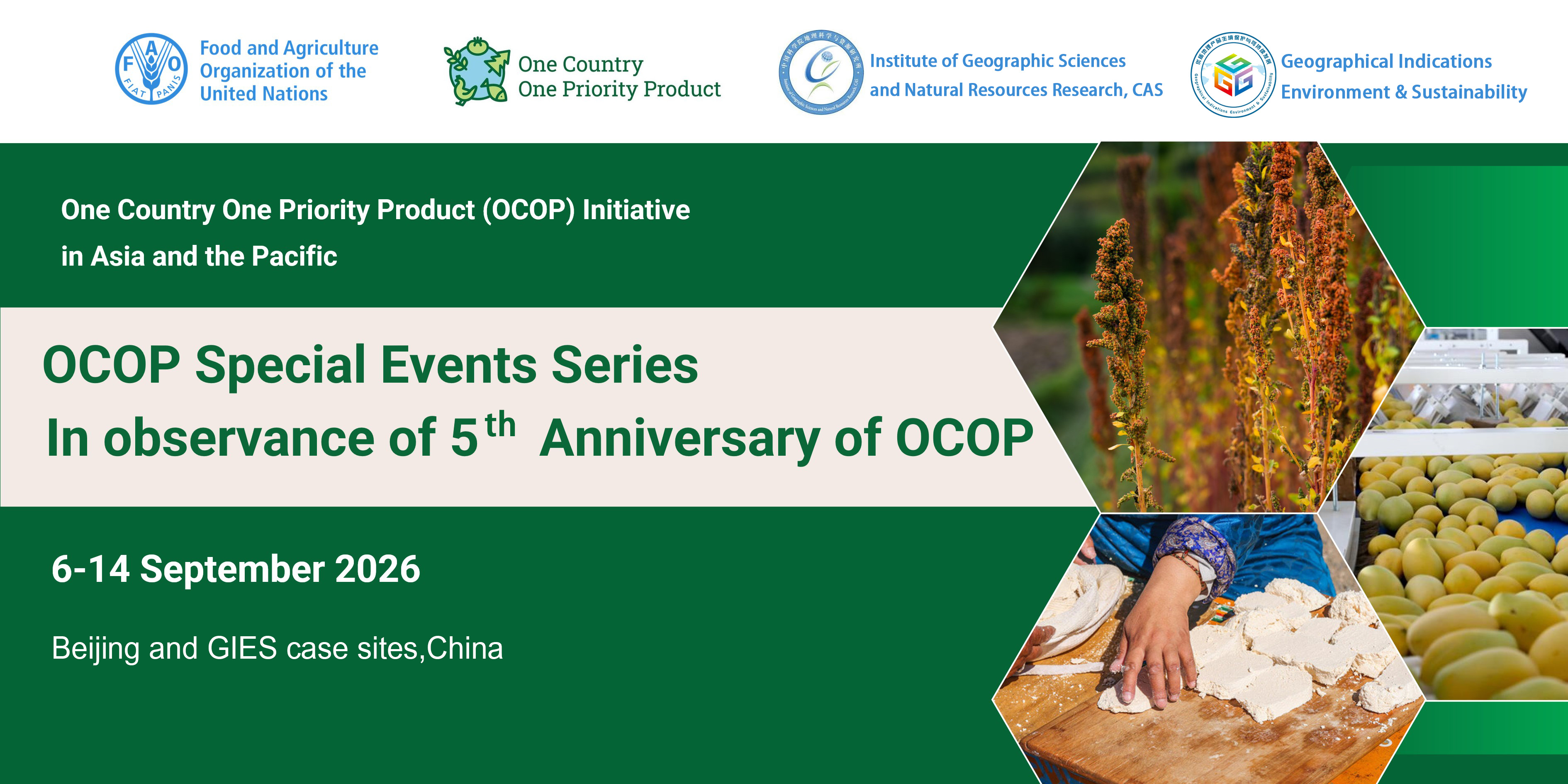
The One Country One Priority Product (OCOP) initiative, launched globally by the FAO Director-General on 7 September 2021 supports Members in the sustainable development of special agricultural products (SAPs), which are hitherto neglected food crops with unique qualities linked to specific locales, farming practices, and cultural heritages. The core value of the OCOP initiative is to produce MORE with LESS, enhancing access to healthy diets, improving farmers' livelihoods, and boosting economic growth. It aims to build MORE efficient, inclusive, resilient, and sustainable agrifood systems.
A country-owned and country-led initiative, OCOP closely aligns with the FAO Strategic Framework 2022-31, and its flagship programmes, including the Hand-in-Hand, 1000 Digital Villages, and Green Cities initiatives. It also leverages South-South and Triangular Cooperation to amplify impact, foster robust partnerships, and mobilize resources, delivering a cohesive and effective approach to sustainable development.
OCOP implementation in Asia and the Pacific is steered by a Regional Organizing Group (ROG) chaired by the Assistant Director-General and FAO Regional Representative for Asia and the Pacific, with technical guidance for OCOP implementation provided by ROG Vice-Chairs representing leading regional science and innovation centres. Annual ROG meetings review OCOP implementation in the region over the preceding year and provide guidance for future implementation.
FAO has adopted a dual-track strategy for OCOP implementation in Asia and the Pacific, focused on both regional and country levels. This includes knowledge sharing across the region on best practices, knowledge generation and partnership with leading regional science and innovation centres to support sustainable development of value chains of SAPs identified by Asia-Pacific OCOP-implementing countries.
Collaboration with leading regional science and innovation partners is central to OCOP implementation in Asia and the Pacific with the expertise of partner members of the OCOP Regional Science and Innovation Network, supporting the Four Betters – Better Production, Better Nutrition, Better Environment, and a Better Life, leaving no one behind. To advance the regional OCOP implementation, the Regional OCOP Science and Innovation Network has been launched at 2nd ROG in China in 2024. Partners includes the Institute of Geographical Sciences and Natural Resources Research, Chinese Academy of Sciences (IGSNRR–CAS), the United Nations Economic and Social Commission for Asia and the Pacific (UNESCAP), Institute of Nutrition of Mahidol University (INMU), among others. These partners are contributing as co-organizers to the OCOP events. (Appendix 1)
In recognizing expertise and excellent contributions in advancing regional OCOP implementation, two partners of the Regional OCOP Science and Innovation Network have been designated as the Asia-Pacific OCOP Centers of Excellence (COEs) at its third annual meeting held in Apia, Samoa, in November 2025: The Institute of Geographical Sciences and Natural Resources Research of the Chinese Academy of Sciences (IGSNRR-CAS), China, and the Institute of Nutrition, Mahidol University (INMU), Thailand.
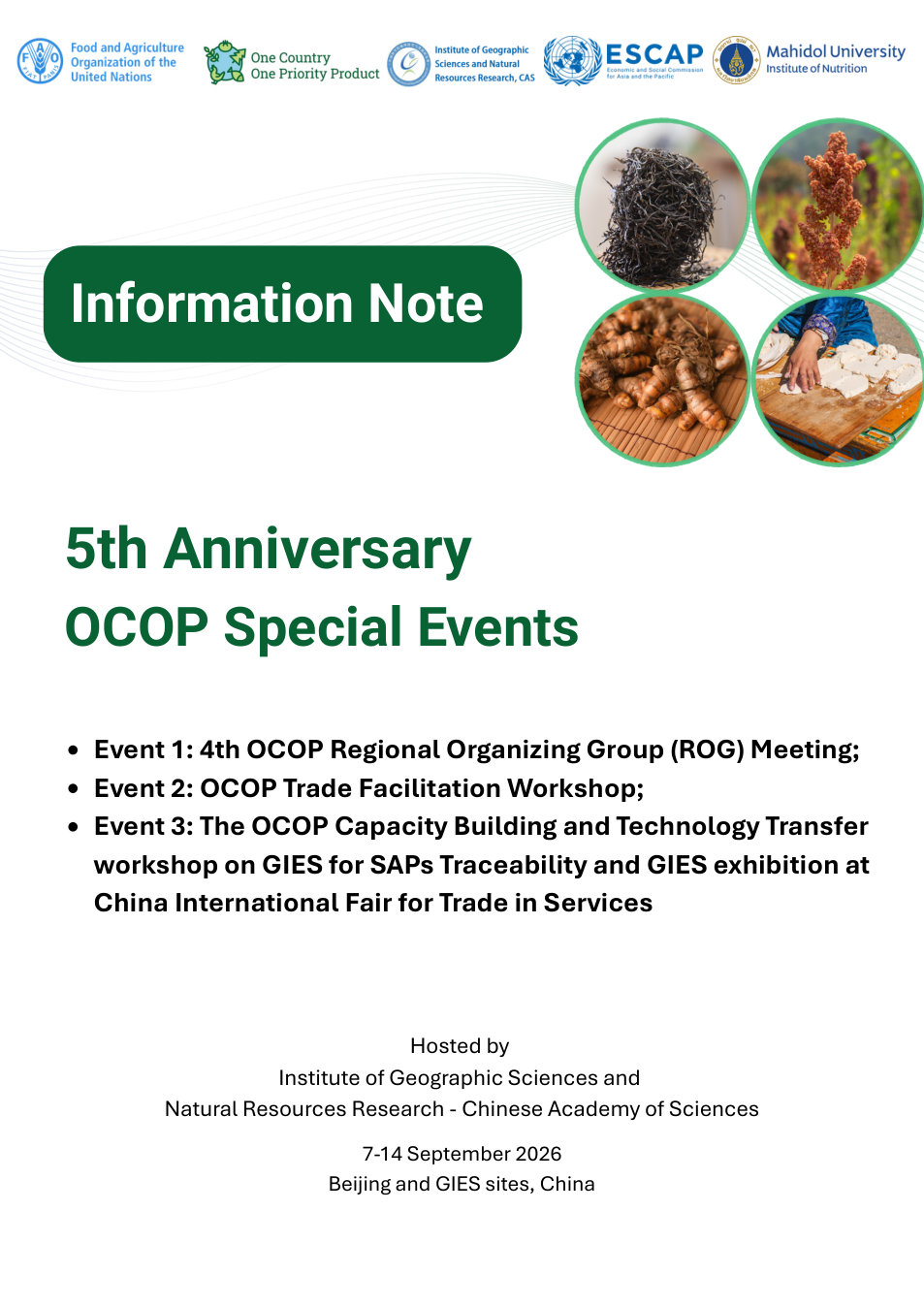
In observance of the 5th anniversary of the launch of the OCOP initiative, RAP OCOP Secretariat is organizing three consecutive OCOP events achieving Four Betters:
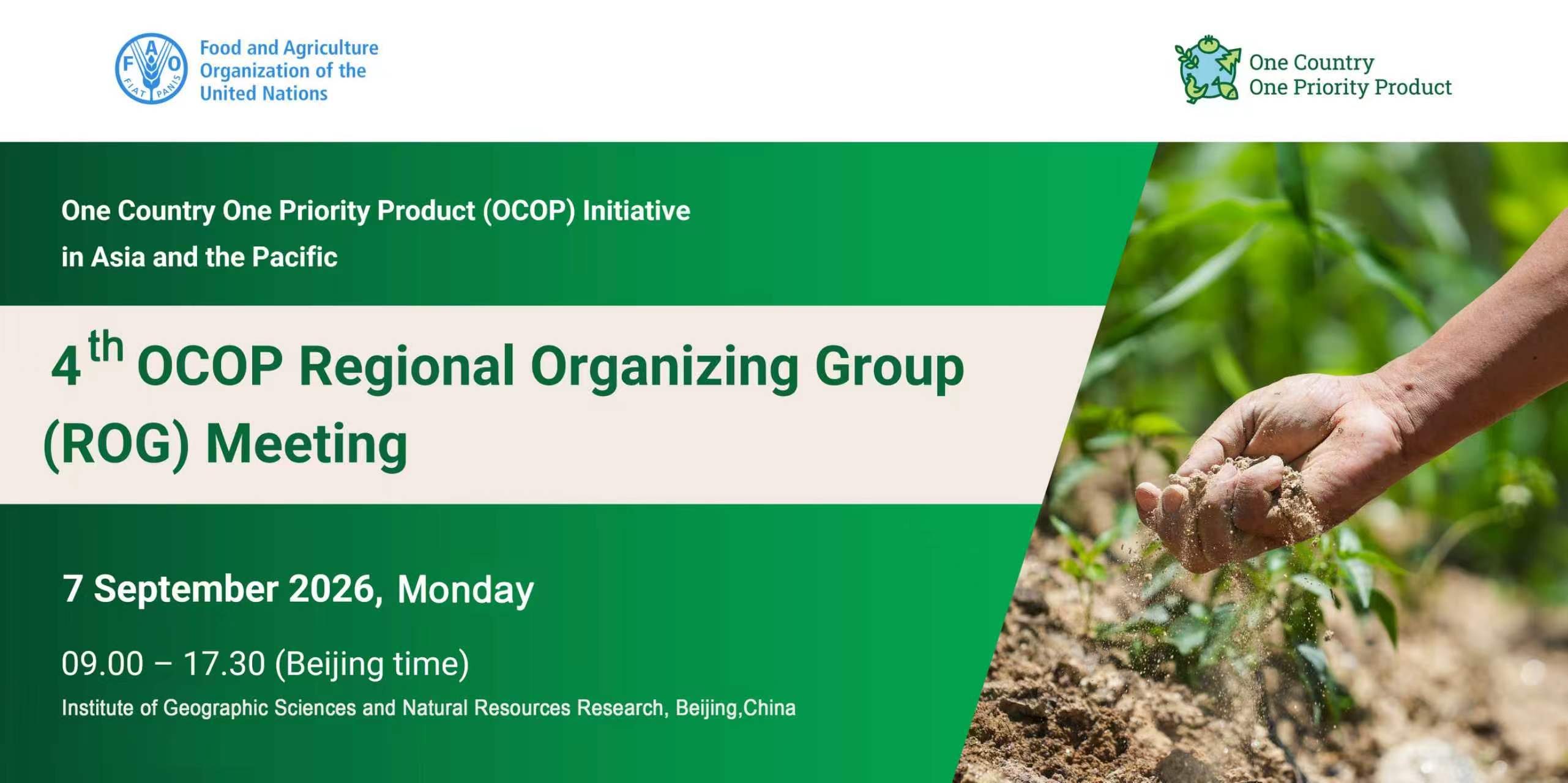
The objectives of the 4th OCOP ROG meeting are to (1) review regional progress of OCOP implementation at country level, (2) build partnerships with leading international institutions on science and innovation for OCOP implementation, and (3) provide guidance on the way forward on OCOP implementation in the region.
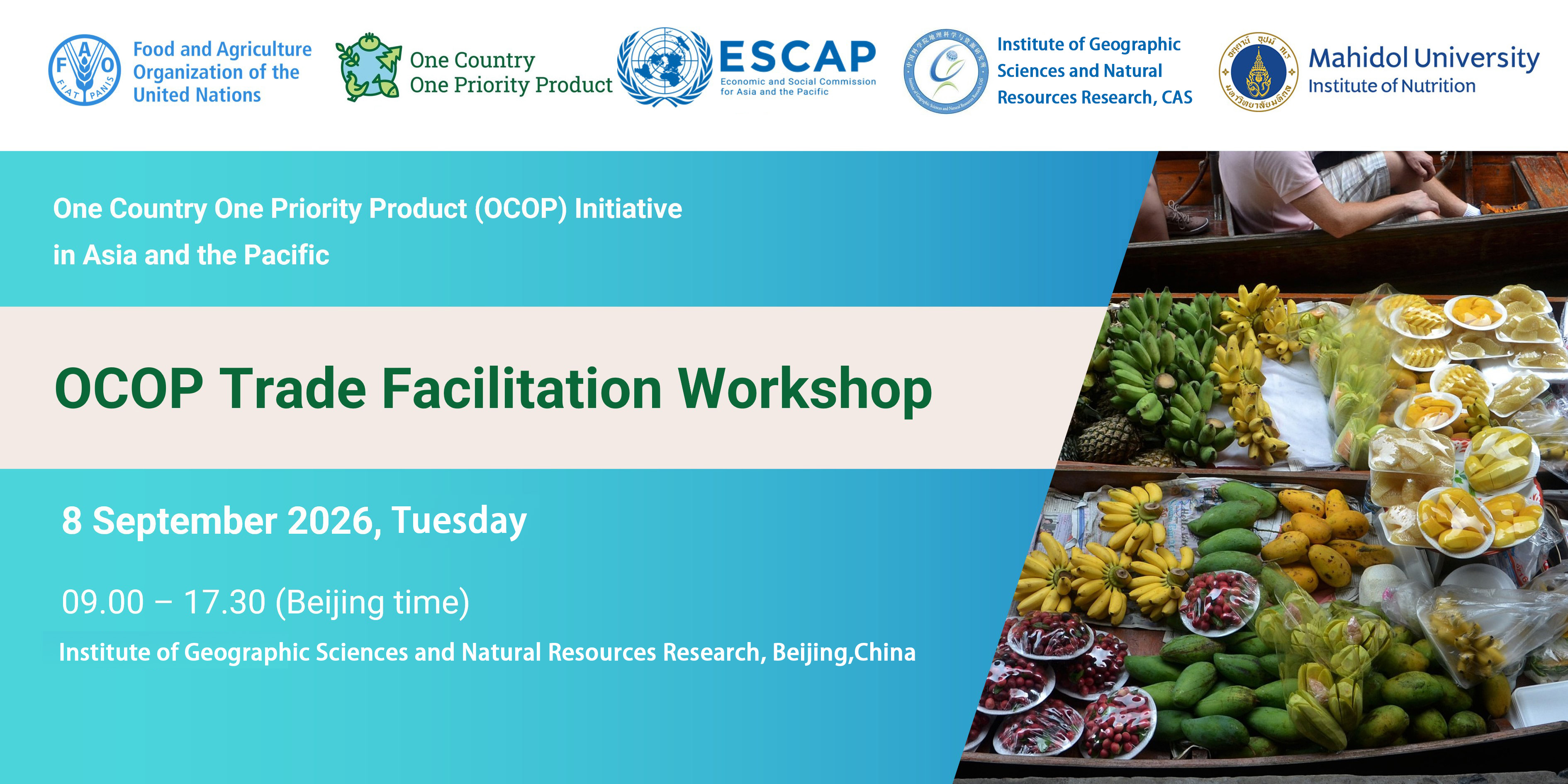
The objectives of the OCOP Trade Facilitation Workshop are to (1) identify trade barriers, regulatory compliance challenges related to OCOP trade at national level; (2) familiarize with the regulatory requirements of importing markets; (3) identify opportunities for joint efforts in leveraging trade facilitation and paperless trade to enhance market access for Special Agricultural Products.
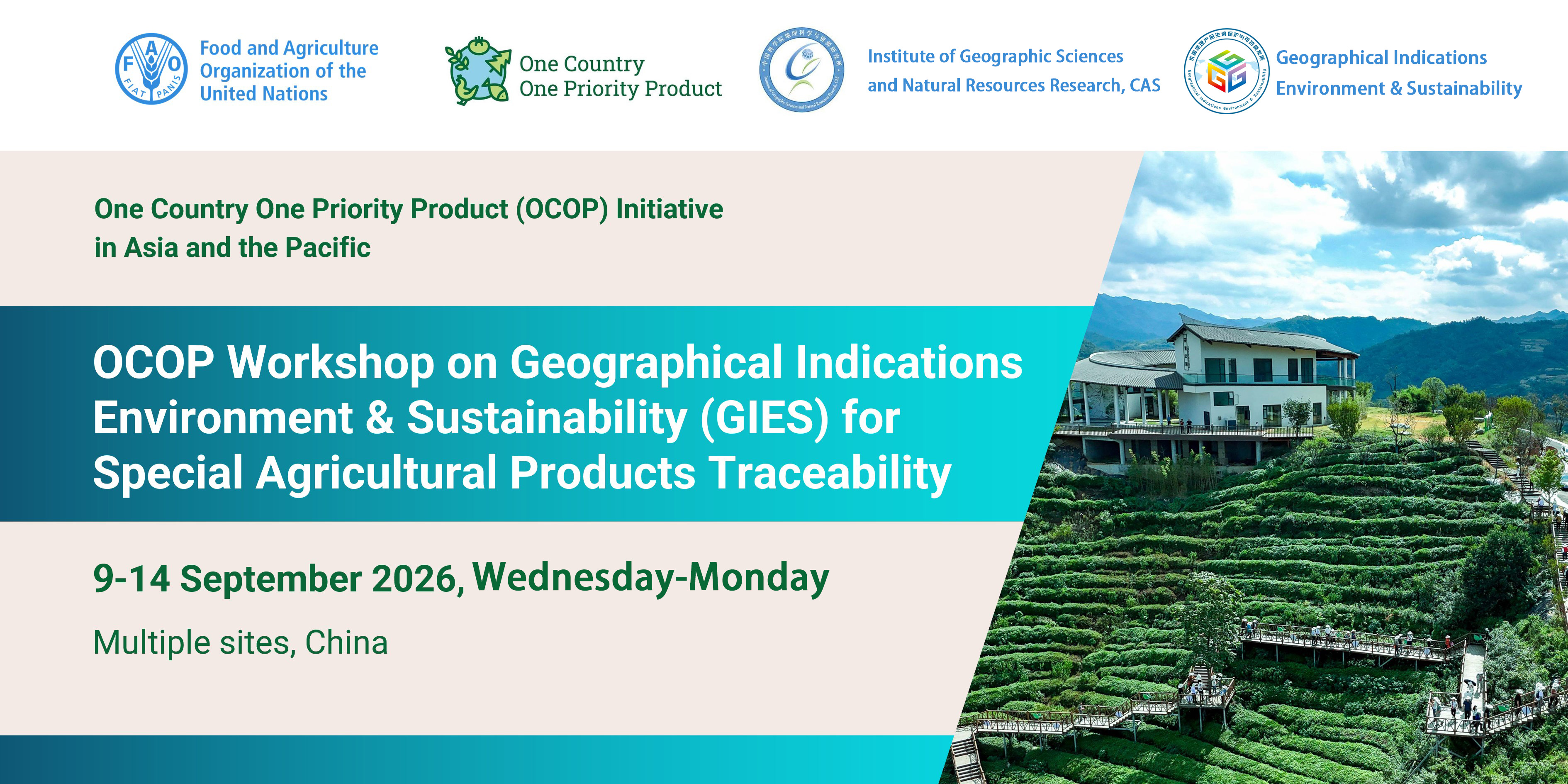
The objectives of the OCOP Workshop on GIES for SAP Traceability are to (1) share knowledge on GIES application for sustainable development of SAP value chains; (2) build capacity on GIES methodology, management and application for SAPs development; (3) organize field visits to observe GIES application using open science technologies for SAPs in diversified agroecological zones in China; and (4) showcase OCOP GIES products at the 2026 China International Fair for Trade in Services (CIFTIS), a landmark annual conference co-organized by the Chinese Ministry of Commerce and the Government of Beijing.
The 4th OCOP ROG Meeting will be organized by FAO RAP;
The OCOP Trade Facilitation Workshop will be co-organized by FAO, UNESCAP, Institute of Nutrition of the Mahidol University (INMU) and IGSNRR-CAS;
The OCOP Workshop on GIES for SAP Traceability will be co-organized by FAO RAP and IGSNRR-CAS.
Dates and modes:
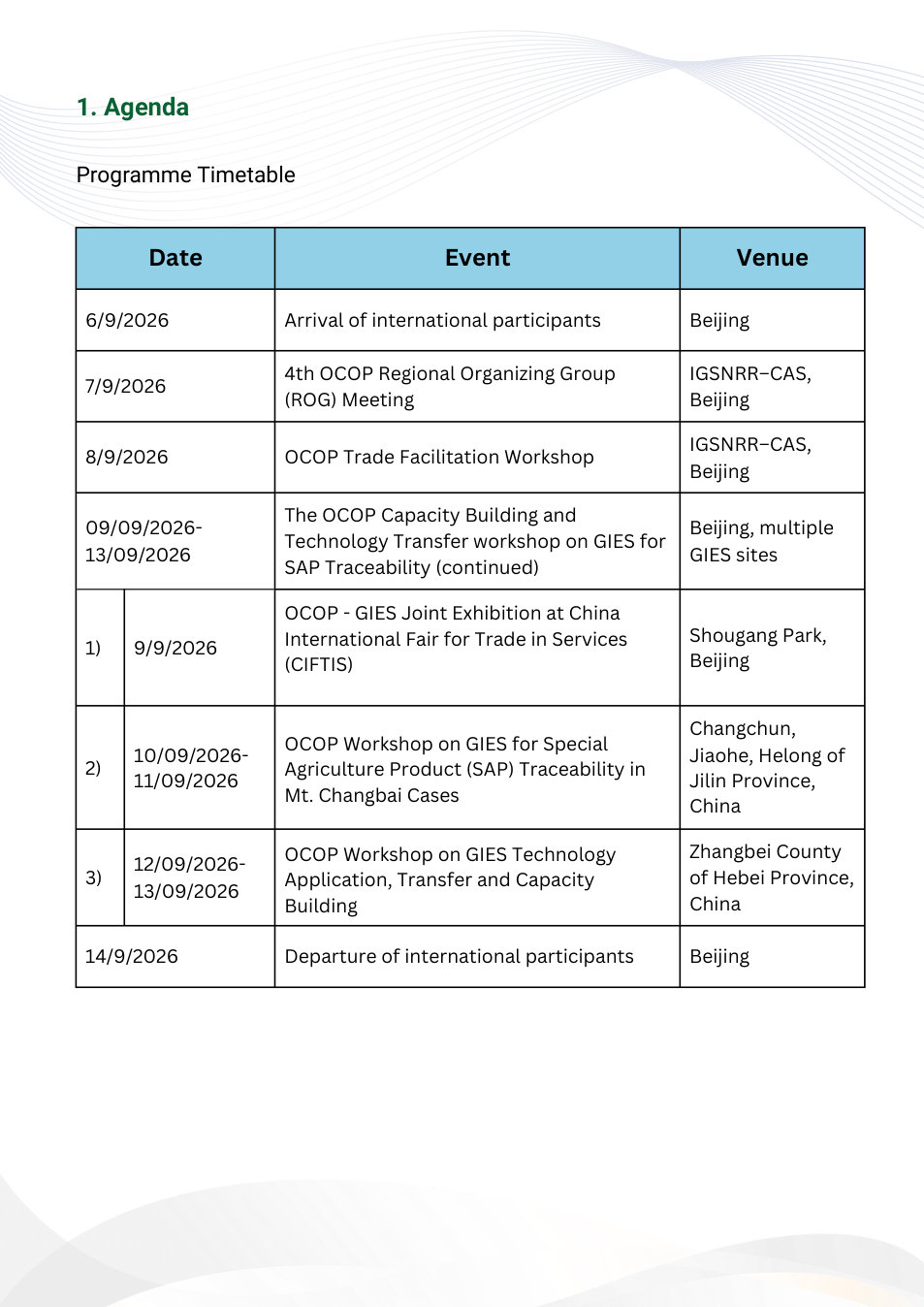
4th OCOP ROG Meeting: 7 September 2026; Hybrid
The OCOP Trade Facilitation Workshop: 8 September 2026; Hybrid
OCOP Workshop on GIES for SAP Traceability: 9–13 September 2026; In-person
Session 1: The 4th OCOP ROG Meeting: it will be attended by ROG members, the FAO OCOP Secretariat in HQ and RAP, OCOP regional science and innovation partners, and OCOP country representatives, country OCOP focal points.
Session 2: The OCOP Trade Facilitation Workshop: it will be attended by representatives from ministries of agriculture (in-person) and ministries commerce (virtual) from the OCOP countries, and representatives from selected importing countries, academia and partners.
Session 3: The OCOP GIES Workshop on SAPs Traceability: it will be attended by two country participants each from all interested OCOP countries in Asia, one is from the government (preferably government OCOP focal point), the other is from the FAO Representation (preferably OCOP Focal Point).
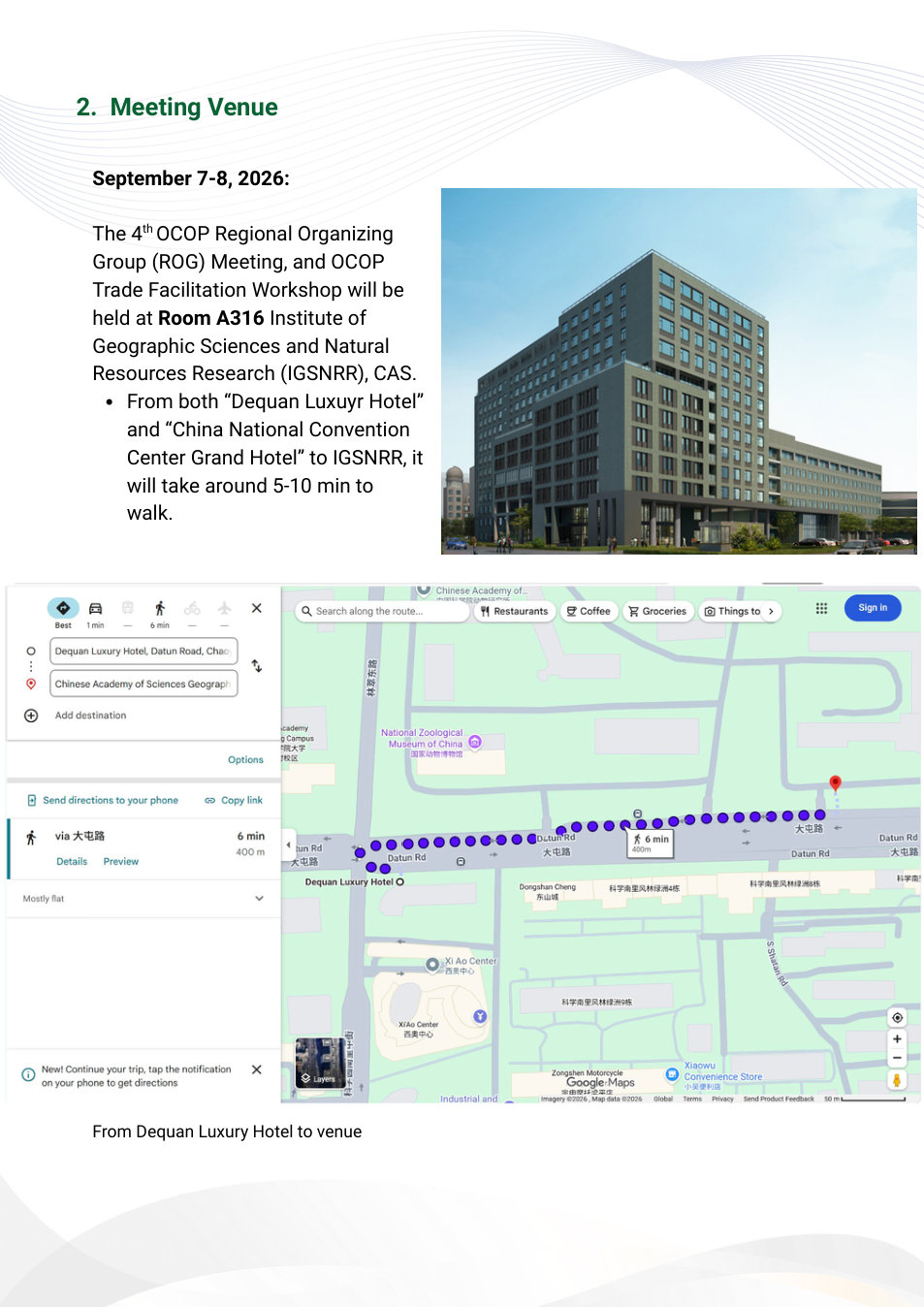
The 4th OCOP ROG Meeting, organized by FAO, will be held on 7 September 2026 (See Appendix 3).
The OCOP Trade Facilitation Workshop, co-organized by FAO, UNESCAP, INMU and IGSNRR-CAS, will be held on 8 September 2026 (See Appendix 4)
The OCOP Workshop on GIES for SAP Traceability, co-organized by FAO and IGSNRR-CAS, will be held on 9–13 September 2026 (See Appendix 5)
Please complete the form below to register for the OCOP Regional Event Series. Fields marked with * are required.
Agenda module is under design — coming soon.
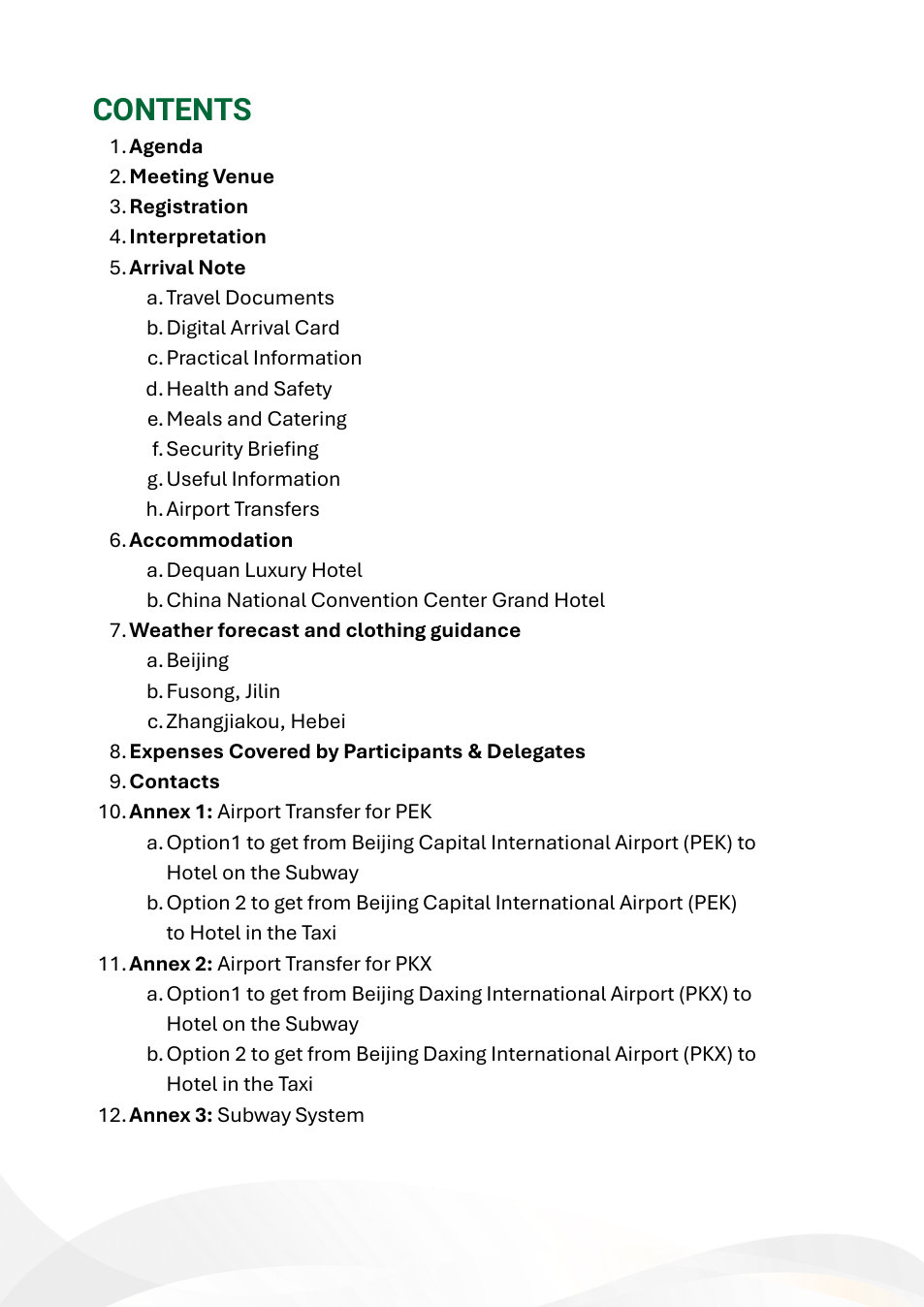
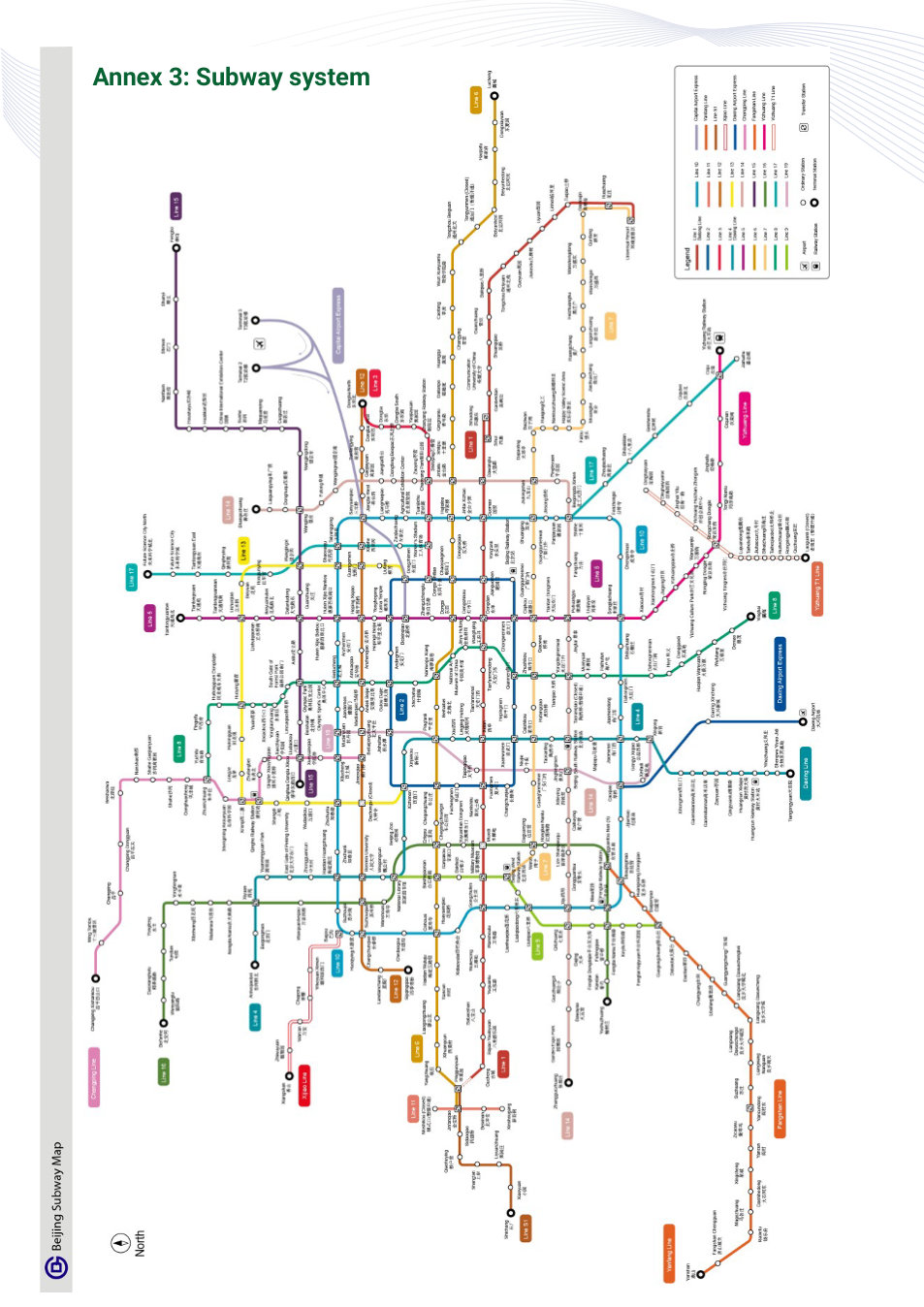
FAO OCOP Event Series in Asia and the Pacific — 2026 Joint International Logistics Note. The full document is shown below; you can also download the original PDF.



Documents module is under design — coming soon.
Photo gallery is under design — coming soon.
For any enquiry about the FAO OCOP Event Series in Asia and the Pacific, please feel free to reach out to the organizing committee.
IGSNRR, CAS & Vice-Chair of FAO Regional Organizing Group,
FAO OCOP in Asia and the Pacific