Global Coverage and Growing Impact of the FAO OCOP
Initiative—Summary of the World Food Forum
High-Level Event on Implementation of the FAO OCOP Initiative
XIA Jingyuan1,2 Beth BECHDOL2 Hafiz MUMINJANOV1
1. OCOP Secretariat, Food and Agriculture Organization of
the United Nations, Rome 00153, Italy;
2. Food and Agriculture
Organization of the United Nations, Rome 00153, Italy
Abstract: On October 15, 2025, FAO held World Food Forum High-Level Event on
the Implementation of the OCOP (One Country One Priority Product) Initiative at
its headquarters in Rome, as part of FAO’s 80th anniversary
celebration. Experts and leaders from across the world shared insights during
the event. The objectives and agenda of the high-level event were listed at the
summary article. The event was moderated by Dr. Xia for the technical session
and Dr. Beth Bechdol for the ministerial segment. Dr. Qu, Director-General of
FAO, His Majesty King Letsie III, King of Lesotho delivered the opening
remarks. Dr. Yurdi Yasmi Director of the Plant Production and Protection
Division (NSP), Deputy Executive Secretary of the OCOP Secretariat made the
report of implementation of OCOP Initiative worldwide. The representatives from
science, education, market and trade, and famers demonstrated the
implementation and ministers and member state representatives from Albania,
Algeria, Bangladesh and Mexico provided the progress of the national OCOP
initiatives. Mr. Hafiz Muminjanov, Technical Adviser, NSP, OCOP Global
Coordinator of the OCOP Secretariat, FAO and Beth Bechdol summarized the high-level
event.
Keywords: High-Level Event; OCOP; FAO 80th anniversary; World Food Forum; global coverage
DOI: https://doi.org/10.3974/geodp.2026.01.01
1 Introduction
On October 15, 2025, FAO held World
Food Forum High-Level Event on the Implementation of the OCOP (One Country One Priority Product) Initiative at its
headquarters in Rome, as part of FAO’s 80th anniversary celebration.
Experts and leaders from across the world shared insights during the event[1–4].
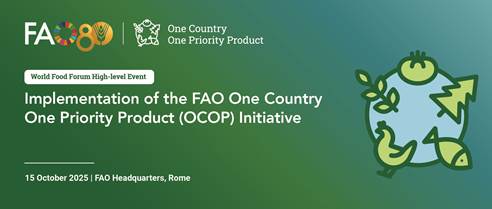
Figure
1 Backboard of the World Food Forum High-Level
Event on Implementation of the OCOP (One Country One Priority Product)
Initiative
2 Objectives and Agenda
2.1 Objectives
This high-level event is a milestone
for the implementation of OCOP Initiative, with the key objectives on the THREE
HOW:
First,
get a better understanding of the OCOP’s rational on HOW to address the
unprecedented challenges faced in global food and agriculture—MORE demands with
LESS supply, by producing MORE with LESS.
Second,
get a better recognition of the OCOP’s core value on HOW to contribute to the
Four Betters (Better Production, Better Nutrition, a Better Environment, and a
Better Life).
Third,
get a better support to the OCOP’s scaling-up worldwide by mobilizing all
technical, financial and human resources available through the synergies and
integration.
The
Technical Session is designed to take stock of the progress we have made
globally and, more importantly, to hear directly from our partners who are
putting OCOP’s vison into action.
The
Ministerial Segment will show that the OCOP is more than a technical effort—it
is a national led and national owned initiative, how government plays special
role will be demonstrated at the Ministerial segment, and how government
connects producers with farmers, researchers, the private sector, development
partners and policy with practice.
2.2 Agenda
The agenda of the high-level event[5]
is listed at the Table 1.
2.3 Messages from the Opening
Remarks and High-Level Statement
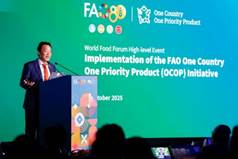
FAO Director-General QU Dongyu
delivered Opening remarks at the event[6] (Figure 2).
Director-General QU Dongyu, who launched the OCOP Initiative in 2021 stressed
the power of collective action and partnerships to accelerate the
transformation of global agrifood systems. “The strength of the OCOP Initiative
lies in partnerships and collaborations. Governments lead, farmers implement,
the private sector brings innovation, academia shares expertise, and
development partners offer support”, he said, “Through collective efforts, we
can deliver real change—especially for small-scale farmers and rural
communities—while advancing the transformation of global agrifood systems”.
Table 1 Agenda of World Food Forum High-Level
Event on the Implementation of OCOP Initiative
|
Item Presenter
|
|
Technical
Session
|
|
|
Moderator: Xia Jingyuan, Adviser
to the FAO Director-General, Executive Secretary of the OCOP Secretariat, FAO
|
|
Progress on OCOP Implementation Worldwide
|
Yurdi
Yasmi, Director of the Plant Production and Protection Division (NSP);
Deputy Executive Secretary of the OCOP Secretariat, FAO
|
|
Stakeholders’
Perspectives on the Implementation of OCOP Initiative (Insights,
Engagement, Lessons-learned and Suggestions)
|
|
Perspective of research and academia
|
Liu Chuang,
Chief Scientist, Institute of Geographic Sciences and Natural Resources
Research (IGSNRR, CAS); Vice-Chair of OCOP Regional Organization Group
in Asia and the Pacific
|
|
Perspective of education and extension
|
Pathmanathan
Umaharan, Professor and Director, Cocoa Research Centre of the
University of the West Indies, Trinidad and Tobago (Recorded video
presentation)
|
|
Perspective of marketing and trade
|
Nguyen
Minh Tien, Director of Viet Nam Trade Promotion Centre for
Agriculture, Vietnam
|
|
Perspective
of farmers
|
Khaled El-Haggan, Date Palm Farm
Manager, Egypt
|
|
Discussion
|
All panelists
|
|
Summary
of the Session
|
Hafiz Muminjanov, Technical Adviser,
NSP; OCOP Global Coordinator of the OCOP Secretariat, FAO
|
|
Ministerial
Segment
|
|
Moderator: Ms. Beth Bechdol, Deputy
Director-General, FAO
|
|
Opening Remarks
|
Qu Dongyu, Director-General, FAO
|
|
High-level Statement
|
His Majesty King Letsie III, King
of Lesotho
|
|
Video on OCOP initiative
|
|
Keynote Addresses on Progress,
Achievements, Impact and Perspectives of the Implementation of the OCOP
Initiative in Countries
|
|
Albania
|
His Excellency Andis Salla, Minister
for Agriculture and Rural Development (Recorded video address)
|
|
Algeria
|
His Excellency Yacine El-Mahdi
Oualid, Minister for Agriculture, Rural Development and Fisheries
|
|
Bangladesh
|
His Excellency Lt. Gen. Md. Jahangir Alam
Chowdhury (Retd.), the Advisor, Ministry of Agriculture
|
|
Mexico
|
Rubén Irvin Rojas Valdés, General
Coordinator of Information, Intelligence and Evaluation of the Secretariat of
Agriculture
|
|
Concluding Remarks
|
Beth Bechdol, Deputy Director-General, FAO
|
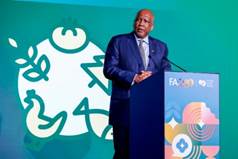
His
Majesty King Letsie III of the Kingdom of Lesotho and FAO Special Goodwill
Ambassador for Nutrition stated: special agricultural products, when
strategically supported, can drive rural transformation[7]. They
offer agronomic and cultural advantages and help build resilient, sustainable
food systems (Figure 3).
2.4 Messages from the Technical
Session and Ministerial Segment
The high-level event was consisted of 2
sessions, technical session and ministerial session. Dr. XIA Jingyuan, Special Adviser
to the FAO Director-General, and Executive Secretary of the OCOP Secretariat, moderated
the technical session (Figure 4), Beth Bechdol, FAO Deputy Director-General, moderated the ministerial
session
(Figure 5).
In the technical session,
Yurdi Yasmi, Director of FAO’s Plant Production and Protection Division and
Deputy Executive Secretary of the OCOP Secretariat reported the progress of
OCOP Initiative worldwide[8]. And then, Professor LIU Chuang,
Vice-Chair of OCOP Regional Organizing Group for Asia and the Pacific, and
Professor at IGSNRR, CAS[9], Pathmanathan Umaharan, Director of the
Cocoa Research Centre at the University of the
|
|
|
|
Figure 2 Dr.
QU Dongyu, FAO Director-General, delivered his speech at the high-level event
©FAO/Giulio Napolitano
|
Figure 3 His
Majesty King Letsie III of the Kingdom of Lesotho and FAO Special
Goodwill Ambassador for Nutrition delivered his speech at the high-level
event ©FAO/Giulio Napolitano
|
|
|

|
|
Figure 4 Dr. XIA Jingyuan, Adviser to the FAO
Director-General, Executive Secretary of the OCOP Secretariat, FAO moderated
the technical session ©FAO/Giulio Napolitano
|
Figure 5 Ms. Beth Bechdol,
Deputy Director-General, FAO moderated the ministerial segment ©FAO/Giulio
Napolitano
|
West
Indies[10], Nguyen Minh Tien,
Director of Trade Promotion, Center for Agriculture, Viet Nam (AGRITRADE)[11],
and Khaled El-Haggan, date palm producer and Chair of Egypt’s Date Palm
Committee[12], reported the progress from the stakeholders’
perspectives on the implementation of
OCOP Initiative (insights, engagement, lessons-learned and suggestions)
based on science and innovation, education, trade and market and farmers
separately (Figure 6).
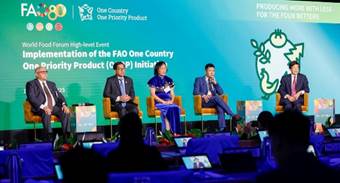
Figure 6 Panelists of the technical session of the
high-level event ©FAO/Giulio Napolitano
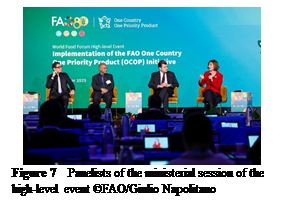 In the ministerial
segment, Andis Salla, Minister for Agriculture and Rural Development of Albania[13],
Yacine El-Mahdi Oualid, Algeria’s Minister for Agriculture, Rural Development
and Fisheries[14], Md. Jahangir Alam Chowdhury, the advisor,
Ministry of Agriculture of Bangladesh[15], Rubén Irvin Rojas Valdés,
General Coordinator at the Secretariat of Agriculture of Mexico[16]
participated the panel discussions (Figure 7).
In the ministerial
segment, Andis Salla, Minister for Agriculture and Rural Development of Albania[13],
Yacine El-Mahdi Oualid, Algeria’s Minister for Agriculture, Rural Development
and Fisheries[14], Md. Jahangir Alam Chowdhury, the advisor,
Ministry of Agriculture of Bangladesh[15], Rubén Irvin Rojas Valdés,
General Coordinator at the Secretariat of Agriculture of Mexico[16]
participated the panel discussions (Figure 7).
3 Achievement and Way Forward
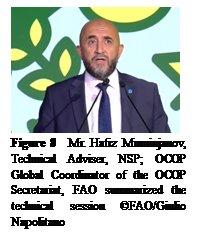
Hafiz Muminjanov, Technical Adviser and
OCOP Global Coordinator at FAO summarized the technical session (Figure 8). He indicated that the researchers and academia
emphasized the critical role of science, technology, and innovation in building
sustainable and resilient value chains. Education and extension services
stressed the importance of capacity development and knowledge transfer,
particularly to farmers, youth, and women. Marketing and trade experts called
for stronger market linkages, an enhanced competitiveness of specialty
agricultural products. Farmers reminded us that OCOP must remain grounded in
the realities of rural communities aiming to improve livelihoods and foster
residents.
He
said that since its launch in 2021 OCOP has engaged 95 member nations,
prioritized 56 special agriculture products, and identified 18 demonstration
countries across all regions. These efforts have yielded tangible results in
sustainable value chain practices and increased awareness of OCOP’s
contribution to FAO’s vision. Vision on Better Production, Better Nutrition, a Better
Environment, a Better Life, leaving no one behind. We also noted the growing
synergy between OCOP and other FAO flagship initiatives such as Hand in Hand,
Thousand Digital Villages, Green Cities, as well as South-South and Triangular
Cooperation Program to scale up successful models. Looking ahead, the next
phase of OCOP require first of all deepening country level demonstration and
scaling up efforts. We have to mobilize more resources and forge new
partnerships. We enhance, we should enhance communication and knowledge
sharing, and above all, we have to ensure that farmers and rural communities
remain at the heart of the OCOP Initiative.
 The high-level
event has reaffirmed that OCOP is a collective journey by integrating science
education, market development, and farmers-centered approaches, we are shaping
agrifood systems that are more inclusive, resilient and sustainable. Let’s
carry forward this spirit of collaboration and shared purpose as we move into
the ministerial session.
The high-level
event has reaffirmed that OCOP is a collective journey by integrating science
education, market development, and farmers-centered approaches, we are shaping
agrifood systems that are more inclusive, resilient and sustainable. Let’s
carry forward this spirit of collaboration and shared purpose as we move into
the ministerial session.
At
the closure of the technical session, Dr. XIA Jingyuan highlighted the core
value of the OCOP Initiative: produce MORE with LESS for the BETTERS. Here are
five More (productivity, biodiversity, safety, profitability, and
sustainability); four Less (biodiversity losses, agrichemical inputs,
environment pollution, and corban emission); and four Betters (production, nutrition,
environment, and life).
He
added that the roadmap to realize the core is by optimizing all positive
aspects of the agro-production systems and minimizing all negative aspects of
the agro-production systems so to maximize the integrated benefits of economy,
social and environment.
He
further pointed out the OCOP have experienced from global initiative to global
action, to global programme, and toward global movement, representing the future
direction of global food and agriculture.
In
the closure of the ministerial segment, DDG Beth Bechdol extend her sincere
appreciation to each one of participates for their active participation and
valuable contributions to this important high-level event. Following is her
closing remarks:
“I
would like to extend my sincere appreciation to each one of you for your active
participation and valuable contributions to this important high-level event.
Your diverse experiences, particularly those at the country level, have
demonstrated the strong momentum and immense potential of the OCOP Initiative.
We now have a clear path forward for supporting all 95 countries, enhancing
internal synergies, strengthening external collaboration, and mobilizing
additional resources. This event has shown that the OCOP is more than a
technical effort—it is a catalyst for meaningful change. It connects producers
with markets, traditions with innovation, and policy with practice. Most
importantly, the OCOP unites stakeholders—governments, farmers, researchers,
the private sector, and development partners—around a shared vision built on
trust, national ownership, and global collaboration.
I
am proud to witness today that we stand together to transform our agrifood
systems through the OCOP Initiative by producing MORE with LESS—for the BETTERS.
While challenges remain—climate risks, market barriers, financing gaps—you have
demonstrated practical, locally driven solutions and pragmatic actions that
show the OCOP is not only scalable—but also adaptable, resilient, and
inclusive. Allow me to emphasize once again—the global success of the OCOP
greatly relies on our close partnership and collaboration at all levels.
Our
next step is to focus on effective implementation and long-term impact. This
means: investing in priority value chains, strengthening capacities, especially
for youth, women, and smallholders, and enhancing partnerships and coordination
at global, regional and national levels. FAO remains fully committed to
supporting you—with technical guidance, capacity development, and platforms for
shared learning and action.
 Let us
leave this event with renewed determination to turn ideas into action and
ambition into results—product by product, community by community, and country
by country. I encourage you to align the OCOP with broader national and global
goals—such as climate resilience, nutrition-sensitive value chains, digital
transformation, and rural revitalization. Together, we can build agrifood
systems that are more efficient, inclusive, resilient and sustainable—for today
and for the future generations. We count on the strong support of all of you,
esteemed members, partners and donors, to make this initiative a greater
success.
Let us
leave this event with renewed determination to turn ideas into action and
ambition into results—product by product, community by community, and country
by country. I encourage you to align the OCOP with broader national and global
goals—such as climate resilience, nutrition-sensitive value chains, digital
transformation, and rural revitalization. Together, we can build agrifood
systems that are more efficient, inclusive, resilient and sustainable—for today
and for the future generations. We count on the strong support of all of you,
esteemed members, partners and donors, to make this initiative a greater
success.
Thank
you once again for your engagement, leadership, and continued support. The OCOP
Secretariat at FAO headquarters stands ready to support field-level
implementation and help ensure the initiative achieves its objective. Let us
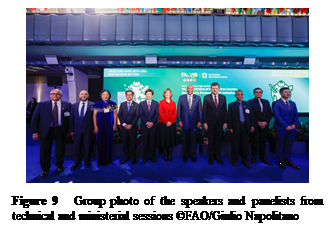
move forward— together—for a better future.” See Figure 9 for the group photo
of the conference.
References
[1]
FAO.
EM07-High-Level Event on the Implementation of the FAO One Country One Priority
Product (OCOP) Initiative [Z/OL]. (2025-10-15) [2026-01-05].
https://www.fao.org/webcast/detail/em07-high-level-event-on-the-implementation-of-the-fao-one-country-one-priority-product-(ocop)-initiative/en.
[2]
FAO. WFF 2025: Special event
boosts momentum for the implementation of the One Country OnePriority Product
(OCOP) Initiative [EB/OL]. (2025-10-15) [2026-01-05]. https://www.fao.org/newsroom/detail/wff-2025--special-event-boosts-momentum-for-the-implementation-of-the-one-country-one-priority-product-(ocop)-initiative/en.
[3]
FAO.
Photos of High-level event on the implementation of the FAO One Country One
Priority Product (OCOP) Initiative [Z/OL]. (2025-10-15)
[2026-01-05]. https://digital-media.fao.org/Share/2673nb87u2jt2hx5dgob8k8d8d5xh54k.
[4]
FAO. High-level event
underscores progress of One Country One Priority Product Initiative
[Z/OL].(2025-10-16) [2026-01-05].
https://www.fao.org/one-country-one-priority-product/asia-pacific/news/detail/high-level-event-underscores-progress-of-one-country-one-priority-product-initiative/en.
[5]
FAO.
High-level event on the implementation of the FAO One Country One Priority
Product (OCOP) Initiative [EB/OL]. (2025-10-15) [2026-01-05].
https://www.fao.org/one-country-one-priority-product/news-and-events/events/events-detail/high-level-event-on-the-implementation-of-the-fao-one-country-one-priority-product-(ocop)-initiative/en.
[6]
Qu,
D. Y. Opening remarks at the High-Level Event on Implementation of the FAO OCOP
Initiative[J/DB/OL].
Digital Journal of Global Change Data Repository,
2026. https://doi.org/10.3974/geodb.2026.01.01.V1.
[7]
His
Majesty King Letsie III. High-level
statement at the Implementation of the FAO OCOP Initiative[J/DB/OL]. Digital Journal of
Global Change Data Repository,
2026. https://doi.org/10.3974/geodb.2026.01.02.V1.
[8]
Yasmi,
Y. Progress on FAO OCOP Initiative implementation worldwide (2021–2025)
[J/DB/OL]. Digital Journal of Global Change
Data Repository, 2026. https://doi.org/10.3974/geodb.2026.01.03.V1.
[9]
Liu,
C. GIES support FAO OCOP implementation: speech at the High-Level Event of
Implementation
of
FAO OCOP Initiative at the FAO 80th Anniversary [J/DB/OL]. Digital
Journal of Global ChangeData Repository, 2026. https://doi.org/10.3974/geodb.2026.01.04.V1.
[10]
Umaharan, P. Perspectives of education
and extension for FAO OCOP Initiative [J/DB/OL]. Digital Journal of Global
Change Data Repository, 2026. https://doi.org/10.3974/geodb.2026.01.09.V1.
[11]
Nguyen,
M. T. Perspective of marketing and trade for implementation of OCOP Initiative [J/DB/OL].Digital Journal of Global Change Data Repository, 2026. https://doi.org/10.3974/geodb.2026.01.10.V1.
[12]
El-haggan, K. Challenges of date
palm farmers and suggestions for FAO OCOP Initiative in Egypt[J/DB/OL]. Digital Journal of Global Change Data
Repository, 2026. https://doi.org/10.3974/geodb.2026.01.11.V1.
[13]
Salla,
A. Progress, achievements, impact and perspectives of the implementation of the OCOP Initiative in
Albania [J/DB/OL]. Digital Journal of Global Change Data Repository,
2026. https://doi.org/10.3974/geodb.2026.01.05.V1.
[14]
Oualid,
Y. E. Progress, achievements,
impact and perspectives of the implementation of the OCOPInitiative in Algeria [J/DB/OL]. Digital Journal of Global Change
Data Repository, 2026. https://doi.org/10.3974/geodb.2026.01.06.V1.
[15]
Chowdhury, M. J. A. Progress, achievements, impact and perspectives of the implementation
of theOCOP Initiative in Bangladesh [J/DB/OL]. Digital Journal of Global Change
Data Repository, 2026. https://doi.org/10.3974/geodb.2026.01.07.V1.
[16]
Rojas
Valdes, R. I.
Progress, achievements, impact and perspectives of the implementation of the OCOP Initiative in Mexico [J/DB/OL].
Digital Journal of Global Change Data Repository,
2026. https://doi.org/10.3974/geodb.2026.01.08.V1.