LI Yu
Jilin Agricultural University, Changchun
130118, China
DOI: https://doi.org/10.3974/geodp.2026.05.01
Dataset Availability Statement:
The video recording
of the associated speech was published and is accessible through the Digital
Journal of Global Change Data Repository at:
https://doi.org/10.3974/geodb.2026.08.01.V1.
On September 20, 2026, the International Mushroom Days, China 2026,
themed “Root, Bridge, Horizon” was held in Xiamen, Fujian. At the invitation of
the organizing committee, the author delivered a speech at the opening
ceremony, reviewing the highlights of China’s edible fungi industry over the
past year and offering an outlook on its next-stage development (Figure 1).
1 Highlights
of China’s Edible Fungi Industry over the Past Year
1.1 Resources and Breeding
Over
the past year, with the support of the Mycological Society of China and the
National Edible Fungi Industry Technology System, nationwide resource surveys
were conducted at least 4 times, yielding a large number of wild resources;
local illustrated floras or records were published in many regions. This has
laid a foundation for further work.
|
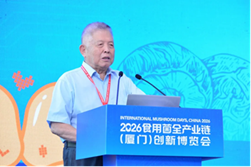
Figure 1 Keynote speech at the opening ceremony
(Sep. 20, 2026, Xiamen)
(Photo: Jilin
Agricultural University)
|
In breeding, the successful development of a
new variety represented by X139 (also known as Xue 139 or Xuerong 139)[1]
ended the era in which China depended on imported original spawn from abroad.
It is an epoch-making milestone and a true “chip” of China’s own. The advent of
X139 enabled Xuerong, the largest industrial-scale producer of domestic enoki
mushroom—that is, the largest industrial-scale enterprise for wood-rotting
fungi—to become an enterprise owning a variety with independent intellectual
property rights.
Previously, we relied on white enoki
mushroom varieties from Japan and South Korea. Since the release of variety X139,
we have not only been able to produce them ourselves but also broken the
barrier that had prevented exports. Since its initial release, more than 1,500
t have been sold to neighboring countries. Breeding has therefore opened a new
era of breeding based on China’s own intellectual property rights.
1.2 Cultivation
Against
the backdrop of the development and popularization of black bolete and yellow
bolete, we have built, in the main maize-producing area of Northeast China, the
largest enterprise in China that uses maize straw to produce button mushrooms (Agaricus
bisporus). At present, it has reached full production capacity, with a
daily output of 200 t, becoming the first industrialized and modern enterprise
in the main maize-producing area, and both its quality and yield have reached
the advanced domestic level.
1.3 Processing
It
is no longer an era dominated by a single outstanding enterprise; many
processing enterprises have emerged. In particular, it is worth mentioning that
on May 6 this year, Shandong took the lead in listing Sanghuang as a food,
opening a new “food era” for edible fungi, especially Sanghuang. This has laid
a foundation for the development of more deep-processed products.
1.4 AI
At
last year’s Xishuangbanna conference, the author elaborated on certain views
regarding AI for mushroom. Through efforts over the past year, we have built
the world’s first big data platform for edible fungi, named “䄱稼”.
The platform has established close ties with
Yazhou Bay Laboratory, BGI, and Huawei. To date, it has stored 80 million
fungal entries.
Another aspect is embodied robots. Embodied
robots will have a role to play in the mushroom industry, especially in
carrying out tasks such as harvesting. The National Bionics Engineering Center
at Jilin University has already turned its attention to embodied robots for
mushroom harvesting.
1.5 New Technologies and New Products
In
fact, fungi have made notable progress not only in the production of edible
fungi but also in many other areas. For instance, in biomanufacturing, mushroom
paper, mushroom leather, and mushroom building materials made from mushrooms
have begun to emerge.
China National Building Material Group Co.
Ltd. has already used our technology to produce biodegradable, pollution-free
wallpaper, and paper and leather are also being scaled up in production. This
undoubtedly represents a notable advance of fungi in different fields,
especially in biomanufacturing and synthetic biology.
This summer, our team used multi-omics
technology to detect Ganoderma, log-cultivated Ganoderma, and
spore powder from different Ganoderma species[2]. This
advanced technology prevents confusion among species and among different
production methods, ensuring the authenticity of genuine log-cultivated Ganoderma.
2 Soft Power Support and
Cultural Development of China’s Edible Fungi Industry
2.1 Soft Power Support
The
National Technical Committee on Standardization of Edible
Fungi was established and began operation on June 12, 2026, which
undoubtedly provides important support for edible fungi production in the next
stage.
Another concrete indicator is brand
building. Many localities have already made branding a priority. For example,
at the Shangri-La Matsutake Festival, Shangri-La matsutake was promoted to the
world as a single-crop brand. This is a concrete practice for truly
implementing brand agriculture, one of the “Four Agricultures” proposed by the
state.
2.2 Cultural Development
After
the Ancient Mulberry Garden on the Old Course of the Yellow River in Linqing
was recognized as a China-Nationally Important Agricultural Heritage System (China-NIAHS), it is an agricultural heritage system with Sanghuang as its main
component[3]. In the selection of the eighth batch of China-NIAHS,
Tongjiang white fungus from Sichuan emerged, which should be an international
recognition of China’s silver ear production.
The author also hopes that in the near
future, Tongjiang white fungus can go global and become a Globally Important
Agricultural Heritage System. At the same time, it is hoped that Suizhou,
Longquan, and Jiaohe can be listed as China-Nationally Important Agricultural
Heritage Systems in different fields.
3 Expectations
for the Next Step
The
author’s dream for China’s edible fungi industry is to see China transform from
a major edible fungi country into a truly strong one, benefiting entrepreneurs
in the edible fungi industry, the vast number of mushroom farmers, and new
rural development. In summary, this can be encapsulated as the “12345 Project”.
“1” represents the hope that in 2026, the
opening year of the 15th Five-Year Plan, and even in the next 5 to 10 years—a
critical decade for China’s march toward becoming a world power—10 trading
markets of the same scale and advanced level as Mushuihua in Kunming, Yunnan,
will emerge in the field of edible fungi. This is not a mere dream.
In fact, in Qingyuan County, Liaoning
Province, Northeast China, there is a man Du, a mushroom gatherer, who collects
wild mushrooms in Northeast China worth tens of millions of CNY each year in
only 2–3 months, of which truffles alone amount to hundreds of tons. The author
believes that in other places, especially in the Greater and Lesser Khingan
Mountains, the Hengduan Mountains region, and southern Zhejiang, where natural
resource conditions are rich, building international-standard markets like the
Mushuihua market is not a difficult task.
“2”
represents the hope that in the next 5 to 10 years, the major of Fungal Science
and Engineering or Edible Fungi Science and Engineering can be established in
more than 20 agricultural universities and colleges in China. At present, in
addition to Jilin Agricultural University, Tianjin Agricultural University,
Shandong Agricultural University, and Ludong University, Anhui Agricultural
University and Yunnan Agricultural University will also establish such
departments or disciplinary programs this year.
The
author believes that contemporary microbiology is not wrong; microbiology
actually originated 200 years ago when Linnaeus called moving organisms animals
and non-moving organisms plants, and those that could not be well classified
were assigned to microbiology.
The
Institute of Microbiology, Chinese Academy of Sciences, was called the
Institute of Applied Mycology when it was established. Later, in consideration
of some advanced work by Mr. FANG Xinfang in brewing, it was renamed the
Institute of Microbiology.
However,
looking back now, in our understanding of the biological world, besides moving
organisms being called animals and non-moving organisms being called plants,
among eukaryotic organisms there is also the largest group, namely mushrooms,
namely our fungi. The living world is divided into the domains Archaea,
Bacteria, and Eukarya, and within Eukarya, fungi are one of the largest and
least developed groups.
Currently,
only 2% of fungi are known to us, and most fungal species have not been
recognized or developed. How to develop them and how to form an industry
depends on truly capable talents. At present, only a few institutions of higher
learning in China offer mycology programs, which is far from sufficient.
Therefore,
the author earnestly appeals that agricultural universities and comprehensive
universities incorporate Fungal Science and Engineering into their scope. Just
as bacteriology, virology, and other fields have become independent
disciplines, mycology should also become an independent first-level discipline.
The author hopes that everyone present will jointly appeal for this matter.
“3”
refers to the hope that in the next five years, 30 groundbreaking new varieties
comparable to X139 and Fumo 28 can truly be bred. In this regard, DUS testing
(Distinctness, Uniformity, and Stability) must be closely followed up in
collaboration with the Shanghai Academy of Agricultural Sciences (SAAS) and
other institutions, so as to promote the recognition and certification of new
edible fungi varieties.
“4”
refers to the particular hope that, under the guidance and support of the newly
established National Technical Committee on Standardization of Edible Fungi
(SAC/TC620), more than 40 technical standards will be successfully implemented.
First-rate enterprises set standards, while second-rate enterprises build
brands. It is hoped that the existing large enterprises will truly become the
vanguard of edible fungi standardization.
“5” refers to the particular hope that in the next five
years, 5 new sites will be selected for inclusion in the China-NIAHS,
so that, as with Tongjiang this year and Qingyuan several years ago, a number
of edible fungi heritage sites with cultural and historical value will emerge.
These are
important indicators supporting China’s edible fungi industry on its path
toward becoming strong. They are intended to enable all Chinese mushroom people
to fully enjoy the well-being brought by the edible fungi industry, benefit the
people of China and the world, and turn people’s pursuit of a better life into
a reality at a higher level.
References
[1]
Hu, W. H., Chen, Y. X., Wu, Y. J., et al. Flammulina
filiformis variety X139, and its identification method and application:
CN202510835880.2 [P]. 2025-12-30.
[2]
Academician LI Yu’s team releases an
anti-counterfeiting authentication technology—Changbai Mountain Ganoderma spore
powder can be tested, traced, and authenticated as genuine or fake [EB/OL].
(2026-06-27) [2026-09-21]. https://www.jlau.edu.cn/info/1023/26625.htm.
[3]
The “Golden Response” on the Old Course of the Yellow
River [EB/OL]. (2026-06-25)
[2026-09-21].
https://baijiahao.baidu.com/s?id=1868926249004820540&wfr=spider&for=pc.