Challenges and Opportunities of Higher Education
Transformation in the Era of Digital Intelligence and
Sustainable Development
GONG Ke1,2
1. Chinese Institute of New
Generation Artificial Intelligence Development Strategies, Tianjin 300350,
China;
2. World Federation of
Engineering Organizations, Paris 75015, France
Abstract: Higher
education is currently at a historic intersection of dual transformations
toward digital intelligence and sustainability. While digital transition
accelerates progress toward Sustainable Development Goals (SDGs), its
fundamental orientation must center on the sustainable development of humanity.
This paper identifies systematic challenges confronting higher education across
four dimensions: disciplinary frameworks, teaching curricula, evaluation
criteria and educational practices. Specifically, siloed disciplines fail to
address complex real-world challenges; teaching content overemphasizes
techno-economic metrics while neglecting environmental accountability;
assessment systems prioritize memorization and computational skills easily
replaceable by machines; industry-education integration remains peripheral
rather than embedded into core educational operations. To tackle these issues,
four countermeasures are proposed: formulating strategic plans for coordinated
digital transformation and green transition; dismantling disciplinary and
industrial barriers to advance systematic industry-education integration;
reinforcing the foundational and overarching role of STEM education; and
boosting cross-border and inter-university collaboration to co-develop
standards incorporating sustainable development principles. This paper stresses
that such transformation of higher education is not an optional initiative but
a strategic imperative for today’s educators, calling for holistic, systematic
reforms instead of piecemeal adjustments.
Keywords: digital intelligence era; higher education
transformation; sustainable development; coordinated digital transformation and
green transition; industry-education integration; STEM education
DOI: https://doi.org/10.3974/geodp.2026.04.01
Dataset Availability Statement:
The video recording
of the associated speech was published and is accessible through the Digital
Journal of Global Change Data Repository at:
https://doi.org/10.3974/geodb.2026.06.05.V1.
On June 6, 2026, the “Global Future Higher Education Summit: A New
Ecosystem for AI-Driven Industry-Academia Collaborative Talent Development” was
held in Shenzhen, China. Invited by the conference committee, the author delivered
a keynote speech at the Summit (Figure 1).
|
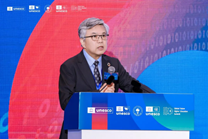
Figure 1 Keynote speech at the Global Future
Higher Education Summit (Shenzhen, June 6, 2026)
(Photo: WFEO Engineering
Capacity Building for Africa Programme (ECBAP) )
|
1 A New Era
Intertwined with The Dual Transformations of Digital Intelligence and
Sustainable Development, And the Role of Education
Today,
the wave of digital transformation is surging, followed closely by intelligent
transformation. However, such evolution does not represent the full picture of
the era[1]. There exists another far more fundamental transformation
bearing on humanity’s shared future: the shift toward sustainable development.
More than two-thirds of the timeline for the UN 2030 Agenda for Sustainable
Development has elapsed, yet only around one-third of its targets are on track[2,3].
Crises including climate change, biodiversity loss, environmental degradation
and public health emergencies have not abated; instead, they have grown more
acute and intertwined in intricate ways. Against this backdrop, harnessing
scientific and technological innovation as a critical lever to accelerate the
achievements of the Sustainable Development Goals (SDGs) has become a shared
responsibility of all humankind. Meanwhile, the rapid advancement of digital
intelligence, as UN Secretary-General António Guterres has noted, brings
renewed hope for advancing the SDGs.
|

Figure 2 Education must cultivate the talent needed
for the dual transformations of digital and sustainable development
|
From
this perspective, we are living in an era marked by the intertwining of the
dual transformations of digital intelligence and sustainable development. These
two transformations are not parallel tracks moving independently; instead, they
share a relationship of goal and pathway. Sustainable development sets the
ultimate direction for all transformations, while digital intelligence serves
as both the pathway and accelerator to deliver such goals[4].
Neither the digital intelligence nor the sustainable development transition can
advance automatically. Humans are both the actors driving these changes and the
ultimate beneficiaries they serve. Hence, the critical question is whether
education can cultivate a new generation of talent capable of driving and adapting
to this dual transformation. This requires higher education itself to undergo
an internal transformation integrating digital intelligence and green
transitions (namely digital intelligence and sustainable development). This is
the context of our times, our educational mission, and our inescapable
responsibility: education must prepare the talent needed for this dual
transformation (Figure 2).
2 Challenges
Facing the Transformation of Higher Education
Against
the historical backdrop of an era intertwined with the dual transformations of
digital intelligence and sustainable development, higher education confronts
severe multifaceted challenges in fulfilling its core functions, which can be
examined from at least the following four dimensions.
2.1 Disciplinary Silos
and Fragmented Knowledge in Higher Education
The
practical challenges we face, such as carbon neutrality and smart cities, are
complex systemic challenges issues that demand interdisciplinary collaboration
to resolve. Nevertheless, university disciplines operate in isolation. The
current academic framework features overly fragmented majors with rigid divides
between fields. Worse still, strict disciplinary boundaries confine students
within narrow single-subject scopes, leaving them without integrated
interdisciplinary thinking and competencies.
This structure fails to meet the demands
of digital intelligence and green transitions. Real-world issues including
carbon neutrality, smart cities, biodiversity conservation and environmental
governance are all complex systemic projects that cannot be tackled
independently by one or a handful of disciplines[5]. The siloed
disciplinary model prevalent across global universities, shaped during the
industrial age, not only hinders solutions to intricate real-world problems but
also restricts students to narrow academic spheres. Equipping students to break
free from such constraints and build capacities for interdisciplinary
communication and collaboration stands as the first major challenge.
2.2 Lack of Green
Concepts and Content in Higher Education Curricula
Compared
with the urgency of the sustainable development agenda, current teaching
programs still overemphasize technological efficiency and economic indicators,
while paying insufficient attention to environmental impact and the social
responsibility of sustainable development[6,7]. If green
transformation content cannot be strengthened in the short term, today’s
digital intelligent economy may not move toward a green economy; instead, it
risks sliding toward a grey or even black economy, accelerating the crisis of
unsustainable development.
2.3 Higher Education
Assessment Systems Prioritize Memorization and Computational Skills
In
terms of the assessment system, higher education still places excessive
emphasis on knowledge memorization and computational skills, precisely the two
areas where intelligent machines excel[8,9]. An educational model
that treats students’ minds merely as storage devices and calculators risks
making their skills increasingly replaceable by rapidly advancing artificial
intelligence[10]. Humanity’s true strengths lie in values,
creativity, empathy, and emotional experience. How to shift the focus of
education toward these uniquely human strengths, while simultaneously
harnessing and making good use of machines’ capabilities, constitutes the third
major challenge that higher education must urgently address.
2.4 Disconnection
Between Higher Education Processes and the Realities of Economic and Social
Development
In
terms of the educational process, there remains a significant disconnect
between current education and the actual functioning of the economy and
society. Despite years of repeated emphasis by various countries and UN
organizations on the closer integration between higher education and industry,
many universities remain in their “ivory towers”. Practical teaching is
marginalized, and industry mentors and industry training are merely external
add-ons to the education system, often treated as extra attachments to the
traditional educational model rather than core components. Industry mentors and
practical training have yet to become fully integrated into the heart of the
education system. How to truly break down barriers, achieve deep integration,
and build an open innovation ecosystem and a completely new system of
industry-education integration, rather than simply adding industry internships
or external mentors, constitutes the fourth challenge.
The above four
dimensions, disciplinary structure, teaching content, assessment priorities,
and educational process, all demonstrate that the challenges are comprehensive
and systemic in nature, rather than localized or patchwork issues. This
indicates that the required transformation cannot be achieved through piecemeal
fixes, but must be a fundamental, systemic reform.
3 Opportunities
for the Transformation of Higher Education
The
comprehensive, systematic and severe challenges confronting higher education
also unlock new opportunities for reflection and strategic choice, enabling the
higher education system to pursue all-round transformation spanning strategic
planning, concrete implementation, senior administration, and teacher-student
interaction.
3.1 Formulating
Strategies for Coordinated Digital intelligence and Green Transitions
The
top priority of higher education transformation lies in strategic adjustment. A
pivotal opportunity for such adjustment is to formulate strategies and
top-level designs for the coordinated digital intelligence and green
transitions at national, regional and institutional levels. This strategy needs
to achieve two integrations: first, integrating the internal logic of digital
intelligent advancement and green development; second, aligning the strategy
with local and institutional realities.
Digital
intelligence empowers education to boost its efficiency. Meanwhile, education
guides digital intelligence transformation onto a sound-track, moving toward
green development, serving humanity, and promoting sustainable development.
This entails both “empowering education with digital intelligence” and
“educating for digital intelligence transformation”, using human values,
emotions, and creativity to safeguard the correct course of digital intelligent
development (Figure 3).
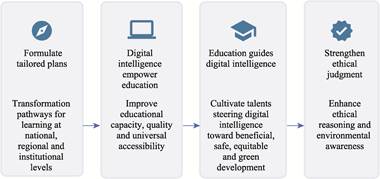
Figure 3 Core contents of top-level strategic
design for coordinated digital intelligence and green transformation in higher
education institutions
3.2 Breaking Down
Barriers and Implementing Systematic Integration of Industry and Education
Breaking
down barriers and implementing systematic integration of industry and education
is the most difficult challenge in achieving higher education transformation.
It requires not only breaking down the barriers between disciplines and
specialties, but also eliminating the boundaries between universities and
industries, so as to build an open and interconnected learning ecosystem that
enables students to engage with industry practice at an early stage. At the
same time, the concept of lifelong learning demands that we also remove
boundaries in the temporal dimension. Achieving this goal requires profound
reforms in faculty appointment systems, curriculum redesign, and student
assessment methods, forming a systemic synergy (Figure 4).
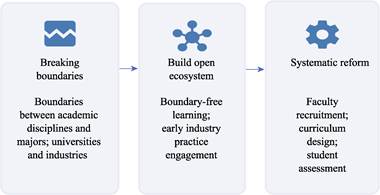
Figure 4 Core contents of higher education
initiatives: breaking boundaries,
open ecosystem and systematic reform
3.3 Consolidating the
Foundational and Overarching Strategic Role of STEM Education
We
must strengthen the foundational and overarching strategic role of Science,
Technology, Engineering and Mathematics (STEM) education amid the overall
educational transformation. STEM education is not a simple combination of four
separate subjects. Instead, it is an educational model built around real-world
challenges, especially practical issues related to sustainable development,
delivered via interdisciplinary teaching and centered on hands-on
problem-solving[11]. This model can serve as an effective starting
point to advance the digital intelligence and green transformation of education
itself.
3.4 Strengthening
Cross-Institutional and Cross-Border Cooperation
A
significant opportunity for higher education institutions during the digital
intelligence and green transformation lies in strengthening cross-institutional
and international cooperation. Such cooperation will help higher education find
the right direction, avoid detours, learn from each other’s strengths, and have
the opportunity to play a central and leading role on the frontiers of
innovation during its successful transformation in the new era. This
cooperation goes beyond merely exchanging educational experiences and sharing
educational resources between institutions and countries; more importantly, it
involves jointly developing a standards system that integrates the SDGs and the
coordinated digital intelligence and green transformation into teaching content
and educational processes, thereby promoting the overall green and digital
intelligent transformation of global higher education.
4 WFEO’s
Engineering Capacity Building for Africa: A Practical Example
As
Chair of the WFEO Special Task Force on the Engineering Capacity Building for
Africa Programme (ECBAP), I led the launch of this initiative. This programme
has been officially endorsed as a Programme of the United Nations International
Decade of Sciences for Sustainable Development (IDSSD)[12]. Under
this programme, several engineering capacity building centers will be
established across Africa. It aims to cultivate cohorts of engineers equipped
to contribute to digital intelligence and sustainable development across
Africa. A full suite of training courses, practical tools, and an ecosystem for
exchanging field experience will be provided to strengthen their expertise,
ultimately advancing the successful digital intelligence and green sustainable
transitions across the African continent[13] (Figure 5).
5 Conclusion
To
sum up, the digital intelligence and green (i.e., sustainable development)
transformation of higher education is by no means an optional task, but a
strategic proposition that all modern educators must address. The challenges
confronting higher education are comprehensive and systemic, requiring profound
and coordinated reform rather than isolated or incremental adjustments. This
transformation requires both strategic foresight and meticulous, coordinated
implementation. Entrusted to us by this remarkable era, this great undertaking
demands collective collaboration. Only by fully leveraging the power of digital
intelligent technologies can we jointly cultivate outstanding future-oriented
talents for global sustainable development.
|
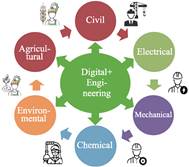
Figure
5 Core concept of the ECBAP
|
References
[1]
Schwab, K. The Fourth
Industrial Revolution [M]. Geneva: World Economic Forum, 2016.
[2]
United Nations. Transforming
our world: the 2030 agenda for sustainable development [EB/OL]. 2015.
https://sdgs.un.org/publications/transforming-our-world-2030-agenda-sustainable-development-17981.
[3]
United Nations. Global
sustainable development report 2023: times of crisis, times of change [R/OL].
2023.
https://sdgs.un.org/sites/default/files/2023-09/FINAL%20GSDR%202023-Digital%20-110923_1.pdf.
[4]
United Nations. Global digital
compact [EB/OL]. 2024. https://www.un.org/digital-emerging-technologies/ global-digital-compact.
[5]
UNESCO.
Engineering for Sustainable Development: Delivering on the Sustainable
Development Goals [M]. Paris: UNESCO, 2021.
[6]
UNESCO. Education for
Sustainable Development: A Roadmap [M/OL]. Paris: UNESCO, 2020. https:// unesdoc.unesco.org/ark:/48223/pf0000374802.locale=en.
[7]
UNESCO. Education for
sustainable development for 2030 toolbox [R/OL]. 2020. https://www.unesco.org/ en/sustainable-development/education/toolbox.
[8]
UNESCO. Artificial intelligence
in education [EB/OL]. 2023. https://www.unesco.org/en/digital-education/ artificial-intelligence.
[9]
UNESCO. Guidance for generative
AI in education and research [R/OL]. 2023. https://www.unesco.org/en/ articles/guidance-generative-ai-education-and-research.
[10]
World Economic Forum. The
future of jobs report 2025 [R/OL]. 2025. https://www.weforum.org/publications/the-future-of-jobs-report-2025/?gad_source=1&gad_campaignid=22228224717&gbraid=0AAAAAoVy5F5tT-zWqQS_BVfk08qmde2MV&gclid=EAIaIQobChMI6cj1sszvlQMVvyd7Bx0AiwEJEAAYASAAEgIZZPD_BwE.
[11]
International Engineering Alliance. Graduate attributes and professional
competencies [R/OL]. 2021. https:// www.internationalengineeringalliance.org/assets/Uploads/IEA-Graduate-Attributes-and-Professional-Competencies-2021.1-Sept-2021.pdf.
[12]
World Federation of Engineering
Organizations. Engineering Capacity Building for Africa Programme (ECBAP)
[EB/OL]. 2025.
https://www.un-sciences-decade.org/en/endorsed-activities/engineering-capacity-
building-africa-programme-ecbap.
[13]
World Federation of Engineering
Organizations. Report on the launching of the Engineering Capacity Building for
Africa Programme [R/OL]. 2025.
https://www.wfeo.org/report-on-the-launching-of-the- engineering-capacity-building-for-africa-programme/.