Development and Impact of the GIES Case on Jinuo Youle Tea
WANG Zhenbo1,2* JI Jiashu1,2 KANG Lei1 LIU Huaixin3 LI Jiaxin1
WANG Shenglin1 YU Kannen4
ZENG Song5 TIAN Qian6 YANG Fengbo7
BAI Siqin8 JIE Bulu9 JIANG Xitian10 LIU Bingzhi1
1. Institute of Geographic Sciences and Natural Resources
Research, Chinese Academy of Sciences, Beijing 100010, China; 2. College of
Resources and Environment, University of Chinese Academy of Sciences, Beijing
100049, China; 3. Hubei University of Technology, Wuhan 430068, China; 4.
Ethnic and Religious Affairs Bureau of Xishuangbanna Dai Autonomous Prefecture,
Xishuangbanna 666102, China; 5. Jinuoshan Jinuo Ethnic Township People's
Government, Jinghong City, Xishuangbanna 666107, China; 6. Yunnan Minzu University,
Kunming 650504, China; 7. China Science Publishing & Media Ltd., Beijing
100717, China; 8. Xishuangbanna Youle Ren Lachala Shou Agricultural
Professional Cooperative, Xishuangbanna 666107, China; 9. Jinghong Amaozuomi
Primary Tea Processing Factory, Xishuangbanna 666107, China; 10. Beijing Liang
Mingyu Glass Art Design Co., Ltd., Beijing 100055, China
Abstract: Jinuo Youle Tea is produced in Jinuoshan
Township, Jinghong City, Xishuangbanna Dai Autonomous Prefecture, Yunnan
Province—one of the core areas of Pu’er tea’s ancient six famous tea mountains.
The region features an outstanding ecosystem with a forest coverage rate of
94.01%, ancient tea tree resources aged 200–300 years, and distinctive Jinuo
ethnic tea culture. However, for a long time it has faced a development
dilemma: high-quality tea without high prices, and difficulty in turning
resources into market value. In 2024, with support from the “Geographical
Indications Environment & Sustainability” (GIES) science-and-technology
service team of the Institute of Geographic Sciences and Natural Resources
Research, Chinese Academy of Sciences, Jinuo Youle Tea was included in a case
system of GIES. Through scientific empowerment, brand building, and industrial integration, it achieved a leap from a
traditional agricultural product to an internationally awarded product. In
2025, Jinuo Youle Tea won the Gold Award at the 15th International Famous Tea
Competition, was showcased at the exhibition celebrating the 80th Anniversary
of FAO, and became a knowledge product under the “Better Environment” pillar of
the FAO “One Country One Priority Product” Initiative. This paper
systematically reviews the development trajectory, key actions, and overall
benefits of the Jinuo Youle Tea GIES case, analyzes how GIES supports
ecological conservation of ancient tea gardens, quality upgrading of the tea
industry, and rural revitalization, and summarizes lessons and insights, with
the aim of providing practical reference for realizing the value of ecological
products in tea-producing regions worldwide.
Keywords: GIES; Jinuo Youle Tea; ancient tea gardens; rural revitalization;
OCOP; international gold award
DOI: https://doi.org/10.3974/geodp.2026.01.05
1 Introduction
Against the backdrop of global agricultural sustainability
and rural transformation, how to convert the advantages of local ecological
resources into the market competitiveness of special agricultural products—to
achieve a win-win outcome between ecological conservation and economic
development—has become a key concern for both scholars and policymakers.
Xishuangbanna Prefecture has a forest coverage rate of 74.05%, and its plant
and animal species account for about one quarter and one sixth of China’s total,
respectively, making it a true “gene bank of biodiversity”. Such unique natural
resources and endowments are Xishuangbanna’s most valuable assets, most
prominent strengths, and most recognizable ecological brand.
The
Geographical Indications Environment & Sustainability (GIES) concept, an
innovative vehicle for integrating local ecological resources, place-based
specialty industries, and cultural heritage, was first proposed by the
Institute of Geographic Sciences and Natural Resources Research, Chinese
Academy of Sciences (IGSNRR, CAS) in 2021, together with a ten-year action plan[1]. Guided by open science, GIES
brings together multidisciplinary approaches and multi-stakeholder
participation to systematically study the natural environment, quality
attributes, historical culture, and governance/management of high-quality
geographical products. It further develops a full-chain support
system—“scientific data+science communication+brand empowerment+industrial
upgrading”—and provides a replicable and scalable methodology for transforming
ecological value into product value.
Jinuo
Mountain is in the northeastern part of Jinghong City, Xishuangbanna Dai
Autonomous Prefecture, Yunnan Province. Situated in the hilly area of the
Wuliang Mountain offshoots of the Hengduan Mountain range, it is one of the
ancient six famous tea mountains of Pu’er tea[2]. The area has long
been home to the Jinuo people, China’s 56th officially recognized ethnic group.
With a tea-growing and tea-making history of over a thousand years, it contains
more than 266.67 ha of ancient tea gardens, with many tea trees aged 200–300
years[3]. Youle Tea (also known as Jinuo Tea) was once a tribute tea
during the Qing Dynasty, when a dedicated local official (“Youle Tongzhi”) was
appointed to manage tribute-tea procurement[4,5]. However, due to
its remote mountainous location, low brand recognition, and information
asymmetry in markets, Jinuo Youle Tea remained trapped for years in the dilemma
of good tea without a good price. Before 2021, the average local tea price was
only 20–30 CNY per kg; although ancient-tree tea had distinctive quality, it
was difficult to generate a price premium, leaving tea farmers in the
predicament of higher output without higher income. Against the dual backdrop
of the profoundly advancing rural revitalization strategy and the exponential
evolution and real-world deployment of AI technologies, geographical indication
(GI) products, which carry unique natural endowments and historical
accumulations, are encountering a crucial strategic opportunity for digital and
intelligent brand transformation. Currently, however, the brand construction of
GI products faces widespread pain points: vague brand positioning, fierce
homogenization, difficult quality management, extensive communication methods,
inadequate digital capabilities, and underutilized cultural assets. Moreover,
the sector is hindered by the systemic issue of emphasizing application while
neglecting operation. Driven by low technology penetration and entrenched data
silos, the current paradigm fails to align with the digital era’s imperative
for refined, targeted, and long-term brand development.
In
February 2024, researchers including Dr. LIU Chuang and Dr. WANG Zhenbo from
IGSNRR, CAS led a GIES science-and-technology service team to conduct field
investigations in Jinuoshan Township. Working with the local government, tea
farmers, and cooperatives, they launched the “GIES Case on Ancient Tea Gardens
of Jinuo Youle Tea in Tropical Mountainous Regions”. Subsequently, with
Associate Researcher KANG Lei as the chief scientist, a cross-disciplinary team
was formed to carry out systematic surveys and research on the natural
ecological environment, soil and water quality, tea quality, history and
culture, and management practices of the Youle ancient tea gardens, producing a
complete dataset[6] and a set of case outputs[7]. In
September 2025, Jinuo Youle Tea stood out at the 15th International Famous Tea
Competition and won the Gold Award[8]. In October, it was showcased
as a representative China’s high-quality geographical product at the FAO’s
first “From Seeds to Goods” global exhibition. These breakthroughs mark a
transformation of Jinuo Youle Tea from “hidden in deep mountains and unknown to
the world” into a “golden leaf” reaching global markets.
This
paper systematically reviews the development trajectory, key measures, and
integrated benefits of the Jinuo Youle Tea GIES case. It explores pathways
through which science and technology can support ecological conservation of
ancient tea gardens, quality upgrading of the tea industry, and rural
revitalization, and summarizes lessons and insights to provide theoretical
references and practical implications for ecological value realization and
rural revitalization in ethnic minority regions.
2 Geographical
Diversity of Jinuo Mountain and the Ancient Tea Garden Ecosystem
2.1 Natural
Ecological Foundation of Jinuo Mountain
Jinuoshan Township is located in the northeastern part of
Jinghong City, Yunnan Province. It is the only Jinuo ethnic township in China,
situated in the hilly area of the Wuliang Mountain range, an extension of the
Hengduan Mountains. The altitude ranges from 575 to 1,691 m, with areas above
1,000 m accounting for 47.61% of the total area, and over 75% of the land
having a slope of less than 25°. The combination of medium-to-high altitude and
gentle topography provides suitable geomorphological conditions for tea plant
cultivation. The climate is classified as tropical monsoon, with an average
annual temperature of 18–22 °C, annual rainfall of approximately 1,400 mm, and
average annual sunshine duration of 1,966.2 h. High cloud frequency and
negative oxygen ion concentrations exceeding 30,000 ions/cm3
facilitate the accumulation of amino acids and the optimization of catechin
composition in tea plants, thereby reducing the bitterness and astringency of
tea infusions.
The
soil is predominantly acidic red soil (lateritic red soil), with a pH ranging
from 4.3 to 5.2. The mean organic matter content is 14.79 g/kg, mean available
potassium is 35.36 mg/kg, and mean total nitrogen is 0.088%. The mean cation
exchange capacity (CEC) is 12.23 cmol/kg, indicating good nutrient retention
capacity. Heavy metal and pesticide residue levels are below the national risk
screening values, with no pesticide residues detected, demonstrating excellent
soil environmental quality. Vegetation coverage is high, with the forest
coverage rate in Youle Village reaching 94.01% and NDVI values ranging from
0.83 to 0.86. Ancient tea trees form stable symbiotic relationships with
Dendrobium orchids and wild bee colonies, reflecting rich biodiversity.
Regarding
the water environment, the rivers in the township belong to the Lancang River
basin[9]. Water quality complies with the national standard for
irrigation water quality (GB5084—2021), with key indicators such as total
mercury, hexavalent chromium, cadmium, and lead all below detection limits. Tea
tree growth relies primarily on natural precipitation and fog. In summary,
Jinuoshan Township exhibits excellent coordination and environmental background
quality in terms of water, soil, climate, and vegetation, providing a solid
natural foundation for the ecological production of high-quality ancient tea
trees.
2.2
Resource Endowments of the Ancient Tea Gardens
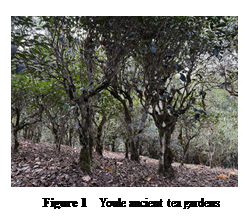
The Youle ancient tea gardens are the best-preserved and
largest ancient tea garden system in Jinuo Mountain, with the core area located
in Youle Village (Longpa Zhai, now Yanuo Village). The total tea garden area is
183.01 ha, including 120 ha of ancient tea gardens. Most ancient tea trees have
a basal girth of 50–120 cm, a trunk circumference (at breast height) of 30–80
cm, a height of 2–3 m, and a crown diameter of 1.5–3 m. Most trees are 200–300
years old[10], with a density of about 1,500 trees per ha. The main
variety is the Youle large-leaf type, together with naturally cross-pollinated
landrace populations. Morphological types include long-leaf and elliptic-leaf
forms, and two bud-stem color types (red-stem with green buds; green-stem with
green buds). The leaves are thick and rich in amino acids and other nutrients,
producing a mellow taste and distinctive aroma. This combination of scarcity,
uniqueness, and high quality makes Jinuo Youle Tea a premium product among
Pu’er teas (Figure 1).
 2.3 Historical and Cultural Heritage
The Jinuo people have a long history of tea cultivation,
processing, and trade. Jinuo Mountain was historically known as Youle Mountain
and is regarded as the first among the ancient six famous tea mountains of
Pu’er tea. In the 7th year of the Yongzheng reign of the Qing Dynasty (1729),
the Qing government established the office of “Youle Tongzhi”, stationed 500
soldiers, and tasked the administration with maintaining social order across
the six tea mountains as well as managing tribute-tea procurement and tea
trade. By the Daoguang period, Youle Tea had already been exported to India and
Europe. The Jinuo have developed distinctive tea culture practices: (1)
liangban cha (cold-mixed tea), in which fresh leaves are pounded and mixed with
chili, salt, and other seasonings—preserving an early human way of using tea;
(2) huoshao cha (fire-roasted tea), where fresh tea wrapped in wild leaves is
roasted and then boiled for drinking; and (3) deep integration of tea with
festivals and rituals. Intangible cultural heritage such as the Jinuo drum
dance also reflects the intergenerational transmission of tea culture.
3 Development
Trajectory of the GIES Case on Jinuo Youle Tea
3.1
Historical Constraints: High-Quality Tea Without a Good Price, and Resources
Difficult to Monetize
Despite its outstanding ecological resources, long-standing
cultural heritage, and distinctive tea quality, the Jinuo Youle Tea industry
faced multiple constraints before the launch of the GIES case.
First, ecological advantages were not converted into
market competitiveness. Tea farmers lacked a scientific understanding of the
ecological value of ancient tea gardens. Tea sales relied mainly on traditional
channels and verbal descriptions, with little scientific evidence to support
quality claims. As a result, it was difficult to build differentiated
competitiveness, and even ancient-tree tea with unique qualities struggled to
obtain a corresponding price premium.
Second,
brand building lagged behind, and market recognition was fragmented and
confusing. Although “Youle Tea” had some level of visibility, it lacked unified
brand governance and market standards. Problems such as adulteration and
counterfeiting were frequent. Plantation tea was sometimes falsely marketed as
ancient-tree tea, seriously undermining brand credibility. Consumers found it
difficult to distinguish authenticity, and genuinely high-quality products
struggled to gain market recognition.
Third,
management was dispersed and the value chain was short. Production was
dominated by small household operations, with inconsistent standards and weak
quality control. Processing was largely limited to primary processing, with a
single product form and little deep processing or professional brand operation.
Most tea was sold externally as raw material, resulting in low added value.
Fourth, pressure on ancient tea tree conservation
increased. As the Pu’er tea market heated up, some farmers pursued short-term
gains, and practices such as over-harvesting and improper management occurred
from time to time, threatening the health of ancient tea trees.
As
the Township Head, ZENG Song, put it plainly: “In the past, we only knew our
tea was good, but we couldn’t explain why it was good, and we couldn’t sell it
at a good price”. This simple statement captures the core bottleneck in the
development of Jinuo Youle Tea.
3.2
GIES Team Works on the Jinuo Mountain
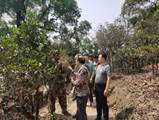
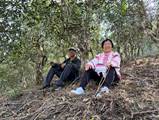
In February 2024, as spring tea buds began to emerge, the
GIES science-and-technology service team from IGSNRR, CAS, visited Jinuoshan
Township. Led by Professor LIU Chuang—an expert of the “Innovative China”
thinks tank and the chief scientist of GIES—and Professor WANG Zhenbo, head of
the GIES planning group, the team conducted field investigations in the Youle
ancient tea gardens. Together with local tea farmers, cooperatives, and
government staff, they discussed pathways for conserving ancient tea gardens
and promoting sustainable development (Figure 2).
Figure
2 Field
visit by the GIES team to the Youle ancient tea gardens
This
investigation was a turning point. What the GIES team brought was not only
scientific methods, but also a clear idea: “let data speak and let science
empower”. The team explained to tea farmers that the unique value of Jinuo
Youle Tea must be grounded in scientific data that are quantifiable, traceable,
and verifiable. Only by validating ecological advantages through scientific
testing—and building quality trust through evidence—could the goal of “high
quality, high price” truly be achieved.
In
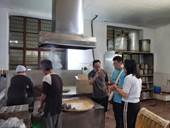
May 2024, an interdisciplinary team was formally established, with Associate
Researcher KANG Lei serving as the chief scientist. The team brought together
14 participating units, including the local government, research institutes,
universities, and tea farmer cooperatives. The Ancient tea gardens of Jinuo
Youle Tea in tropical mountainous regions then entered the substantive
implementation stage (Figure 3).
3.3
Systematic Research to Identify the Core Value
Guided by the principles of open science, the GIES team
carried out a multi-dimensional and systematic study of the Youle ancient tea
gardens, covering the ecological environment, quality attributes, historical
culture, and governance/management.
For
the ecological environment dimension, the team used 30-m DEM data to analyze
topography and landforms; collected stratified samples from 9 soil profiles to
test physicochemical properties and heavy metal indicators; established
water-quality monitoring sites and tested 16
parameters; and, based on Sentinel-2 satellite imagery, produced NDVI maps
and land-use classifications to comprehensively characterize the ecological
baseline of the ancient tea gardens. For quality attributes, the team
commissioned the China National Research Institute of Food & Fermentation
Industries (National Quality Supervision and Inspection Center for Subsidiary
Foodstuffs) to conduct laboratory testing in line with EU standards. This
included both key physicochemical indicators (e.g., moisture, total ash, water
extract, tea polyphenols, caffeine, and 16 amino acids) and a full set of
232safety-related indicators. For historical and cultural work, the team
systematically reviewed the Jinuo people’s history of tea cultivation and processing,
traced the origins of Youle tribute tea, and
documented local tea traditions. It also explored the contemporary value of
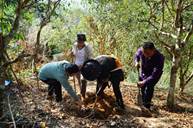
Figure
3 GIES
team field survey for the Jinuo Youle Tea case
traditional practices such as liangban cha (cold-mixed tea)
and huoshao cha (fire-roasted tea). For governance and management, the team
investigated mechanisms for ancient tea garden conservation, production
organization models, and market sales channels, and further analyzed key
constraints and pathways for upgrading the industry.
In
2025, the team published the paper “GIES case study on ancient tea gardens of
Jinuo Youle Tea in tropical mountainous regions” in Journal of Global Change
Data & Discovery and released the accompanying case dataset in Digital
Journal of Global Change Data Repository. The dataset includes 4 major
categories of data: (1) case-area boundary; (2) physical geography and
ecological environment; (3) product characteristics; and (4) historical culture
and socio-economic development. It consists of 109 data files with a total size
of 163 MB, and is openly shared for global access (Figure 4).
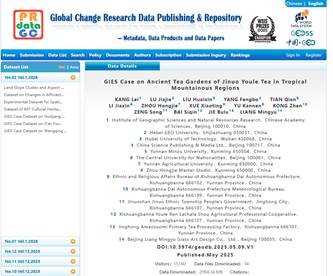
Figure 4 Case dataset
3.4
Scientific Evidence to Support Value Recognition
To reveal the core quality and intrinsic value of Jinuo
Youle Tea in a comprehensive, scientific,
and objective manner, the GIES team carried out systematic testing and
integrated evaluation from 4 dimensions—physicochemical composition, food
safety, sensory characteristics, and ecological environment. Using rigorous
data and professional standards, the team produced a full scientific “profile”
of both the Youle ancient tea gardens and the tea quality.
The
results strongly show the outstanding quality of Jinuo Youle Tea. In terms of
physicochemical indicators, performance was exceptional: the water extract
reached 46.3%, well above the requirement of ≥35.0% for Pu’er raw tea in GB/T
22111—2008. Tea polyphenols measured 29.8%, and 16 amino acids were detected at
relatively high levels. This combination—high water extract together with
abundant amino acids—provides key material support for the tea liquor’s
signature traits, including a rich and full body, lingering sweetness, and a
refreshing aftertaste.
Food-safety
indicators were equally robust. In accordance with EU standards, the team
tested 232 safety indicators (including pesticide residues and heavy metals),
and all results were not detected. The product also complies with national
standards GB 2763—2021 and GB 2760—2024, providing strong assurance for both
product safety and access to international markets.
In
sensory evaluation, Jinuo Youle Tea presents a clean and pure aroma with
evident floral notes; the taste is mellow and full-bodied, with long-lasting
sweetness and a lively, smooth mouthfeel. During storage and aging, the aroma
can gradually shift from a fresh fragrance to a sweeter fragrance with
honey-floral nuances, while the taste continues to evolve from mellow toward a
sweeter, smoother, and more silky profile. Compared with small-tree tea,
ancient-tree tea shows clearer advantages in aroma complexity, mouthfeel
thickness, and overall drinking experience.
Meanwhile,
multi-dimensional habitat data—covering soil, water quality, climate, and
related factors—confirm that the Youle ancient tea gardens possess a clean,
fertile, self-maintaining, and stable ecosystem, providing a naturally superior
environment for high-quality raw material production. Together, these
scientific findings transform the long-held, word-of-mouth claims of “good tea”
into evidence that is quantifiable, verifiable, and traceable—laying a solid
and authoritative foundation for quality certification, value upgrading, and
brand development of Jinuo Youle Tea.
3.5
International Gold Award and Global Visibility
|
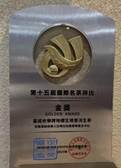
Figure
5 Jinuo Youle Tea receiving an
international Gold Award
|
Scientific empowerment enabled a leap in the brand value of
Jinuo Youle Tea, allowing it to move from a “hidden gem” in remote mountains to
a high-quality tea product with global influence. In September 2025, at the
15th International Famous Tea Competition held in Qingdao, China, a total of 463 tea products from
multiple countries and regions—including Japan, South Korea, Singapore, Malaysia, Russia, Italy, Germany,
Sri Lanka, India, and China—competed on the same stage. The competition adopted a
fully anonymous blind-tasting process. Experts conducted strict assessments
across 5 dimensions: appearance, aroma, taste, liquor color, and infused
leaves.
The
“Jinuo Youle” GIES Pu’er Tea (raw tea), produced by Xishuangbanna
Youle Ren Lachala Shou Agricultural Professional Cooperative, stood out for its solid quality and won the
Gold Award. It was also the only winning tea product in this competition
supported by high-standard, full-process scientific data (Figure 5).
In
October 2025, Jinuo Youle Tea, as a representative of China’s high-quality
geographical indication products, was showcased at the first “From Seeds to
Goods” global exhibition held at Food and Agriculture Organization of the
United Nations headquarters in Rome. The exhibition drew strong attention and
positive recognition from distinguished guests, including Director-General QU
Dongyu and Letsie III of Lesotho. Meanwhile, the Jinuo Youle Tea GIES case was
successfully selected for the Asia-Pacific regional knowledge-sharing platform
under the FAO “One Country One Priority Product” Initiative, and was promoted
globally as one of the first knowledge products under the “Better Environment”
pillar. In less than 2 years, Jinuo Youle Tea evolved from a locally known
mountain tea into a benchmark product—winning an international gold award and
gaining visibility on the UN stage—achieving a step change in both brand
influence and market value (Figure 6,7).
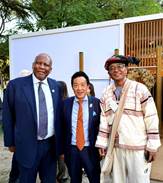
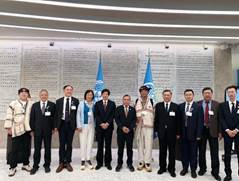
Figure 6 FAO Director-General
QU Figure
7 FAO officials and HAN Jun
visiting the Jinuo
Dongyu and Letsie
III visiting the Jinuo Jinuo Youle Tea
exhibit
Youle Tea exhibit ©FAO/Giulio
Napolitano
4 Major
Impacts Promoted by the GIES Case on Jinuo Youle Tea
4.1
Technology Empowerment for the Full-Chain Supporting System
Driven by “new quality productive forces” as the core
engine, the GIES team focused on the sustainable development of ancient tea
gardens and the high-quality upgrading of the tea industry. It innovatively
built an integrated, full-chain technical support system that covers ecological
conservation, production and processing, quality control, data sharing, and
brand communication. Through digital, standardized, and science-based
approaches, the system provides solid technical support for the high-quality
development of the Jinuo Youle Tea industry.
|
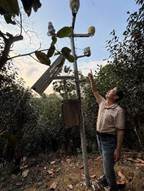
Figure
8 GIES
Ground station for the ancient tea gardens
|
In
terms of ecological environment monitoring, the team relied on the Global
Change Scientific Research Data Publishing & Repository to establish a
comprehensive habitat monitoring network for Jinuo Youle Tea. It combined
multiple methods, including satellite remote sensing to retrieve vegetation
cover and NDVI; stratified soil-profile sampling to test physicochemical
properties and heavy metal indicators; and the on-site deployment of a
self-developed near-real-time geo-positioned observation station for high-quality
geographical product habitats. The station enables near-real-time monitoring of
a wide range of indicators, such as local meteorology, air quality, soil
parameters, vegetation growth, phenology, vegetation productivity, pests and
diseases, and oxygen-rich (negative ion) conditions. By integrating
multi-source data, the team developed a digital ecological “portrait” of the
ancient tea gardens, enabling both precise characterization of the ecological
baseline and dynamic, continuous monitoring (Figure 8).
|
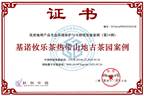
Figure 9
Certificate for the Jinuo Youle Tea case
|
In
terms of quality testing and analysis, the team commissioned nationally
recognized, authoritative testing institutions to conduct full-coverage testing
of both physicochemical and safety indicators. Among these, 232 safety
indicators were tested strictly in accordance with EU standards, with all
results not detected, while also meeting China’s relevant food safety
standards—thereby establishing a robust safety baseline for entry into
international markets. Meanwhile, data on key physicochemical indicators—such
as water extract, tea polyphenols, and amino acids—provide quantifiable and
verifiable scientific evidence for the flavor quality and nutritional
advantages of Jinuo Youle Tea.
In
terms of open data sharing, the team strictly followed open-science principles
and formally published the complete case dataset, making it freely available
for download to research institutions and the public worldwide. Through a
transparent data-sharing mechanism, scientific trust is translated into
consumer trust, effectively strengthening brand credibility and international
recognition (Figure 9).
4.2
Brand Building to Enable International Communication
To address key challenges—low brand awareness, frequent
market disorder, and insufficient product identifiability—relevant stakeholders
adopted targeted strategies and established a three-tier brand development
matrix: regional public brand + enterprise brand + product brand. Through
systematic measures, they advanced brand creation, standardization, and
communication, thereby supporting the high-quality development of the tea
industry.
To
consolidate the foundations for branding, the Xishuangbanna
Youle Ren Lachala Shou Agricultural Professional Cooperative was established and successfully registered the
dedicated trademark “Jinuo Youle”. Led by the cooperative, an operational model
of unified production standards, unified quality control, and unified brand
authorization was implemented. This effectively broke the previous pattern of
fragmented, household-based operations and uncoordinated competition, and
promoted a transition from dispersed individual production toward scaled,
standardized, collective brand management—helping to restore market order at
the source and reduce destructive competition. On this basis, the brand system
was further enriched by cultivating distinctive proprietary tea brands—such as
“Xiaopuxi” and “Zebawei”—forming a new structure in which the regional public
brand strengthens overall image while differentiated brands expand market
reach.
In
terms of brand communication, the case innovated both pathways and formats to
continuously broaden influence. Since 2024, Jinuo Youle Tea has been showcased
at major domestic exhibitions such as the China
International Fair for Trade in Services and the GIES New Year Fair, using these platforms to present product quality and
cultural value, and steadily promote recognition in the domestic market. In
2025, international communication achieved a breakthrough: the tea not only won
a Gold Award at the 15th International Famous Tea Competition, but also
appeared as a representative Chinese premium tea product at the FAO global
exhibition in Rome, stepping onto the international stage and marking a key
leap in global visibility.
|
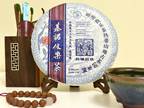
Figure
10 Trademark of the Jinuo Youle Tea brand
|
At
the same time, the case emphasized building brand trust through scientific
credibility. Core resources—research data from the GIES case, authoritative
testing reports, and expert endorsements—were deeply integrated into the entire
brand communication process. With dual support from “scientific data +
authoritative certification”, the case addressed a common challenge in the tea
industry: “good tea is hard to explain, and quality is difficult to quantify”.
In doing so, it effectively established consumer confidence in the quality of
Jinuo Youle Tea and laid a strong foundation for the brand’s long-term
development (Figure 10).
4.3
Promoting Intangible Cultural Heritage Inheritance and Integrating Culture with
Tourism
Jinuoshan Township has actively explored and leveraged the
distinctive tea-culture resources of the Jinuo people, closely linking cultural
narratives with geographical indication products. This deep binding of culture
and product has continuously increased the cultural added value of Jinuo Youle
Tea, making the brand more compelling and competitive.
In
terms of intangible cultural heritage (ICH) transmission, the Jinuo people have
preserved a set of distinctive traditional tea-making practices, including
liangban cha (cold-mixed tea) and huoshao cha (fire-roasted tea), as well as
tea-related cultural forms that carry collective memory—such as rituals
honoring the tea deity and ceremonies involving tea offerings to drums. Local
efforts have particularly relied on Master JIE Bulu as a key driving force. As a leading figure in
the inheritance of Jinuo tea-culture ICH, he has devoted decades to traditional
tea-making craftsmanship. He not only masters the essence of these ancient
techniques, but—supported by the cooperative—also engages actively in ICH
training and transmission. Through oral instruction, hands-on demonstration,
and on-site practice, he passes down both the skills and the cultural meanings
of traditional tea-making to younger generations, safeguarding the cultural
roots of the community and enabling the living continuation of Jinuo tea ICH across
generations.
In
terms of cultural value realization, the township has adopted a range of
measures to integrate tea culture with industry and cultural tourism, turning
the ICH craftsmanship represented by Master JIE Bulu into a core cultural
symbol of the brand. Building on the ancient tea tree resources and the
cultural heritage of the Jinuo people, the township has carefully developed
immersive experience programs—such as tea picking, tea making, and tea
tasting—with Master JIE Bulu providing on-site guidance. Visitors can wear
traditional Jinuo clothing and participate in the full process from fresh-leaf
picking to finished tea production under the master’s demonstration,
experiencing the craftsmanship behind ancient methods. They can also taste
Jinuo-style tea foods made by the master, such as cold-mixed tea and
tea-leaf-wrapped roasted snacks, thereby engaging with Jinuo tea culture in a
comprehensive way.
The
township has also strengthened its cultural “festival IP”. It has successfully
held five editions of the Youle Tribute Tea Cultural Festival, with dedicated
sessions for ICH demonstrations by Master JIE Bulu, alongside activities such
as tea competitions and tea-song/tea-dance performances. These events showcase
the essence of Jinuo tea culture in a concentrated form. At the same time, the
local area has officially designated and signposted the “Youle No. 1 Ancient
Tea Tree”, reinforcing cultural brand identifiers and enhancing reputation. In
addition, leveraging the influence of the Jinuo Drum Dance (listed in the first
batch of China’s national ICH), and using the Jinuo Mountain Village Scenic Area
as a platform, the township has organically combined ICH demonstrations,
tea-culture experiences, and rainforest ecological sightseeing. This has helped
build an integrated development model of “ICH + cultural tourism + tea
industry”, enabling visitors to experience the unique charm of Jinuo culture
and Youle ancient tea in an immersive way and further amplifying the brand’s
cultural value (Figure 11).
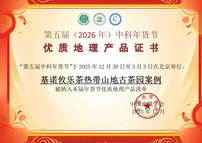
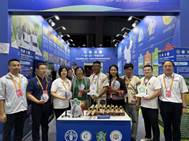
Figure
11 Jinuo
Youle Tea showcased at key events
4.4
Integrating Primary, Secondary, and Tertiary Industries to Unlock New Growth
Momentum
Building on the unique resources of the
Youle ancient tea trees and the area’s well-preserved natural landscape, Jinuoshan
Township seized the opportunity to establish a pilot zone for integrated
development across the primary, secondary, and tertiary sectors in the Youle
ancient tea mountain area. By breaking down sectoral boundaries, it promoted an
integrated “tea-culture-tourism” value chain and encouraged the tea industry to
shift from single-purpose production toward a diversified model combining production,
tourism, and cultural creativity, thereby injecting new vitality into the
industry and widening local income channels.
For the primary sector and secondary-sector upgrading,
the township promoted scaled, standardized, and quality-oriented development.
In 2024, it supported one local enterprise to be recognized as a
municipal-level leading enterprise, strengthening industry leadership. At the
same time, it renovated and upgraded 15 primary tea-processing facilities by
introducing advanced equipment, updating techniques, and optimizing processing
workflows. These efforts extended the production chain and increased value added
in processing. The township also advanced organic certification: 2 organic tea
gardens were established, with a certified area of more than 133.33 ha[3].
By applying strict organic cultivation standards, these initiatives improved
quality and safety and laid a foundation for premium positioning and branding.
For
deep integration of tea, culture, and tourism, the township took Yanuo ancient
tea mountain as a core demonstration area and improved supporting
infrastructure, including ecological boardwalks, rest pavilions, and viewing
platforms. It designed immersive eco-tea-garden routes so visitors can
experience both the natural landscape and the cultural heritage of the ancient
tea gardens. Building on this, it further developed diversified tourism
products based on Jinuo cultural heritage and rainforest resources, such as
rainforest hiking, tasting of local cuisine, and ethnic homestay experiences.
Together, these efforts formed a new eco-tourism model that combines leisure
sightseeing, tea-related experiences, and ethnic culture, enabling mutual
reinforcement between the tea industry and tourism.
As
tea-tourism integration deepened, the local “hiking economy” expanded rapidly.
The township has attracted 24 hiking-tourism companies and developed 22
differentiated rainforest hiking routes that balance ecological sightseeing and
outdoor experience. In 2024, the area received 370,000 hiking tourists, which
directly increased collective village income by 3.286 million CNY. Through job
creation and the sale of agricultural products, it also helped local farmers
increase income by more than 20 million CNY, translating ecological resources
into tangible livelihood gains.
In
the cultural and creative sector, the cooperative supported Baduo Village in
establishing a dedicated cultural-creative company. Drawing on Jinuo cultural
elements and the distinctive features of Youle ancient tea, it designed and
registered 2 exclusive IP characters, “Youyou” and “Lele”, and developed more
than 20 cultural products such as fridge magnets, folding fans, backpacks, and
tea gift boxes. This strengthened the link between tea culture and creative
products. Meanwhile, the township improved the rural environment by renovating
15 rural houses into ethnic-style homestays and revitalizing 50 idle courtyards
into landscaped household gardens[11]. These measures improved
living conditions while expanding tourism services, further consolidating the
integrated development pattern of “tea + tourism + cultural creativity”.
4.5
Building a Multi-Stakeholder Win-Win Mechanism
Based on local realities, Jinuoshan Township established a
“five-in-one” sustainable mechanism featuring government guidance, scientific
and technological support, enterprise leadership, household participation, and
brand empowerment. Through organizational innovation, stronger
village-enterprise cooperation, improved benefit-sharing arrangements, and
enhanced talent development, it addressed bottlenecks in stakeholder linkage
and enabled win-win outcomes among government, enterprises, village
collectives, and farming households, providing lasting momentum for
high-quality industrial development.
For
organizational innovation, the township built a full-chain collaboration system
of “enterprise + cooperative + farmers”, integrating 3 tea factories, 14
cooperatives, and 545 primary processing sites, and coordinating 1,820
tea-farming households to develop collectively. This overcame the limitations
of scattered household-based operations. With unified branding under “Jinuo
Youle” and a full-process traceability management system, product
competitiveness improved and tea purchase prices rose significantly. Farmers
were therefore able to share the gains from brand value growth, strengthening
their willingness to participate in industry development.
For
village-enterprise cooperation, the township increased efforts to attract
high-quality tea enterprises and created a three-party model of “enterprise +
village collective + farmers”, enabling close alignment between collective
resources and enterprise capital and technology. Through diversified income
channels—such as equity participation, land rent, and asset leasing—the village
collective achieved steady growth in collective income. This model alone
increased collective income by more than 350,000 CNY, while also providing
stable employment and broader income opportunities for households, forming a
virtuous cycle in which enterprises profit, collectives grow stronger, and
households benefit.
For
benefit-sharing optimization, Baduo Village served as a pilot to establish a
“Party branch + village collective + enterprise” benefit-sharing mechanism so
that development gains could be distributed more fairly among residents. In the
rainforest hiking program, a resource fee of 15 CNY per person is charged and
distributed as 3 CNY to the village Party organization and 12 CNY to the
village group, directly increasing revenues for both. The cultural-creative
lifestyle store adopts a “235” distribution model, with dividends shared among
the village collective, villagers, and the enterprise according to the
corresponding proportions. This safeguards collective accumulation while
increasing villagers’ property income, achieving parallel progress in village
strengthening and household prosperity.
For
talent development, the township established a three-tier talent roster and
trained more than 300 people, including ICH inheritors, entrepreneurship
leaders, and skilled tea farmers, providing strong human-capital support for
industrial development. It has delivered 31 training programs covering
scientific tea-tree management, tea processing, and tea performance skills, significantly
strengthening professional capacity among farmers and practitioners. Baduo
Village also created a youth talent pool and introduced preferential policies
to attract 6 young people to return and start businesses locally, enabling 300
villagers to obtain nearby employment. These efforts revitalized local human
resources and provided long-term support for the stable operation of the
benefit-linkage mechanism.
5 Integrated
Benefits of the GIES Case on Jinuo Youle Tea
5.1
Conserving Ancient Tea Gardens and Enhancing Ecosystem Value
Research and implementation under the GIES case have
noticeably strengthened ecological conservation in the ancient tea gardens of
Jinuo Mountain, reinforcing the area’s ecological “buffer” function. The
township incorporated ancient tea garden protection into village rules and
agreements, explicitly banning tree cutting, over-harvesting, and the use of
harmful agrochemicals. Tea farmers are guided to follow a “harvest and nurture
in balance” approach—growing, managing, processing, and marketing tea responsibly—and
to protect this ecological asset through traditional hand-picking practices. At
the same time, the township has worked to establish a national standardized
green-food raw material base (tea) and has promoted organic certification. 2
organic tea gardens have been certified, covering more than 133.33 ha.
In
the ancient tea gardens, epiphytic dendrobium is often found on the trunks and
branches of old tea trees, while the forest understory is dense and provides
ideal habitats for wild bee colonies. With a forest coverage rate of 94.01%,
the area forms a stable ecosystem and serves as an important carbon sink. As
conservation work has progressed, farmers’ environmental awareness has
increased markedly, reflecting a shift from “living off the mountain” to
“nurturing and protecting the mountain”.
5.2 From
Low-Priced Raw Material to Brand Premium
The GIES case has deeply empowered the high-quality
development of the tea industry in Jinuoshan Township. By focusing on
standardization, brand-based operations, and diversified integration, it has
helped Jinuo Youle Tea achieve a sharp rise in value—from a traditional
agricultural product to a core pillar of the local economy—thereby energizing
the endogenous momentum of rural revitalization and becoming a new engine for
quality and efficiency gains in the township and surrounding areas.
With
stronger quality control and brand empowerment, tea prices have increased
dramatically, breaking the long-standing “high quality without high price”
dilemma. Under the guidance of the GIES case, local rules were further improved
to strengthen both ecological protection and quality management. Regular
technical training—delivered through the agricultural extension station and the
tea association—has steadily improved farmers’ cultivation and processing
skills. Meanwhile, the “Jinuo Youle” brand operation has been strengthened and
the traceability system refined, making quality trackable and value more
visible.
By
2025, tea prices in Jinuoshan Township had reached a new level compared with
the pre-case period: organic tea stabilized at 200–300 CNY/kg, almost 10 times
the previous 20–30 CNY/kg. Prices for ancient-tree tea continued to rise: in
the core production area, the range reached 3,000–6,000 CNY/kg, while ordinary
ancient-tree tea remained stable at 1,200–4,000 CNY/kg. Single-origin
ancient-tree tea from the case area became a sought-after high-end category,
exceeding 8,000 CNY/kg. With a “high quality–high price” market mechanism
firmly in place, households owning ancient tea trees gained substantially
higher returns, with average annual per-household income increasing by about
30,000 CNY.
Through
whole value-chain integration and upgrading, the case also drove significant
growth in the overall output value of the Jinuo Youle Tea industry, making it a
key growth engine for the regional economy. During implementation, the township
further optimized the “enterprise + cooperative + farmers” collaboration
mechanism, integrating 3 tea-processing enterprises, 14 specialized
cooperatives, and 545 primary processing sites, and linking 1,820 tea-farming
households into an integrated system spanning cultivation, processing, and
sales. Product innovation also advanced, with diversified offerings such as
ancient-tree white tea, black tea, and ripe Pu’er tea, expanding the product
portfolio and meeting more diverse consumer demand.
In
2024, the total output value of the township’s tea industry reached 350 million
CNY, doubling compared with the pre-case level (2021). Annual tea production
reached 1,515.2 tons, a year-on-year increase of 4.7%. A typical example shows
that during the spring tea season, one household-run primary processing site
purchased 13 tons of high-quality fresh leaves and achieved an output value of
700,000 CNY after processing. The case also stimulated coordinated growth in
related sectors such as processing, packaging design, and logistics, forming a
more complete tea-industry ecosystem and making tea a pillar industry for Jinuoshan
Township.
5.3
Rural Revitalization and Better Livelihoods
New business models brought clear income gains. The GIES
case helped the Jinuo Youle Tea industry move beyond a single focus on
cultivation and primary processing, deepen integration across the three
sectors, and foster a wider range of innovative activities. This created
multiple income channels for households and supported a more diversified local
economy.
Building
on the case’s approach to ecological protection and industrial empowerment, the
township has drawn on the ecological resources of the ancient tea mountains and
the cultural heritage of the Jinuo people to develop a multi-industry
demonstration system that combines “ancient-tree tea + culture and tourism +
wellness”. Tourism infrastructure in the ancient tea mountain area has been
upgraded, including the construction of the “Healthy Walk in Youle Ancient Tea
Mountain” sightseeing trail. The township has also developed an ICH village and
a tea-tourism demonstration village, and has held the Youle Tribute Tea
Cultural Festival for five consecutive editions, revitalizing the historical
brand.
In
2024, rainforest hiking expanded at scale. A total of 22 themed routes were
developed in a standardized way, generating 12 million CNY in total revenue
from hiking tourism and related industries and directly increasing farmers’
income by 21 million CNY. The workforce involved reached 3,200 people. At the
same time, 10 types of new business activities were fostered, such as village
cafés, rainforest tea rooms, and plant-based tie-dye. These drove the
coordinated development of 27 homestays, 48 farm restaurants, and 103 local
specialty sales outlets, created 1,720 local jobs, and increased average annual
income per worker by 48,000 CNY. Through market-linking platforms such as the
“Teneduo” mountain-goods street and mobile supply-and-sales vehicles, tea and
other local products were supplied more directly to markets, bringing an
additional 2.765,6 million CNY in income gains. Overall, a diversified income
structure integrating tea, tourism, and local commerce has taken shape. In
2024, average household income increased by 12,000 CNY, making the tea sector a
new driver of prosperity and high-quality regional development.
5.4
Stronger ICH Transmission and Cultural Confidence
The GIES case enabled Jinuo tea culture to move from
“living inheritance” toward real economic and social value creation,
significantly strengthening cultural confidence. As a key inheritor of Jinuo
tea culture, JIE Bulu has spent more than 3 decades specializing in traditional
tea-making. He has systematically mastered ancient techniques such as
cold-mixed tea and fire-roasted tea and, while preserving their core features,
has actively promoted training and public engagement.
Through
a three-dimensional approach—classroom explanation, hands-on practice, and
cultural interpretation—tea-making skills and their cultural meanings have been
passed on to younger generations, supporting the continued living practice of
Jinuo tea-related heritage. Meanwhile, other local heritage elements, including
the Jinuo drum dance and traditional textile craftsmanship, have also received
more systematic protection. Demonstrations led by JIE Bulu have become a
central component of tourism experiences, and the inherited techniques have
evolved into distinctive cultural experience programs. The close integration of
Jinuo food traditions and tea culture has also produced a series of related
products, enriching cultural tourism offerings.
As
industry collaboration has grown, villagers have shifted from passive observers
to active co-builders of culture. JIE Bulu’s work has strengthened community
cultural identity and ethnic pride. With support from inheritance groups
represented by him, cultural symbols such as Jinuo tea culture, the drum dance,
and the folk instrument “Qike·Bugu” have gained wider visibility, helping Jinuo
culture expand from local transmission toward broader international outreach.
5.5
Contributing a Jinuo Local Approach to Sustainable Development
In 2024, FAO and IGSNRR, CAS signed a memorandum of
understanding. This incorporated the GIES approach and related techniques into
the support framework of the FAO “One Country One Priority Product” Initiative,
providing an institutional basis for Jinuo Youle Tea to expand internationally.
Building
on this foundation, the case achieved a notable rise in international influence
in 2025. In September, it won the Gold Award at the 15th International Famous
Tea Competition. In October, as a representative of China’s premium tea
products, it was invited to participate in activities celebrating FAO’s 80th
Anniversary and showcased outcomes at the first “From Seeds to Foods” global
exhibition, offering an international demonstration of China’s pathway for
turning ecological value into product value.
Tea
farmer representative JIE Bulu was invited to take photos with FAO
Director-General QU Dongyu and King Letsie III of Lesotho. Both guests spoke
highly of the scientific value that the GIES technical system brought to Jinuo
Youle Tea. During the same period, the case was officially included in the FAO
“One Country One Priority Product” Asia-Pacific regional knowledge-sharing
platform as one of the first knowledge products under the “Better Environment”
pillar and promoted globally. Its technical model has also been applied to
specialty agricultural product cases in countries such as Bhutan and Nepal,
providing a demonstrative Chinese approach for global efforts to realize the
value of ecological products.
6 Discussion
and Conclusion
The successful practice of the Jinuo Youle Tea GIES case
offers several important lessons.
Precisely
identifying the potential of ecological resources is the foundation for value
realization. By building a strong link between local ecological endowments and
product characteristics, and by using systematic scientific testing to turn
ecological advantages into quantifiable evidence, the case helps address the
central challenge that ecological value is hard to measure. For regions rich in
ecological resources, this suggests a shift from a resource-oriented mindset to
a value-oriented one: clarify what makes the ecosystem distinctive, and make
“lucid waters and lush mountains” a value carrier that can be quantified,
converted, and priced with a premium.
Stronger
science and technology empowerment is the key driver for unlocking value
conversion. A full-chain technical support system—covering ecological
monitoring, quality testing, data sharing, and standardized production—can turn
scientific evidence into the backbone of brand premium. The lesson is that new
quality productive forces should guide closer integration between innovation
and industry, moving from proving value with technology to creating value
through technology, and making scientific data a market passport for ecological
products. The paradigm of technological empowerment in GI product brand
building is firmly validated through 4 core mechanisms. Specifically,
intelligent quality control and traceability act as the core foundation of
brand development. Intelligent brand identity and design serve as the key
driver for brand differentiation. Precision in market demand analysis and
consumer profiling offers fundamental support for accurate brand positioning.
Lastly, intelligent brand communication and marketing represent the critical
avenue for enhancing brand influence. Interdependent and mutually supportive,
these four mechanisms constitute a comprehensive intelligent empowerment
system, propelling GI brand development toward an intelligent, high-quality
future.
Coordinated
government leadership is essential for building an enabling safeguard system.
Through top-level planning, local specialty industries can be incorporated into
broader regional development strategies. By coordinating resources, improving
infrastructure, establishing collaborative industry organizations, and
regulating market order, government can provide critical support. This suggests
that GIES development should break down administrative silos, build a coherent
policy support framework, and create an efficient environment for
collaboration—while fully leveraging the government’s guiding role in resource
coordination and institutional innovation.
A
sound market operating mechanism is the core pathway to stronger development
vitality. By developing a three-tier brand matrix— “regional public brand +
enterprise brand + product brand”—and using unified standards and brand
authorization, the case achieves both differentiation and cluster-based scale
effects. By innovating marketing and communication strategies and converting
scientific trust into consumer trust, the industry can upgrade from “selling
raw materials” to “selling products” and “selling culture”, ensuring that high
quality is rewarded with high prices.
A
robust benefit-sharing mechanism is the fundamental safeguard for inclusive
outcomes. Innovative multi-stakeholder models—such as “enterprise + cooperative
+ farmers” and “Party branch + village collective + enterprise”—help build
distribution systems that share risks and benefits through equity
participation, dividends, and resource-fee sharing. The lesson is that
villagers should become direct participants and beneficiaries of ecological
value conversion, sharing more of the value added along the chain, and
advancing ecological protection and livelihood improvement together.
Deeper
integration across the three sectors is an important direction for expanding
the value space. By moving beyond the boundaries of traditional agriculture and
promoting the integration of “tea industry + cultural tourism + wellness”, the
case cultivates new activities such as rainforest hiking and intangible
cultural heritage study tours. By extending the industrial chain, upgrading the
value chain, and strengthening the supply chain, it achieves a leap from “green
leaves” to “golden leaves”, releasing the combined ecological and economic
benefits of healthy ecosystems.
References
[1]
Liu,
C., Gong, K., Liu, Y. H., et al. An innovative solution on geographical
indications for environment & sustainability (GIES) [J]. Journal of
Global Change Data & Discovery, 2021, 5(3): 237–248.
https://doi.org/10.3974/geodp.2021.03.03.
[2]
The
Paper. Pu’er famous tea mountain: Youle tea mountain [EB/OL]. (2024-06-17)
[2026-02-04]. https:// www.thepaper.cn/newsDetail_forward_27759763.
[3]
Yunnan
Net. The aroma of tea deep in the rainforest [EB/OL]. (2025-12-10)
[2026-02-04]. https://xsbn. yunnan.cn/system/2025/12/10/033769960.shtml.
[4]
Xinhua
Net. Charming mountain village|new tunes from ancient rhymes deep in the
rainforest [EB/OL]. (2025-05-19) [2026-02-04].
http://www.yn.xinhuanet.com/20250519/3a45781b7fcb47e4bd1dcaa84a94dfea/ c.html.
[5]
Economic
Herald. The “Three Cards” become the new specialty business cards and important
pillar industries of Jinuoshan Township [EB/OL]. (2025-01-18) [2026-02-04].
https://www.jdonline.com. hk/content_94448.html.
[6]
Kang,
L., Lu, J. J., Liu, H. X., et al. GIES case study on ancient tea gardens of
Jinuo Youle Tea in tropical mountainous regions [J]. Journal of Global
Change Data & Discovery, 2025, 9(2): 136–154.
https://doi.org/10.3974/geodp.2025.02.02.
[7]
Kang,
L., Lu, J. J., Liu, H. X., et al. GIES case on ancient tea gardens of Jinuo
Youle Tea in tropical mountainous regions [J/DB/OL]. Digital Journal of Global
Change Data Repository, 2025.
https://doi.org/10.3974/geodb.2025.05.09.V1.
[8]
Liu,
H. X. GIES empowers Jinuo Youle Tea to win Gold Award in the 15th International
Famous Tea Competition held in Qingdao, China [OL]. Journal of Global Change
Data & Discovery (WeChat Official Account), 2025-11-24.
[9]
Jinghong
Municipal People’s Government. Basic overview of Jinghong City in 2023 [EB/OL].
(2024-02-22)
[2026-02-04]. https://www.jhs.gov.cn/226.news.detail.dhtml?news_id=123948.
[10] Yao, S. Youle Mountain and Pu’er tribute
tea [J]. China Place Names, 2016(1): 65−67.
[11] Yunnan Pioneer Net. Hiking ignites the
small mountain village in the Jinuo Mountain rainforest [EB/OL]. (2025-10-12)
[2026-02-04]. https://ylxf.1237125.cn/Html/News/2025/10/11/492076.html.