Data
Publishing Associated with Graduate Thesis: A Case Study in Geography
CHU Mingruo1,2* LUO Lingzhi1,2 GAO Ku1,2 WANG Shuoyue1,2 LI Jingyi1,2 WANG Zhenbo1,2 LIU Chuang1
1.
Institute of Geographic Sciences and Natural Resources Research, Chinese
Academy of Sciences, Beijing 100101, China;
2. University of Chinese Academy of Sciences, Beijing
100049, China
Abstract:
The innovative dataset associated with graduate theses represent an important,
outcome of graduate research. These datasets are closely linked to the theses
and serve as mutually corroborating scientific evidence. In 2025, China had 4.3
million enrolled graduate students, with 1.4 million admissions and 1.2 million
graduates. This implies that over one million theses were produced nationwide
in 2025. Currently, most institutions in China lack clear regulations on the
publication and aggregation of scientific data linked to graduate theses,
resulting in dispersal and loss of these valuable datasets. In particular,
geography is a dataset-intensive field that contains
rich scientific value within its thesis data; however, traditional closed-models
limit data publication and sharing. This paper focuses on the current status of
publishing original data from geography graduate theses under the framework of
open science, analyzes the main challenges, and proposes conceptual, policy,
and practical solutions for the field. The paper also outlines future trends in
publishing graduate thesis data and calls for the Institute of Geographic
Sciences and Natural Resources Research, Chinese Academy of Sciences, to lead
pilot initiatives and explore management methods and implementation strategies
for publishing original data associated with master’s and doctoral theses.
Keywords: graduate theses; original data; data
publication; geography; data management
DOI: https://doi.org/10.3974/geodp.2026.02.01
1 Introduction
As
the highest level of higher education in China, graduate education plays a
crucial role in both scientific research and talent development. Graduate
theses reflect students’ research abilities and the quality of their training, often resulting in highly-valuable scientific outputs in
the form of peer-reviewed research publications. As a result, the theses and their associated original scientific
data hold significant scientific value[1]. According to the
Statistical bulletin on national economic and social development
of China, 2025[2], China had 4.3 million graduate students
enrolled in 2025, with 1.438 million admissions and 1.167 million graduates.
This suggests that more than one million theses were produced nationwide in
2025, with the ratio of master’s to doctoral theses approximately 4:1, implying
roughly 800,000 master’s theses and 200,000 doctoral theses. The data embedded
in these theses represent valuable scientific resources that should not be
overlooked, whether for the graduate students themselves, the academic
community, or national data resource management.
Scientific datasets
are essential not only for technological progress and innovation but also for
decision-making in socio-economic development[3]. With advances in
information technology, the demand for datasets have grown, and scientific data
sharing has become an increasingly important issue. Internationally, the
establishment of numerous institutions and the introduction of policies have
emphasized the importance of data sharing. Since the International Geophysical
Year (IGY) established the World Data Center in 1957[4,5],
subsequent milestones include the establishment of the International DOI
Foundation (IDF) and the DOI system by the Association of American Publishers
(AAP) in 1998[6,7]; the OECD’s Declaration on open access to research data from public funding
in 2004[8] and OECD Principles and guidelines
for access to research data from public funding[9]; the founding of “Earth System Science Data” in 2009, which centers
on published data papers as its core content[10]; and UNESCO’s Policy guidelines for the development and promotion
of open access in 2012[11]. Currently, UNESCO operates the
Global Open Access Portal, monitoring open access to scientific information in
158 countries[12].
Domestically,
since Chinese Academy of Sciences academician Sun Shu and colleagues first
emphasized the importance of data sharing in 1994[13], China has
spent more than 20 years addressing the issue[14]. Following the
196th Xiangshan Conference in 2002, China launched a plan for building
scientific data sharing platforms in 2003. Key policies include the National
science and technology infrastructure construction outline (2004–2010)[15]
and the Measures for the administration
of scientific data in 2018[16], which define that data
sharing should follow the principle of “open by default, closed by exception”.
Article 22 further emphasizes: “Relevant authorities and legal entities should
actively promote the publication and dissemination of scientific data,
supporting researchers in organizing and publishing data with clear ownership,
completeness, accuracy, and high sharing value”. The publication of original
data associated with graduate theses should be incorporated into the data
management system according to these measures.
2 The Nature of Original Data
Associated with Graduate Theses
Original data associated with graduate
theses refer to data generated by graduate students during thesis preparation
through intellectual labor, including collection, organization, computation,
and analysis. These datasets represent important academic achievements
resulting from graduate research and are valuable scientific resources for the
broader research community. A successful thesis generally contains significant
scientific findings sufficient to meet the requirements for degree conferral.
The original data associated with a thesis typically include both the original
datasets supporting the scientific discoveries and data papers that describe
and validate these datasets. In other words, a successful thesis outcome
comprises 3 components: a unique scientific discovery, an original dataset
supporting the discovery, and a data paper demonstrating the dataset’s
reliability, credibility, and reproducibility.
Since these data constitute a valuable research resource, their
publication is essential for ensuring data security, protecting ownership
rights, maintaining quality standards, complying with ethical standards, and facilitating
data sharing. Furthermore, publishing and sharing original thesis data can
enhance the visibility and impact of both the data authors and the affiliated institutions, promoting
collaboration and academic exchange in related fields. This aligns with Article
22 of the Measures for the administration of scientific data[16].
Effectively managing original data generated in graduate theses and
incorporating them into the scientific data sharing system has become an urgent
issue in academic governance. However, publishing thesis-related original data
is a relatively new concept, and most graduate students have limited
understanding of it. To address this, this paper conducted a survey on graduate
students’ attitudes and preferences regarding data publication. Based on this
survey, we analyze the current status and role of original thesis data and
propose strategies for its publication, aiming to optimize the allocation and
sharing of substantial research resources in universities, accelerate
scientific innovation and discovery, and foster a sense of historical
responsibility among graduate students in the era of big data.
3 Survey on Graduate Students’
Engagement with Data Publication
The main purpose of this survey was to understand graduate students’
awareness, attitudes, practices, and recommendation regarding data publication,
thereby providing a reference for optimizing data publication strategies. The
study employed a mixed-methods approach combining questionnaire surveys,
in-depth interviews, and data analysis. Participants were graduate students
enrolled in geography-related programs at 26 universities and research
institutes with strong disciplinary reputations in geography across China. A
total of 138 valid questionnaire responses were collected, including 48
doctoral students (34.78%), 88 master’s students (63.77%), and 2 undergraduates
from research institutes, Project 985/211
universities and other universities (Figure 1a). The students’ majors mainly
covered cartography and geographic information systems, human geography,
physical geography, ecology and resources and environment sciences. Among them, only 10 students (7.25%) had completed their thesis defense, whereas
92.75% had not yet done (Figure 1b). All participating graduate students used
different types of data to varying extents during their thesis research,
primarily statistical data, followed by remote sensing data, with field survey,
experimental, and site observation data used to a similar degree (Figure 1c).
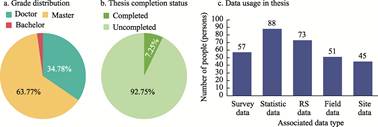
Figure 1 Basic characteristics of the survey sample
3.1 Graduate Students’ Awareness and Attitudes
Toward Data Publication
Graduate
students generally recognize the importance of publishing original thesis data
and acknowledge its value for academic dissemination and research (Figures 2a,
2b). However, as Figure 2c shows, due to limited promotion and understanding of
this field, students’ awareness of thesis-related data publication remains
relatively vague. Nevertheless, their overall attitudes toward publication are
positive: 48.55% support it, 45.65% remain neutral, and only 5.80% oppose it
(Figure 2d).
Regarding
willingness to share and publish data, 78.26% and 76.81% of students expressed
willingness to share and publish their thesis data, respectively (Figures 2e,
2f), far exceeding the proportions unwilling to share (21.74%) or publish
(23.19%). Table 1 shows that students believe publishing thesis data offers
opportunities for further academic interaction and cooperation, avoidance of
duplicate work, and expansion of research impact. These benefits are the main
motivations for their willingness to share and publish. Analysis of students
opposing data publication indicates that their concerns mainly involve doubts
about reliability, confidentiality of data, lack of systematic organization of
the data, and fear of plagiarism.
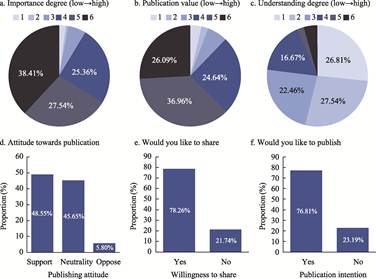
Figure
2
Graduate students’ awareness and attitudes
toward data publication
Table 1 Expected benefits from publishing original
thesis data
|
Expected benefits
|
Number
of students (persons)
|
Proportion (%)
|
|
Academic interaction and cooperation
|
108
|
78.26
|
|
Avoidance of
duplicate work
|
105
|
76.09
|
|
Expansion of
research impact
|
85
|
61.59
|
|
Academic reputation enhancement
|
52
|
37.68
|
|
Financial support
|
43
|
31.16
|
|
Others
|
1
|
0.72
|
3.2 Current Status of Graduate Students’ Data
Publication
In contrast to graduate students’ generally
positive attitudes toward the publication of thesis data, the results show that
over 97% of students had never participated in publishing thesis data (Figure
3a), and more than 70% were unfamiliar with existing data sharing policies and
platforms (Figure 3b). This indicates that, at present, practical engagement
with thesis-related data publication is almost nonexistent. Students identified
issues such as copyright, data quality, data privacy, and platform usability
(Table 2) as challenges that need urgent resolution. Additionally, academic
policy requirements, supervisor’s opinion, academic morality, peer pressure,
and personal interest (Table 3) are potential factors affecting students’
decisions to share and publish data.
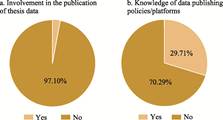
Figure 3
Current
status of degree thesis data publication
Table 2 Possible challenges in data publication
|
Challenges
|
Number of students (persons)
|
Proportion (%)
|
|
Copyright issues
|
122
|
88.41
|
|
Data quality control
|
114
|
82.61
|
|
Privacy and security
|
110
|
79.71
|
|
Platform usability
|
75
|
54.35
|
|
Others
|
1
|
0.72
|
Table 3 Factors influencing decisions on data
sharing and publication
|
Factors
|
Number of students
(persons)
|
Proportion (%)
|
|
Academic policy requirements
|
97
|
70.29
|
|
Supervisor’s opinion
|
89
|
64.49
|
|
Peer pressure
|
61
|
44.20
|
|
Academic morality
|
57
|
41.30
|
|
Personal interest
|
49
|
35.51
|
|
Others
|
3
|
2.17
|
4 Key Issues Regarding the Publication of Graduate Thesis-Associated
Original Data
4.1 Intellectual Property and Data Security
Intellectual property rights and data security are among the primary
concerns for graduate students regarding the publication of thesis-associated
original data. Currently, universities and research institutions train a large
number of graduate students who contribute significantly to China’s scientific
development. Compared with other research papers, the data generated in
graduate theses possess greater theoretical and practical value and are closely
linked to China’s current stage of development. If such data are published
without proper management or oversight, copyright disputes or unauthorized use may
arise, thereby threatening data security across various research fields.
Most graduate students
participate in research projects led or co-led by their supervisors, and their
theses often constitute parts of these projects. Although the scientific
findings in a thesis are independently produced by the student, data collection
and processing are usually conducted under the guidance of supervisors or
project leaders, and many datasets are generated collaboratively. Therefore,
the handling of intellectual property for datasets produced by individual
students versus project teams is a key concern for graduate students when
publishing thesis-associated original data.
4.2 Data Publication
Platforms
Data publication involves providing datasets with clear ownership,
security, reliability, and ethical compliance to society, enabling
discoverability, accessibility, verification, evaluation, and reuse[17,18].
A central concern for students is determining the appropriate platform for data
submission. Unlike traditional research papers, data publication includes both
the publication of physical datasets and the associated knowledge, often in the
form of data papers. The primary issue for authors and users is the
availability of digital platforms for publishing datasets.
Currently, datasets can be
published through 2 main routes based on the issuing institution. The first is
submission to data centers, which assign unique and permanent identifiers
(e.g., DOI, CSTR). Data centers include institutional repositories and
journal-based repositories. Institutional repositories encompass national
government data centers (e.g., data.gov, NASA data centers, China Science and
Technology Resource Sharing Network covering 20 national scientific data
centers), discipline-specific centers (e.g., World Data System, wwPDB), and
some public repositories providing data storage and publication services.
Journal-based repositories require authors to submit datasets associated with
papers to designated journal-recognized platforms, such as Nature, Science,
PLoS, ESSD, GigaScience, and Scientific Data. Publishers such as China
Scientific Data require authors to store associated datasets in designated
repositories (e.g., Figshare, Dryad) prior to article publication, citing the
data in the paper[19], ensuring linkage between the article and the
dataset[20].
The second route is direct
data publication. The Journal of Global
Change Data & Discovery[21,22]and the Digital
Journal of Global Change Data Repository[23], co-hosted by the Institute of Geographic Sciences
and Natural Resources Research, Chinese Academy of Sciences (IGSNRR, CAS), and
the Geographical Society of China, treat datasets and data papers as
independently published but linked outputs. Unlike supplementary materials,
they are independent, peer-reviewed knowledge units, following a formal publication
process that includes peer review, ensuring security, ownership, quality,
ethics, format, and standard compliance.
Data publication platforms
play a critical role in data quality control, which remains a key challenge in
the publication of graduate thesis-associated data. Platform construction
affects publication workflows, storage efficiency, preservation accuracy, and
usability, and is essential for establishing mechanisms and promoting data
publication. Data quality control impacts the acceptance and willingness of
research communities to use published data. Internationally, numerous
repositories have been established to store and share data, including Figshare[24],
Dryad[25], BMC[26], Springer-Nature-approved repositories[27],
Elsevier-approved repositories[28], China Data Bank[29],
National Scientific Data Center of China[30], World Data Center[31],
and institutional databases. Authors submitting datasets generally follow
corresponding data and metadata submission guidelines[32]. Such
repositories can be considered as pre-publication platforms, where stored
datasets can serve as supplementary materials for scholarly articles.
According to the 2024 revised
Regulations on the administration of publication,
electronic publications must be issued by registered publishing entities
(Chapter 2, Article 9), which are required to obtain official approval,
publishing license, and business registration (Chapter 2, Article 15).
Publishing entities are responsible for editorial accountability (Chapter 3,
Article 24). Accordingly, data storage and data publication are distinct
activities, and datasets stored in centers lacking formal publishing
qualifications cannot be considered formally published—they should be
considered “pre-publication” data.
With
approval from the National Press and Publication Administration, The Journal of Global Change Data & Discovery and the Digital Journal of Global Change Data
Repository were officially
launched in 2017 and 2020, respectively. The two journals are
currently the only pair worldwide authorized to publish both datasets and
associated data papers with full publication qualifications. Their
establishment and operation provide a model for dataset publication. As data
publication develops, more qualified journals are expected to emerge, thereby facilitating
the publication of graduate thesis-associated original data.
4.3 Impact
on the Publication of Research Paper
In the era of big data, graduate
degrees are primarily awarded based on theses, which focus on scientific
discoveries, technological innovations, and empirical validation. Digital
datasets supporting these findings are essential foundations. Graduate students
are often concerned whether publishing data might hinder the publication of
research papers. To handle this issue, typically, research papers and their
associated datasets could be published synchronously (or linked via agreements)
in different academic journals. This approach is increasingly advocated and
implemented in journals worldwide, such as those published by the American
Geophysical Union[33].
4.4 Evaluation of Degree
Achievement and Scientific Contribution
Graduate students generally acknowledge the value of data
publication, while also recognizing that it increases research scope and
workload. Discovering scientific patterns in data is one step, while preparing
datasets for publication requires additional effort and creativity.
Assessing the scientific
contribution of graduate students via data publication has become a widespread
concern. Citation metrics and publication in high-impact journals incentivize
traditional research papers; data publication also requires a separate
evaluation framework[34,35]. The data publication
evaluation phase is a necessary component of the complete lifecycle of data
publishing[36]. Common evaluation metrics include accesses,
downloads, and citations[36,37]. Further refinement
can assess data quality according to publication level. Liu[38]
proposed a data impact score method, and Scientific Data provides Altmetric
indicators to reflect visibility and online discussion[39]. In
China, increasing attention has also been devoted to strengthening data
publication through platforms such as official media accounts[40].
Without innovative policies encouraging and guiding evaluation, graduate
students may have limited motivation to publish original thesis data.
4.5 Supervisor Support
Supervisors’
attitudes and actions directly influence students’ willingness and
effectiveness in publishing data. Lack of support is a key barrier. Some
supervisors undervalue data publication, regarding traditional research papers
as the sole academic output and considering data publication an extra burden
rather than a contribution. If supervisors do not recognize the independent
publication value of these data, they are unlikely to provide moral support or
encouragement. More seriously, concerns about revealing competitive advantages
or core technologies may lead supervisors to resist data publication. Moreover,
current academic evaluation systems often exclude data publication from
supervisor assessment, reducing the incentive to guide students. As a
consequence, students may encounter obstacles in seeking supervisor support,
hindering data publication efforts.
5 Conclusions and Recommendations
In recent years, several research institutions and universities have
begun exploring the publication of original data associated with graduate
theses, with pilot initiatives notably undertaken by the IGSNRR, CAS. This
paper provides an in-depth examination of the publication practices of
geography graduate thesis data under the framework of open science. It not only
highlights the critical role of open data in promoting transparency,
reproducibility, and collaboration in scientific research but also analyzes the
proactive efforts of geography graduate students within this emerging trend,
underscoring the necessity and urgency of data publication. Survey and
interview results from graduate students confirm the importance of publishing
original thesis data and demonstrate strong support within the student
community for data sharing. During the survey stage, enrolled graduate students
showed a high level of willingness to share their data, indicating promising
prospects for initiating nationwide efforts to publish graduate thesis-associated
original data.
Looking forward,
institutions such as the IGSNRR, CAS may serve as leading pilot programs to
gradually standardize, guide, and promote the publication of graduate thesis
data. Simultaneously, it is necessary to establish national-level mechanisms to
support these efforts[41]. However, we acknowledge that data
publication is neither a simple nor immediate process. In practice, challenges
remain, including data security, quality control, limited awareness of data
publication, and complex intellectual property issues. To address these
challenges, collaborations with open data platforms and the exploration of
innovative publishing models are recommended, aiming to overcome traditional
publication barriers, facilitate global sharing and utilization of research data,
and enhance the academic value and impact of graduate theses.
Based on these
considerations, we propose a set of targeted strategies. Firstly, it is
necessary to develop reliable and qualified platforms for data publication,
storage, and sharing to ensure data quality, accuracy, and proper citation,
thereby laying a solid foundation for the long-term planning of graduate thesis
data publication. Secondly, practical policies and procedures should also be
established, including guidelines on publication methods, application
processes, and usage norms, to enable systematic review and archiving of data
while safeguarding the rights of students and institutions, thereby maximizing
the value of thesis data and promoting deeper
research related to graduate thesis-associated original data. Furthermore,
strengthening education and outreach is critical. Enhancing awareness among
graduate students and supervisors, providing technical guidance, and
establishing appropriate incentive mechanisms are essential to support
effective participation in data publication.
Looking ahead, as
the principles of open science continue to gain traction and technology
advances, the publication of data in geography is expected to experience
broader development. Data publication should be integrated into research
evaluation systems to further encourage graduate students and researchers to
actively participate in data sharing. At the same time, continuous improvement
of data platforms and processing technologies will significantly enhance the
efficiency and quality of data publication. The exploratory and practical
efforts led by the IGSNRR, CAS in publishing graduate thesis data may serve as a reference
model for promoting openness, transparency, and collaboration in scientific
research. We anticipate that more disciplines will join
this initiative, collectively advancing the openness, transparency, and
collaborative nature of scientific research, and enabling early-career
researchers to make creative and historically significant contributions in the
field of scientific data.
Author Contributions
Liu,
C. required that original data linked to graduate theses be published. Wang, Z.
B. solicited experimental cases for graduate training at the Institute of
Geographic Sciences and Natural Resources Research, CAS. Chu, M. R., Wang, Z.
B., and Liu, C. were responsible for the overall design of the survey
questionnaire. Chu, M. R., Luo, L. Z., Gao, K., Li, J. Y., and Wang, S. Y.
conducted the survey data collection and investigation. Chu, M. R. completed
the first draft of the paper, and Liu, C. revised it.
Conflicts of Interest
The authors declare no conflicts of interest.
References
[1]
The
past, present and future of the PhD thesis [J]. Nature,
2016, 535: 7.
[2]
National
Bureau of Statistics. The 2025 national economic and social development statistical
communique of P. R. China [EB/OL].
https://www.stats.gov.cn/sj/zxfbhjd/202602/ t20260228_1962662.html.
[3]
Zhu,
Y. Q., Zhu, Q., Feng, Z., et al.
Scientific big data sharing mechanisms research and suggestions for environmental
information sharing [J]. Chinese Journal
of Environmental Management, 2015, 7(6): 38–45.
[4]
Introduction
of World Data System [EB/OL].
https://www.worlddatasystem.org/organization/intro-to-wds.
[5]
The
Editors of Encyclopaedia Britannica. International Geophysical Year
[EB/OL]. https://www.britannica. com/event/International-Geophysical-Year.
[6]
DOI
[EB/OL]. http://www.doi.org.
[7]
ISO.
Information and documentation—digital object identifier system (ISO 26324: 2025)
[S]. 2025.
[8]
OECD.
Declaration on access to research data from public funding [EB/OL]. https://legalinstruments.oecd. org/en/instruments/OECD-LEGAL-0321.
[9]
OECD.
OECD Principles and guidelines for access to research data from public funding [EB/OL]. https://www.oecd.org/sti/sci-tech/38500813.pdf.
[10]
ESSD [EB/OL]. https://www.earth-system-science-data.net/.
[11]
United
Nations Educational, Scientific, and Cultural Organization. Policy guidelines for
the development and promotion of open access [EB/OL].
http://www.sexarchive.info/BIB/UNESCOOA.html.
[12]
Global
Open Access Portal [EB/OL]. https://www.goap.info/.
[13] Department of Earth Sciences, Chinese
Academy of Sciences. Suggestions on further promoting the sharing of basic data
and information in China’s Earth sciences, resources and environmental sciences
research [J]. Advances in Earth Sciences, 1996, 11(1):
122–123.
[14]
Liu,
C. Global change research data publishing and repository [J]. Acta Geographica Sinica, 2014, 69(s1): 3–11.
[15]
Outline
for the construction of national science and technology infrastructure platform
(2004–2010) [EB/OL].
https://www.gov.cn/gongbao/content/2004/content_62878.html.
[16]
Measures
for the management of scientific data [EB/OL].
https://www.gov.cn/zhengce/zhengceku/2018-04/ 02/content_5279272.html.
[17]
Costello,
M. Motivating online publication of data [J]. BioScience, 2009, 59(5): 418–427.
[18]
Lawrence,
B., Jones, C., Matthews, B., et al.
Citation and peer review of data: moving towards formal data publication [J]. International Journal of
Digital Curation, 2011, 6(2): 4–37.
[19]
Li, X.
Y., Tian, X., Zheng, J. W., et al.
The prospect of China’s data publishing [J]. Chinese Journal of Scientific and Technical Periodicals, 2015,
26(8): 792–799.
[20]
CODATA
China National Committee. Scientific Discovery in Big Data Era [M]. Beijing: Science Press, 2014.
[21]
Editorial
Office of Journal of Global Change Data & Discovery.
Guidelines of Global Change Research Data Publishing & Repository [J]. Journal
of Global Change Data & Discovery, 2017, 1(3): 253–261.
DOI: 10.3974/geodp.2017.03.01.
[22]
Ge, Q.
S. Inaugural editorial [J]. Journal of Global Change Data &
Discovery, 2017, 1(1): 1–2. DOI: 10. 3974/geodp.2017.01.01.
[23]
Inauguration
editorial of Digital Journal of Global Change Data Repository [J]. Journal
of Global Change Data & Discovery, 2020, 4(2): 101–109.
DOI: 10.3974/geodp.2020.02.01.
[24]
Figshare
[EB/OL]. https://figshare.com/.
[25] DRYAD [EB/OL]. https://datadryad.org/.
[26]
BMC [EB/OL].
https://www.biomedcentral.com/about/policies/open-data.
[27] Scientific Data [EB/OL].
https://www.nature.com/sdata/policies/data-policies.
[28] Elsevier [EB/OL].
https://www.elsevier.com/researcher/author/tools-and-resources/research-data/data-base-
linking.
[29] Science Data Bank [EB/OL]. https://www.scidb.cn/.
[30] National Science & Technology Infrastructure [EB/OL].
https://www.escience.org.cn/.
[31] World Data System [EB/OL].
https://worlddatasystem.org/members/member_directory/.
[32]
Chavan,
V., Penev, L. The data paper: a mechanism to incentivize data publishing in
biodiversity science [J]. BMC
Bioinformatics, 2011, 12(S15): S2.
[33]
AGU [EB/OL].
https://www.agu.org/learn-about-agu/about-agu/data-leadership.
[34]
Liu,
C. Management mechanism of U.S. publicly funded scientific
data sharing and its implications for China [J]. China Basic Science, 2003(1): 36–41.
[35]
Liu,
R. D., Zhu, Y. Q., Liu, C., et al.
Analysis on the current status, problems & countermeasures of scientific data
DOI in China [J]. China Science & Technology Resources Review, 2014, 46(5): 65–71+78.
[36]
Wu, L.
Z., Wang, L. X., Nan, Z. T., et al.
Scientific data publication: a review and framework [J]. Remote sensing technology and application, 2013, 28(3): 383–390.
[37]
Ingwersen,
P., Chavan, V. Indicators for the Data Usage Index (DUI): an incentive for
publishing primary biodiversity data through global information infrastructure [J].
BMC Bioinformatics, 2011, 12(S15):
S3.
[38]
Liu,
C. Data Impact Score (DIS)—a quantitative method of data performance to the
data-driven sciences [J]. Journal of Global Change Data &
Discovery, 2018, 2(2): 135–143. DOI: 10.3974/geodp.2018.02.02.
[39] NATURE [EB/OL].
https://www.nature.com/nature/journal-impact.
[40]
Xing,
W. M., Liu, T. Scientific data publishing driven by enhanced publishing: motivations,
modes, and paths [J]. Chinese journal of
scientific and technical periodicals, 2019, 30(8): 853–861.
[41]
Yan,
Y. C. Research on the applicable mechanism of copyright in scientific data
publishing: protection, attribution and utilization rule [J]. Publishing Research, 2023(1): 37–42+36.