Equity Dataset Development of PM2.5 Exposure for
Different Population Groups in Six Cities of China from the Trajectory Data
Perspective
WU Zihao1,2 MA Zhifeng1,2 XIA Jizhe1,2*
1. School of Architecture and Urban Planning, Shenzhen
University, Ministry of Natural Resources (MNR) Key Laboratory for
Geo-Environmental Monitoring of Great Bay Area, Guangdong Key Laboratory of
Urban Informatics, Shenzhen Key Laboratory of Spatial Smart Sensing and
Service, Shenzhen 518060, China;
2. State Key Laboratory of
Subtropical Building and Urban Science, Shenzhen 518060, China
Abstract: The authors
calculated individual hourly average PM2.5 exposure concentrations
by overlaying cleaned large-scale population trajectory data with hourly 1-km
resolution PM2.5 distribution
data. Distinct from traditional static population distribution assumptions,
this method more accurately reflects individual PM2.5 exposure
levels across different spatiotemporal contexts. The study computed the hourly
average PM2.5 exposure concentrations for groups differentiated by
gender, age, income, and commuting distance. Based on this, the Gini
coefficient of resident exposure and the concentration index for different
groups in each city were evaluated, systematically identifying
vulnerable groups and spatial inequality patterns of PM2.5 exposure
across cities. We established a dataset of PM2.5 exposure equity for
different population groups based on trajectory data. This dataset includes the
following data for the study area from January 24 to February 23, 2023: (1)
Hourly 1-km spatial distribution data of PM2.5 concentration for 6
cities including Beijing, Shanghai, and Shenzhen; (2) Urban per capita PM2.5
exposure concentration based on dynamic mobile phone trajectories; (3) Hourly
average PM2.5 exposure data for groups with different social
characteristics (age, income, and gender) and spatial characteristics
(commuting distance) in each city; (4) Gini coefficient of PM2.5
exposure for residents in each city; (5) Results of OLS regression analysis of
the PM2.5 exposure concentration index for various groups; (6)
County-level hourly average PM2.5 exposure amount for residents. The
dataset is archived in .shp, .tif, and .xlsx formats, comprising 753 data files
with a total data volume of 10.6 GB (compressed into one file, 127 MB).
Keywords: GPS trajectory data; PM2.5 concentration
retrieve; PM2.5 exposure assessment; inequality analysis
DOI: https://doi.org/10.3974/geodp.2026.02.08
Dataset Availability Statement:
The dataset supporting this paper was published and is accessible through
the Digital Journal of Global Change Data Repository at: https://doi.org/10.3974/geodb.2026.02.08.V1
1 Introduction
Entering
the 21st century, accompanied by rapid urbanization and industrialization, the
issue of PM2.5 pollution in China has become increasingly prominent.
Air pollution, especially PM2.5, has been strongly linked to various
health problems[1,2]. Existing research[3] indicates that
long-term exposure to high concentrations of PM2.5 can lead to
premature mortality. Therefore, proactive air pollution prevention and control
are essential. To address the issue of PM2.5 pollution, China
explicitly included PM2.5 concentration in the expanded pollutant
standards in the Ambient air quality standards (GB3095—2012) published in 2012[4].
Current analyses
of PM2.5 exposure equity differences mostly rely on census
statistical data[5–7], with the core assumption that individuals are
located within static residential spaces, using the regional average PM2.5
concentration as the exposure level for all residents in that area. This method
ignores the impact of individual daily mobility on air pollution exposure,
making it difficult to reflect dynamic and realistic exposure risk
distributions, thereby introducing bias in environmental equity assessments. PM2.5
exposure equity refers to whether the distribution of PM2.5
pollution exposure levels is fair among different social groups, such as those
characterized by varying income, age, gender, and commuting distance. If the
average exposure concentration of one group is significantly higher than that
of others, it indicates the existence of exposure inequality.
By combining
high spatiotemporal resolution PM2.5 data with group trajectory
data, this dataset enables a more comprehensive understanding of the
differences in PM2.5 exposure among different social groups and the
underlying reasons. Such integrated analysis not only elucidates the impact of
air pollution on public health but also provides a scientific basis for
formulating targeted air quality management measures and public health
policies.
2 Metadata of the Dataset
The metadata of 1-km hourly raster dataset of PM2.5
exposure equality in six cities of China from the trajectory data perspective
(Jan. –Feb. 2023)[8] dataset is summarized in Table 1. It includes
the dataset full name, short name, authors, year of the dataset, data format,
data size, data files, data publisher, and data sharing policy, etc.
3 Methods
3.1 Data Sources
The
remote sensing data used for PM2.5 distribution simulation are as
follows. Ground-level PM2.5 monitoring data were obtained from the
hourly real-time air quality monitoring data released by the China National
Environmental Monitoring Centre. Aerosol
Optical Depth (AOD) data utilized the MCD19A2 product from
MODIS Terra and Aqua satellites, with a spatial resolution of 1 km, sourced
from the NASA LAADS DAAC platform. Meteorological data, including hourly
variables of wind speed, temperature, humidity, precipitation, boundary layer
height, were extracted from the ERA5 reanalysis dataset released
by the European Centre for Medium-Range Weather Forecasts (ECMWF). Topographic
data used the SRTM GL1 Digital Elevation Model (DEM)2 with a spatial
resolution of 30 m, sourced from NASA. Normalized Difference Vegetation Index
(NDVI) employed the MODIS MOD13Q1 product with a spatial resolution of 250 m,
sourced from NASA2. Urban built-up area data (building footprints
and road networks) were obtained through the Baidu Maps Open Platform to
characterize urban structure and human activity intensity. Based on these
multi-source data, a Stacking ensemble learning model was constructed to
achieve hourly 1-km PM2.5 concentration spatiotemporal prediction,
thereby supporting subsequent population exposure and equity assessments.
Table
1 Metadata summary of the 1-km
hourly raster dataset of PM2.5 exposure equality in six cities of
China from the trajectory data perspective (Jan. –Feb. 2023)
|
Items
|
Description
|
|
Dataset full name
|
1-km hourly
raster dataset of PM2.5 exposure equality in six cities of China
from the trajectory data perspective (Jan. –Feb. 2023)
|
|
Dataset short
name
|
Trajectory_PM2.5_Exposure_Equity
|
|
Authors
|
Ma, Z. F., School of Architecture and Urban
Planning, Shenzhen University, 1037341855@qq. com
Wu, Z. H., School
of Architecture and Urban Planning, Shenzhen University,
2510114024@mails.szu.edu.cn
|
|
|
Xia, J. Z.,
School of Architecture and Urban Planning, Shenzhen University,
xiajizhe@szu.edu.cn
|
|
Geographical
region
|
Beijing,
Shanghai, Shenzhen, Chengdu, Wuhan, Xi’an
|
|
Year
|
2023.01.24–2023.02.23
|
|
Data format
|
.tif, .shp, .xlsx
|
|
|
|
Data size
|
127 MB (compressed)
|
|
|
|
Data files
|
(1) Hourly 1-km
spatial distribution data of PM2.5 concentration for 6 cities; (2)
Urban per capita PM2.5 exposure concentration based on dynamic
mobile phone trajectories; (3) Hourly average PM2.5 exposure data
for groups with different social characteristics and spatial characteristics
in each city; (4) Gini coefficient of PM2.5 exposure for residents
in each city; (5) Results of OLS regression analysis of the PM2.5
exposure concentration index for various groups; (6) County-level hourly
average PM2.5 exposure amount for residents
|
|
Foundation
|
National Natural
Science Foundation of China (42171400)
|
|
Data publisher
|
Global Change Research Data Publishing & Repository,
http://www.geodoi.ac.cn
|
|
Address
|
No. 11A, Datun
Road, Chaoyang District, Beijing 100101, China
|
|
Data sharing policy
|
(1) Data are openly available and can be
free downloaded via the Internet; (2) End users are encouraged to use Data subject to citation; (3) Users,
who are by definition also value-added service providers, are welcome to
redistribute Data subject to
written permission from the GCdataPR Editorial Office and the issuance of a Data redistribution license; and (4)
If Data are used to compile new
datasets, the “ten percent principal” should be followed such that Data records utilized should not
surpass 10% of the new dataset contents, while sources should be clearly
noted in suitable places in the new dataset[9]
|
|
Communication and searchable system
|
DOI, CSTR, Crossref, DCI, CSCD, CNKI,
SciEngine, WDS, GEOSS, PubScholar, CKRSC
|
The large-scale
individual trajectory data used in this study were provided by Moxing
Technology. These data capture and record user behavioral dynamics at regular
high frequencies using various positioning technologies, such as Wi-Fi,
Bluetooth, and GPS. The data cover the entire spatial extent of 6 cities:
Beijing, Shanghai, Shenzhen, Chengdu, Wuhan, and Xi’an. The dataset includes
anonymized user IDs, timestamps, positioning methods, and precise latitude and
longitude information. To minimize the impact of fluctuations in residents’
daily mobility patterns on experimental error, this study selected trajectory
data spanning one month, from January 24 to February 23, 2023. To fully reflect
an individual’s daily PM2.5 exposure scenario, individual trajectory
data with at least 20 hours of valid positioning records were selected. The
spatial accuracy of this trajectory data is within 1 m, and the temporal
accuracy is within 1 h.
3.2 Algorithms
3.2.1 High Spatiotemporal Resolution PM2.5
Distribution Simulation
To
accurately assess the differences in PM2.5 exposure among various
population groups, high spatiotemporal resolution PM2.5
concentration distribution data are required. This study proposes an hourly PM2.5
prediction model based on Stacking ensemble learning, integrating multi-source
remote sensing and urban big data to achieve estimation of PM2.5
concentration at 1-km resolution with hourly updates.
This study
constructed a two-layer Stacking ensemble model to capture the complex
nonlinear relationships between PM2.5 and various influencing
factors, as shown in Figure 1. The first layer base learners selected were
XGBoost[10], Gradient Boosting Machine (GBM)[11], and
Random Forest (RF)[12], all of which perform excellently in air
quality prediction and can effectively handle high-dimensional heterogeneous
data. The second layer meta-learner employed Elastic Net[13],
combining L1 and L2 regularization to avoid overfitting and enhance model
generalization capability. Model training utilized five-fold cross-validation,
and hyperparameters (such as learning rate, tree depth, regularization
coefficients) were optimized independently for each city to adapt to regional
characteristics.
This study selected
relevant features based on correlation analysis, including AOD, NDVI, road
network density, and other target features as independent variables for model
training, with PM2.5 concentration at monitoring stations as the
dependent variable. Considering the differences among cities in atmospheric
environment, topographic structure, and human activities, independent models
were trained for the six cities to enhance regional adaptability and prediction
accuracy. Subsequently, the study area was divided into a regular grid of 1 km
× 1 km cells, feature data for each grid cell at corresponding time periods
were extracted, and input into the trained city-specific models to output the
predicted PM2.5 concentration for each grid center.
To further improve
spatial continuity, Inverse Distance Weighting (IDW) interpolation was applied
to the discrete prediction points, ultimately generating hourly 1-km PM2.5
concentration spatial distribution maps.
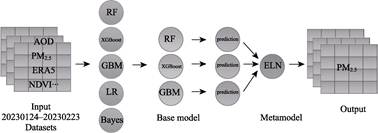
Figure 1 Stacking model architecture diagram
3.2.2 Time-Weighted Calculation of PM2.5
Exposure Concentration
This
study employs a time-weighted method to estimate an individual’s hourly average
PM2.5 exposure. This method comprehensively considers the PM2.5
concentration encountered at each time point and the duration the individual
stays at that point. By accumulating the product of PM2.5
concentration and duration for these time points and dividing the sum by the
individual’s total recorded time during the day, the individual’s hourly
average PM2.5 exposure concentration is obtained. The calculation
principle is illustrated in Figure 2. Considering the barrier effect of
buildings on air pollution[14], this study adjusts the estimated
individual PM2.5 exposure concentration based on the method used to
acquire trajectory data to determine whether the individual is indoors or
outdoors. Data points acquired via GPS signals are classified as outdoor
environments, while points recorded using Wi-Fi or Bluetooth are classified as
indoor environments. Simultaneously, the PM2.5
exposure concentration at each stay point is adjusted using an indoor-outdoor
exposure correction factor to ensure the accuracy of the assessment results.
The time-weighted calculation Equation for
individual PM2.5 exposure concentration is as follows:
 (1)
(1)
Where represents the individual’s hourly average PM2.5
exposure (µg/m3),
represents the individual’s hourly average PM2.5
exposure (µg/m3),  represents the PM2.5
concentration (µg/m3) the individual is exposed to while
staying in the
represents the PM2.5
concentration (µg/m3) the individual is exposed to while
staying in the  grid cell,
 represents the duration of stay (h) in thegrid cell,
  represents the indoor-outdoor PM2.5 concentration
correction factor. Referring to existing research[14], this study
assumes the coefficient for each indoor/outdoor scenario equals the average
value, set to 0.67.
represents the indoor-outdoor PM2.5 concentration
correction factor. Referring to existing research[14], this study
assumes the coefficient for each indoor/outdoor scenario equals the average
value, set to 0.67.  is the total
valid recording time (h) for the individual throughout the day. n refers to the total number of grid cells visited during the
observation period.
is the total
valid recording time (h) for the individual throughout the day. n refers to the total number of grid cells visited during the
observation period.
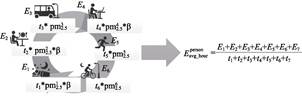
Figure 2 Schematic diagram of hourly average PM2.5
exposure calculation
To explore
differences in PM2.5 exposure among various groups, this study
classified and aggregated the data based on individual characteristic labels
and calculated the hourly average PM2.5 exposure concentration for
each group accordingly. This provides an effective quantitative means for
assessing and comparing the exposure risks of different groups. The calculation
Equation is as follows:
 (2)
(2)
Where represents the group’s average hourly PM2.5
exposure concentration (µg/m3), and
represents the group’s average hourly PM2.5
exposure concentration (µg/m3), and represents the number of individuals possessing a specific
characteristic. Calculating the hourly average PM2.5 exposure for
groups allows for an effective depiction of exposure risk at the group level on
a relatively equitable dimension, thus ensuring the scientific validity of
subsequent assessments of PM2.5 exposure differences among different
groups.
represents the number of individuals possessing a specific
characteristic. Calculating the hourly average PM2.5 exposure for
groups allows for an effective depiction of exposure risk at the group level on
a relatively equitable dimension, thus ensuring the scientific validity of
subsequent assessments of PM2.5 exposure differences among different
groups.
3.2.3 Equity Assessment of PM2.5 Exposure Driven by Group
Trajectories
(1)
Gini Coefficient Calculation
The Gini Index
(GI), a classic statistical tool for measuring inequality, is widely applied in
inequality research across various domains such as income distribution,
education levels, and health indicators[15]. Its advantage lies in
its ability to comprehensively reflect the degree of inequality in a
distribution through a normalized value (ranging from 0 to 1). Additionally,
the Gini coefficient is sensitive to changes in the middle range of income or
exposure levels. Therefore, this study employs the Gini coefficient to quantify
and compare exposure inequality among different cities or groups. The Equation for calculating the Gini
coefficient is as follows:
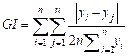 (3)
(3)
Where represents the difference in PM2.5 exposure values
among individuals (µg/m3), indicating the absolute value of the
difference between different individuals within the group.
represents the difference in PM2.5 exposure values
among individuals (µg/m3), indicating the absolute value of the
difference between different individuals within the group. is twice the average PM2.5 exposure value of all
individuals. Here, i and j
represent the indices of different individuals within the group, and n is the total sample size within that group. This normalizes the
total difference, making the Gini coefficient independent of sample size.
is twice the average PM2.5 exposure value of all
individuals. Here, i and j
represent the indices of different individuals within the group, and n is the total sample size within that group. This normalizes the
total difference, making the Gini coefficient independent of sample size.
(2) Concentration
Index Calculation
Due to
computational limitations, the Gini coefficient applies only to unidimensional
data and cannot parse the complex relationships among multiple dimensions
influencing inequality; For instance, it cannot directly reveal the interaction
between income level and PM2.5 exposure inequality. Therefore, this
study employs the Concentration Index (CI)[16] to explore the
relationship between social and spatial characteristics and PM2.5
exposure inequality. The calculation Equation
for the Concentration Index is as follows:
 (4)
(4)
Where represents the average PM2.5 exposure level (µg/m3),
 represents the value of a specific social or spatial
characteristic, and
represents the value of a specific social or spatial
characteristic, and represents the associated individual’s PM2.5
exposure concentration (µg/m3). Here, i
denotes the rank of the individual after sorting by the social or spatial
characteristic value in ascending order, and n
is the total sample size. The CI ranges from ‒1 to 1. Taking the correlation
between income and PM2.5 exposure concentration as an example: a CI
value close to 0 indicates small exposure differences among groups with
different incomes. A CI value less than 0 suggests that low-income groups bear
higher exposure burdens, whereas a CI value greater than 0 suggests that
high-income groups bear higher exposure burdens.
represents the associated individual’s PM2.5
exposure concentration (µg/m3). Here, i
denotes the rank of the individual after sorting by the social or spatial
characteristic value in ascending order, and n
is the total sample size. The CI ranges from ‒1 to 1. Taking the correlation
between income and PM2.5 exposure concentration as an example: a CI
value close to 0 indicates small exposure differences among groups with
different incomes. A CI value less than 0 suggests that low-income groups bear
higher exposure burdens, whereas a CI value greater than 0 suggests that
high-income groups bear higher exposure burdens.
4 Data Results and Validation
4.1 Dataset Composition
The
dataset comprises the following 6 categories of data: (1) hourly 1-km PM2.5
concentration spatial distribution data of 6 cities from Jan. 24 to Feb. 23,
2023; (2) per capita PM2.5 exposure concentrations of urban
residents derived from dynamic mobile phone trajectory data; (3) hourly average
PM2.5 exposure data of groups in each city classified by social
characteristics (age, income and gender) and spatial characteristics (commuting
distance); (4) Gini coefficients of PM2.5 exposure for residents in
each city; (5) concentration indices and OLS analysis of PM2.5
exposure for each population group; (6) hourly average PM2.5
exposure of residents at the county level.
4.2 Data Results Analysis
4.2.1 Equity Assessment Results of PM2.5 Exposure in Each City
The
mean hourly PM2.5 exposure is an intuitive indicator for assessing
group exposure levels. As shown in Table 2, Xi’an had the highest mean exposure
among the cities at 69.22 µg/m3; conversely, Shenzhen had the lowest
mean exposure at just 19.96 µg/m3. The mean exposures for other
cities—Chengdu, Wuhan, Shanghai, and Beijing—were 56.36 µg/m3, 50.46
µg/m3, 43.74 µg/m3, and 38.44 µg/m3,
respectively. These figures are generally consistent with the annual average
monitored PM2.5 values and their ranking for each city.
The Gini
coefficient illustrates the comparison of PM2.5 exposure inequality
across cities. Beijing ranked highest with a Gini coefficient of 0.49,
indicating the greatest disparity in PM2.5 exposure levels among
residents within the city. In contrast, Shenzhen, with a Gini coefficient of
0.10, demonstrated a more uniform distribution of PM2.5 exposure and
smaller intra-city disparities.
Table 2 Comparison of urban per capita PM2.5
exposure concentration and exposure Gini coefficient
|
City
|
Beijing
|
Shanghai
|
Shenzhen
|
Wuhan
|
Chengdu
|
Xi’an
|
|
Per capita PM2.5 exposure (µg/m3)
|
38.44
|
43.74
|
19.96
|
50.46
|
56.36
|
69.22
|
|
Gini coefficient
|
0.49
|
0.24
|
0.10
|
0.18
|
0.20
|
0.17
|
4.2.2 Equity Assessment Results of Pollution Exposure for Groups with
Different Social Characteristics
Figure
3 presents the summary statistics of hourly average PM2.5 exposure
for groups stratified by income, age, and gender across the six cities. Age
group and gender labels originate from the trajectory data provider, covering
users aged 22 to 85, grouped in 5-year intervals. Income level uses housing
prices in the individual’s area as a proxy variable, classified into 9 levels
using a three-class model[17].
As shown in Table
3, in the income dimension, the CI values for Beijing, Shenzhen, Wuhan, and
Chengdu are all greater than 0, indicating that higher PM2.5
exposure is concentrated among high-income groups in these cities. Conversely,
the CI values for Shanghai and Xi’an are less than 0, suggesting that
low-income groups bear relatively higher PM2.5 exposure burdens in
these two cities. From the correlation analysis results between different
population groups and PM2.5 exposure, in the age dimension, PM2.5
exposure among residents in Beijing, Wuhan, Chengdu, and Xi’an declined with
age. In contrast, in Shanghai, increasing age was positively correlated with
higher PM2.5 exposure. In the gender dimension, male groups in
Beijing and Shanghai experienced higher levels of PM2.5 exposure
compared to female groups, whereas in Chengdu, female exposure levels were
higher than male levels.
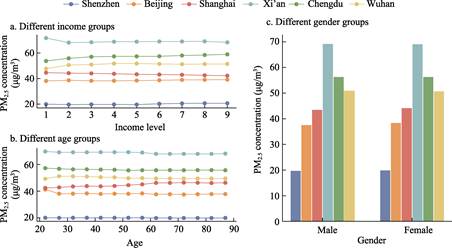
Figure 3 Hourly average PM2.5 exposure
for groups with different social characteristics in each city
Table
3 PM2.5 exposure
concentration index and exposure correlation OLS analysis for groups with different
social characteristics in each city
|
City
|
Beijing
|
Shanghai
|
Shenzhen
|
Wuhan
|
Chengdu
|
Xi’an
|
|
Income (CI)
|
0.0077
|
‒0.0115
|
0.0039
|
0.0123
|
0.0190
|
‒0.0050
|
|
Age (CI)
|
‒0.0066
|
0.0090
|
‒0.0015
|
‒0.0032
|
‒0.0047
|
‒0.0034
|
|
Gender (CI)
|
0.0027
|
‒0.0339
|
‒0.0078
|
‒0.0284
|
‒0.0087
|
‒0.0093
|
|
Income (OLS)
|
0.315*
|
‒0.701*
|
0.237*
|
4.8***
|
4.8***
|
‒2.17**
|
|
Age (OLS)
|
‒1.44***
|
1.29***
|
0.077
|
‒0.403*
|
‒0.432**
|
‒0.713**
|
|
Gender (OLS)
|
21.6**
|
11.51**
|
3.6*
|
0.232
|
‒4.66**
|
‒2.57*
|
*
denotes P<0.1, marginal significance; ** denotes P<0.05,
significant; *** denotes P<0.01, highly significant.
4.2.3
Equity Assessment Results of Pollution Exposure for
Groups with Different Spatial Characteristics
To
explore the differences in PM2.5 exposure among groups with
different spatial characteristics, this study employed a three-class model to
categorize residents’ commuting distances, aiming to investigate the
relationship between daily commuting distance and PM2.5 exposure. As
shown in Table 4, medium- and long-distance commuters in Beijing and Shanghai
experienced higher exposure. Notably, when commuting distance exceeded a
certain threshold, exposure levels decreased (Figure 4). In Wuhan,
short-distance commuters experienced higher exposure. In Shenzhen, Xi’an, and
Chengdu, PM2.5 exposure was concentrated among medium- and
long-distance commuters, although the results were not statistically
significant.
Table
4 PM2.5 exposure
concentration index and exposure correlation OLS analysis for groups with different
spatial characteristics in each city
|
City
|
Beijing
|
Shanghai
|
Shenzhen
|
Wuhan
|
Chengdu
|
Xi’an
|
|
Commuting distance (CI)
|
0.0308
|
0.0749
|
0.0128
|
‒0.0580
|
0.0099
|
0.0157
|
|
Commuting distance (OLS)
|
2.2***
|
0.8***
|
0.2
|
‒1.9***
|
0.1
|
0.1
|
*
denotes P<0.1, marginal significance; ** denotes P<0.05, significant; ***
denotes P<0.01, highly significant.
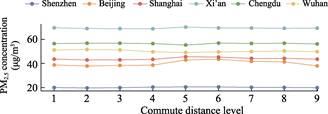
Figure 4 Hourly average PM2.5 exposure
for groups with different commuting distances in each city
Figure 5 depicts
the spatial distribution of county-level hourly average PM2.5
exposure for residents in the six cities. From a spatial distribution
perspective, the characteristics of PM2.5 exposure distribution
exhibit significant heterogeneity across cities. In Beijing, populations with
high PM2.5 exposure are mainly distributed in the southeastern and
northeastern parts of the city. In Shanghai, residents around the city center
have higher PM2.5 exposure risks, with exposure in some districts
being up to 26% higher than in the city center. In Chengdu and Wuhan, residents
in the city center experience higher levels of PM2.5 exposure.
Spatial autocorrelation analysis (Moran’s I) shows that resident
PM2.5 exposure in Chengdu and Wuhan exhibits significant positive
spatial correlation, with a higher degree of clustering than in other cities,
indicating a distinct central agglomeration pattern. Furthermore, the highest
PM2.5 exposure values in Chengdu are located in the southern and
southeastern parts of the city. The distribution pattern of PM2.5
exposure in Xi’an is similar to that in Beijing and Shanghai, primarily
concentrated in the suburbs outside the central ring road. Shenzhen’s PM2.5
exposure distribution exhibits a polycentric pattern.
4.3 Data Validation
The
hourly PM2.5 distribution data used in this study were obtained
through predictions from the Stacking ensemble model. The model demonstrated
relatively high R² values (ranging from 0.660 to 0.853) and low
RMSE values across all cities, with performance significantly superior to
traditional single models. It also showed excellent performance across
different concentration intervals. Compared with observed daily means, the
model’s prediction error rate remained within the 10%–20% range. Compared with
semi-annual means, the error rate was only between 0.9% and 10%, indicating
good spatiotemporal extrapolation capability and stability. This confirms its
reliability and accuracy.
Figure 6 shows the scatter distribution and
fitting results of observed versus predicted PM2.5 concentrations
for the six cities. The Stacking model performed robustly across all
concentration intervals, with predicted values generally distributed along the
45° diagonal
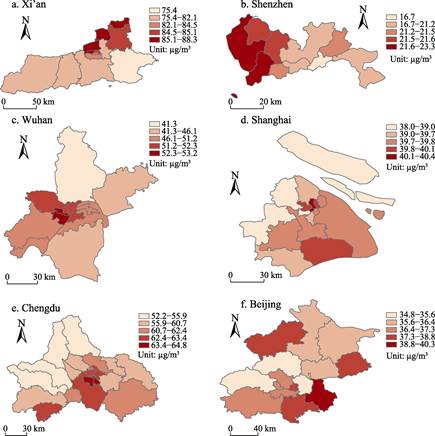
Figure 5 Maps of the county-level hourly average
PM2.5 exposure for residents in each city
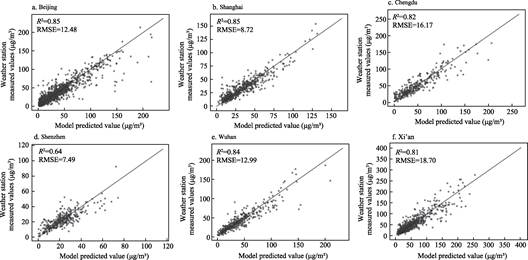
Figure 6 Stacking model fitting results for each city
line, demonstrating
good consistency. Some local errors exist, such as slight overestimation in
Beijing for the 40–150 μg/m3 range, and similar trends in the high
concentration ranges for Shenzhen, Wuhan, as well as Chengdu. This phenomenon
may be related to the training data primarily originating from urban centers
where PM2.5 concentrations are generally higher, leading to
overestimation at peripheral stations. Overall, the model exhibits high
accuracy and stability across different cities.
5 Discussion and Conclusion
This
dataset overlays refined trajectory data with high-precision PM2.5
distribution, employs a time-weighted method to accurately calculate individual
and group PM2.5 exposure concentrations, and subsequently assesses
the overall exposure differences among cities, delving into the equity issues
of PM2.5 exposure for groups with different characteristics within
cities.
The data results
indicate that the time-weighted PM2.5 exposure concentration
estimates are generally consistent with the annual average monitored PM2.5
values for each city, demonstrating the reliability and stability of the
exposure prediction method used in this study. Furthermore, all cities within
the study area face a certain degree of inequity in PM2.5 exposure.
Based on the Gini coefficient calculations, inequality is most severe in
Beijing, while it is relatively low in Shenzhen, indicating heterogeneity in PM2.5
exposure disparities across different regions. To elucidate the causes of these
differences, this study examined the exposure disparities among groups with
different social and spatial characteristics. The results reveal that
residents’ PM2.5 exposure levels are significantly influenced by
their social and spatial characteristics, and these influences vary across
cities. This phenomenon may be related to the urban structure and industrial
layout of the cities. Beijing’s urban structure follows a monocentric ring
pattern; residents in the suburbs have relatively fewer job opportunities,
leading to longer commuting distances and consequently higher exposure. In
Shanghai and Xi’an, heavy polluting industries are located in the suburbs,
resulting in higher PM2.5 concentrations there, indirectly causing
suburban residents to bear higher pollution exposure levels. In Wuhan, PM2.5
pollution concentration is higher in the city center, thus high-income groups
in the city center experience higher exposure. In Chengdu, the areas with the
highest resident PM2.5 exposure are in the southern and southeastern
parts of the city, which aligns with Chengdu’s polycentric urban layout.
Shenzhen’s PM2.5 exposure distribution is highly consistent with the
city’s polycentric structure, showing a polycentric distribution pattern that
makes residents’ exposure less influenced by income or commuting distance
across different areas.
These results
reveal the compound impact of urban spatial layout and industrial distribution
on the environmental exposure risks of different population groups and provide
a crucial basis for accurately identifying vulnerable groups to PM2.5
exposure within cities. This offers precise data support for urban PM2.5
pollution control, facilitates the refinement of environmental measures, and
holds significant importance for achieving environmental justice. This dataset
covers only 6 cities in China and may not fully reflect the actual situation of
PM2.5 exposure inequality nationwide, although overall, the dataset
remains representative to a certain extent. Future research needs to
incorporate more influencing factors to further explore the deeper reasons
behind the phenomenon of exposure inequality.
Author Contributions
Xia, J. Z. designed the algorithms of dataset. Wu,
Z. H. contributed to the data processing and analysis and wrote the data paper.
Wu, Z. H. and Ma, Z. F. designed the models and algorithms and performed data
validation.
Conflicts of Interest
The authors declare no conflicts of interest.
References
[1]
Chen, H., Kwong, J. C., Copes,
R., et al. Exposure to ambient air pollution and the incidence of
dementia: a population-based cohort study [J]. Environment International,
2017, 108: 271‒277.
[2]
Guo, Y., Zeng, H., Zheng, R., et
al. The association between lung cancer incidence and ambient air pollution
in China: a spatiotemporal analysis [J]. Environmental Research, 2016,
144: 60‒65.
[3]
Maji, K. J., Dikshit, A. K.,
Arora, M., et al. Estimating premature mortality attributable to PM2.5
exposure and benefit of air pollution control policies in China for 2020 [J]. Science
of the Total Environment, 2018, 612: 683‒693.
[4]
Ministry of Environmental
Protection, General Administration of Quality Supervision, Inspection and
Quarantine. Ambient air quality standard: GB 3095—2012 [S]. 3rd ed. Beijing:
China Environmental Science Press, 2012: 3.
[5]
Collins, T. W., Grineski, S.
E., Shaker, Y., et al. Communities of color are disproportionately
exposed to long-term and short-term PM2.5 in metropolitan America
[J]. Environmental Research, 2022, 214: 114038.
[6]
Ouyang, W., Gao, B., Cheng, H.,
et al. Exposure inequality assessment for PM2.5 and the
potential association with environmental health in Beijing [J]. Science of
the Total Environment, 2018, 635: 769‒778.
[7]
Bravo, M. A., Anthopolos, R.,
Bell, M. L., et al. Racial isolation and exposure to airborne
particulate matter and ozone in understudied US populations: environmental
justice applications of downscaled numerical model output [J]. Environment
International, 2016, 92: 247‒255.
[8]
Ma, Z. F., Wu, Z. H., Xia, J.
Z. 1-km hourly raster dataset of PM2.5 exposure equality in six cities
of China from the trajectory data perspective (Jan. ‒Feb. 2023) [J/DB/OL]. Digital
Journal of Global Change Data Repository, 2026. https://doi.org/10.3974/geodb.2026.02.08.V1.
[9]
GCdataPR Editorial Office.
GCdataPR data sharing policy [OL]. https://doi.org/10.3974/dp.policy.2014.05
(Updated 2017).
[10]
Chen, Z. Y., Zhang, T. H.,
Zhang, R., et al. Extreme gradient boosting model to estimate PM2.5
concentrations with missing-filled satellite data in China [J]. Atmospheric
Environment, 2019, 202: 180‒189.
[11]
Danesh Yazdi, M., Kuang, Z.,
Dimakopoulou, K., et al. Predicting fine particulate matter (PM2.5)
in the Greater London Area: an ensemble approach using machine learning methods
[J]. Remote Sensing, 2020, 12(6): 914.
[12]
Sun, J., Gong, J., Zhou, J.
Estimating hourly PM2.5 concentrations in Beijing with satellite
aerosol optical depth and a random forest approach [J]. Science of the Total
Environment, 2021, 762: 144502.
[13]
Zou, H., Hastie, T.
Regularization and variable selection via the elastic net [J]. Journal of
the Royal Statistical Society Series B: Statistical Methodology,
2005, 67(2): 301‒320.
[14]
Shao, Z. J. Study on indoor PM2.5
pollution and its impact on human health [D]. Nanjing: Nanjing University,
2019.
[15]
Jbaily, A., Zhou, X., Liu, J., et
al. Air pollution exposure disparities across US population and income
groups [J]. Nature, 2022, 601(7892): 228‒233.
[16]
Josa, I., Aguado, A. Measuring
unidimensional inequality: practical framework for the choice of an appropriate
measure [J]. Social Indicators Research, 2020, 149(2): 541‒570.
[17]
Saunders, P. Social class and
stratification [M]. London: Routledge, 2006.