Spatial Distribution Dataset Development of Industrial
Cultural Heritage in Electric Power Industry of China
LI Yueze1 MA Jun1 ZHANG Yan1 WU Fan2 WANG Hongliang2 CHEN Yaya2 YE Peng3* WANG Shu4,5*
1. State Grid Customer Service
Center, Tianjin 300304, China;
2. SFMAP (Shenzhen) Co., Ltd.,
Shenzhen 518101, China;
3. College of Civil Engineering
and Transportation, Yangzhou University, Yangzhou 225127, China;
4. State Key Laboratory of Geographic Information Science
and Technology, Institute of Geographic Sciences and Natural Resources
Research, Chinese Academy of Sciences, Beijing 100101, China;
5. Jiangsu Center for Collaborative Innovation in
Geographical Information Resource Development and Application, Nanjing 210023,
China
Abstract: To
address the issue of the existing industrial cultural heritage list in the
electric power industry lacking spatial attributes and struggling to meet
digital management needs, this study has developed a spatial distribution
dataset of industrial cultural heritage in China’s electric power industry. The
authors utilized the 2023 list of industrial cultural heritage in the electric
power industry of central enterprises published by China State-owned Assets
Supervision and Administration Commission of the State Council as the source
data. It comprehensively utilized SFMAP address big data platform and publicly
available online information to clean, spatially locate, and expand the
attributes of the heritage data. The final dataset includes 25 core heritage
sites, such as power plants, substations, and industrial factories, and
establishes a complete attribute database that includes the name of the
heritage, the affiliated unit, administrative division, latitude and longitude
coordinates, and the main construction year. This dataset not only accurately
reflects the current geographical distribution of electric power industry
heritage but also outlines the historical context of industrial development
through the attribute of construction year. The
dataset is archived in .shp and .xls formats, consists of 7 data files, with a
data volume of 191 KB (compressed into a single file of 33.0 KB).
Keywords: industrial cultural heritage; electric power
industry; national level; spatial distribution; China
DOI: https://doi.org/10.3974/geodp.2026.01.12
Dataset Availability Statement:
The dataset supporting this paper was published and is
accessible through the Digital Journal of Global Change Data Repository
at: https://doi.org/10.3974/geodb.2025.10.03.V1.
1 Introduction
According
to The Nizhny Tagil Charter for the Industrial Heritage issued by The
International Committee for the Conservation of the Industrial Heritage
(TICCIH) in 2003, industrial heritage is clearly defined as various industrial
relics with historical accumulation, technological innovation, social
significance, or scientific value. Its scope covers a wide range of material
remains, from production workshops and power facilities to associated social spaces[1]. As “living fossils” of
urbanization, these heritage sites not only reflect the evolution of past
economic structures and lifestyles but also embody irreplaceable collective
memories and demonstrate enduring humanistic values[2].
On this basis, the term “industrial cultural heritage” further elevates the
conceptual connotation. It transcends the mere perspective of material
protection, particularly emphasizing the infusion of cultural and social
attributes, aiming to reshape the humanistic spirit of the remains rather than
merely treating them as residues of urban development.
The practice and
exploration of industrial heritage protection in China can be traced back to
the Symposium on Modern Architectural History hosted by Tsinghua University in
1986. However, in the early stage, the focus of relevant research was mainly on
public and religious architecture, and industrial architecture did not receive
due attention. On April 18, 2006, the National Cultural Heritage Administration
of China organized the “Wuxi Forum” in Wuxi, Jiangsu Province. The Wuxi
Proposal adopted at the conference became a landmark document in the process of
industrial heritage protection in China. Compared with the international The
Nizhny Tagil Charter for the Industrial Heritage, the Wuxi Proposal added
intangible cultural heritage categories such as “processes, data records, and
enterprise archives” to the definition of industrial heritage. This supplement
fully reflects China’s unique considerations in the cognition and practice of
industrial cultural heritage[3].
In the same year, the National Cultural Heritage Administration of China issued
the Notice on strengthening the protection of industrial heritage; In 2007, the
third national cultural relics survey officially included industrial heritage
in the scope of investigation; In 2013, industrial heritage was listed as a
separate category for the first time in the selection of the seventh batch of
national key cultural relics protection units. This series of measures clearly
outlines the development trajectory of China’s industrial heritage protection
system gradually moving towards maturity and improvement[4].
As a key component
of industrial cultural heritage, electric power industrial heritage can be
regarded as the “industrial flame” that has been continuously passed down
during the over-century-long development of the electric power industry, and it
is also a precious treasure accumulated in the more than 140-year evolution
history of the electric power industry[5].
In the context of the electric power industry where technological iteration is
rapid and industrial upgrading is continuously advancing, the protection,
inheritance and activated utilization of industrial cultural heritage have
irreplaceable value for the development of the industry and cultural continuity[6].
On September 14, 2023, the List of industrial cultural heritage
of central enterprises in the electric power industry was officially
released. The list includes 25 representative heritage sites of different types
such as museums, power plants, substations, industrial plants and electrical
equipment, covering 2 major power grid companies, 5 major power generation
groups, as well as core enterprises like China Three Gorges Corporation, Power
Construction Corporation of China (POWERCHINA) and 2 major electrical groups.
The dataset of this study collects the spatial location information of these 25
industrial cultural heritage sites in the above-mentioned list, including core
fields such as heritage names, declaring entities, completion years and
geographic coordinates. These data can not only provide basic support for
analyzing the spatial distribution characteristics of industrial cultural
heritage in the electric power industry, but also play an important role in the
practice of excavating, protecting and inheriting regional industrial cultural
resources.
2 Metadata of the Dataset
The
metadata of the Spatial distribution dataset of industrial cultural heritage in
electric power industry of China[7] is summarized in Table 1. It
includes the dataset full name, short name, authors, year of the dataset, data
format, data size, data files, data publisher, and data sharing policy, etc.
Table 1 Metadata summary of the Spatial distribution dataset of
industrial cultural heritage in electric power industry of China
|
Items
|
Description
|
|
Dataset full name
|
Spatial
distribution dataset of industrial cultural heritage in electric power
industry of China
|
|
Dataset short
name
|
PowerICH_China_2023
|
|
Authors
|
Li, Y. Z., State
Grid Customer Service Center, 502513735@qq.com
Ma, J., State
Grid Customer Service Center, 1306859767@qq.com
Zhang, Y., State
Grid Customer Service Center, 1030431434@qq.com
Wu, F., SFMAP
(Shenzhen) Co., Ltd, vance_woo@163.com
Wang, H. L.,
SFMAP (Shenzhen) Co., Ltd, 1936637988@qq.com
Chen, Y. Y.,
SFMAP (Shenzhen) Co., Ltd, 3150007286@qq.com
Ye, P., College
of Civil Engineering and Transportation, Yangzhou University,
007839@yzu.edu.cn
Wang, S.,
Institute of Geographic Sciences and Natural Resources Research, Chinese
Academy of Sciences, wangshu@igsnrr.ac.cn
|
|
Geographical
region
|
China
|
|
Year
|
2023
|
|
Data format
|
.shp, .xls
|
|
Data size
|
191 KB
|
|
Data files
|
(1) The industrial cultural heritage of
centralized enterprises in the electric power industry and their spatial
distribution; (2) statistics on the number of industrial cultural heritage in
the electric power industry by different superintend, province, the year of
construction
|
|
Foundations
|
National Natural
Science Foundation of China (42471503, 42301522); Chinese Academy of Sciences
(XDB0740200-01); Ministry of Science and Technology of P. R. China
(2022YFF0711601); State Grid Customer Service Center (FT20240232)
|
|
Data publisher
|
Global Change Research Data Publishing & Repository,
http://www.geodoi.ac.cn
|
|
Address
|
No. 11A, Datun
Road, Chaoyang District, Beijing 100101, China
|
|
Data sharing
policy
|
(1) Data are openly available and can be
free downloaded via the Internet; (2) End users are encouraged to use Data subject to citation; (3) Users,
who are by definition also value-added service providers, are welcome to
redistribute Data subject to
written permission from the GCdataPR Editorial Office and the issuance of a Data redistribution license; and (4)
If Data are used to compile new
datasets, the ‘ten per cent principal’ should be followed such that Data records utilized should not
surpass 10% of the new dataset contents, while sources should be clearly
noted in suitable places in the new dataset[8]
|
|
Communication and searchable system
|
DOI, CSTR, Crossref, DCI, CSCD, CNKI, SciEngine, WDS, GEOSS, PubScholar,
CKRSC
|
3 Methods
Based on the List of industrial cultural heritage
of central enterprises in the electric power industry released in 2023, the
authors collected and integrated relevant cultural resources of various
industrial cultural heritage sites through the “Internet +” model.
Administrative divisions and geographical coordinates of each industrial
cultural heritage were obtained based on the SFMAP address big data service
platform, and visualized as the spatial distribution of industrial cultural
heritage in the electric power industry of China with the support of ArcGIS.
The technical workflow for the development of this dataset is shown in Figure
1.
|
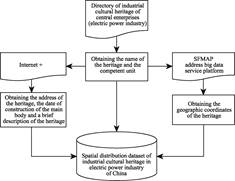
Figure 1 Flowchart of the dataset development
|
3.1 Data Sources
On
September 14, 2023, the official website of China State-owned Assets
Supervision and Administration Commission of the State Council (SASAC) issued a
notice entitled “Release of the List of industrial cultural heritage of central
enterprises in the electric power industry in Beijing”. A total of 25
industrial cultural heritage sites from 11 central enterprises were included in
the list (Table 2). The published list contains 2 types of information: the
name of the industrial cultural heritage and the competent authority to which
the heritage belongs.
Table
2 Directory of industrial cultural heritage of central
enterprises (electric power industry)
|
No.
|
Name of the heritage
|
Competent authority
|
No.
|
Name of the heritage
|
Competent authority
|
|
1
|
Shanghai Zhabei Power Plant
|
State Grid
Corporation of China
|
14
|
Yilihe Power
Plant of Huadian Yunnan Power Generation Co., Ltd.
|
China Huadian
|
|
2
|
220 kV Liangting Substation
|
State Grid Corporation
of China
|
15
|
Original site of
Jiamusi Power Plant
|
China Huadian
|
|
3
|
Fengman
Hydropower Station
|
State Grid Corporation
of China
|
16
|
Lvshuihe
First-class Power Station
|
China Huadian
|
|
4
|
Former site of
British Hankou Electric Light Company (Hubei Electric Power Museum)
|
State Grid Corporation
of China
|
17
|
Equipment of the
electrical control room of Unit 1–3 in Plant A
|
State Power
Investment Corporation of China
|
|
5
|
Jingpo Lake
Power Plant
|
State Grid Corporation
of China
|
18
|
Geheyan water conservancy
project
|
China Three
Gorges Corporation
|
|
6
|
Guangzhou
Electric Power Exhibition Hall
|
China Southern Power Grid
|
19
|
Jiaozuo Power
Plant
|
China Energy
Investment Corporation
|
|
7
|
Former site of
Yunnan Kunhu Power Plant
|
China Southern Power Grid
|
20
|
Maotiao River
Cascade Hydropower Station of Hongfeng Hydropower Plant
|
China Energy
Investment Corporation
|
|
8
|
Yunnan Kaiyuan
Nanqiao Power Plant
|
China Southern Power Grid
|
21
|
Laohudong Power
Station
|
China Energy
Investment Corporation
|
|
9
|
Equipment of the
main electrical panel control room and No. 8 turbine generator set in the old
factory of Xigu Thermal Power Company
|
China Huaneng
|
22
|
Guodian Power
Huanren Power Plant
|
China Energy
Investment Corporation
|
|
10
|
Train power station
of the 12th Station of Zhalainuoer Coal Company
|
China Huaneng
|
23
|
Office buildings
and workshops in the front area of Harbin Electric Turbine Factory
|
Harbin Electric
Corporation
|
|
11
|
Old factory area
of Huxian Thermal Power Plant
|
China Datang
|
24
|
“Dongdian Yinji” Industrial
History and Culture Park
|
Dongfang
Electric Corporation
|
|
12
|
Xiaqingyuandong
Red Historical Hydropower Station
|
China Datang
|
25
|
Industrial plant
heritage of Jiajiang Hydraulic Engineering Bureau of Sinohydro Engineering
Bureau 7 Co., Ltd.
|
Power
Construction Corporation of China
|
|
13
|
Beijing Huadian
Hydropower Co., Ltd.
|
China Huadian
|
|
|
|
3.2 Industrial Cultural
Heritage Attribute Data Collection
Cultural
heritage is a valuable wealth left to mankind by history, and cultural heritage
resources are a collection of valuable cultural heritage-related resources that
have been included and processed[9]. The systematic protection and
living inheritance of industrial cultural heritage not only rely on the release
of authoritative protection lists, but also require a comprehensive grasp of
the multidimensional cultural information of heritage. However, the existing
lists are mainly based on the name of the heritage and the competent authority
as the main information carrier, which is difficult to meet the needs of
refined protection, spatial analysis and public dissemination. Therefore, this
study adopted the “Internet +” mode, through the in-depth search of
authoritative media reports, official websites of enterprises, cultural
heritage databases and other online resources, to supplement heritage
information such as the specific address of the heritage, the date of its
construction, and its historical functions, and also to provide data support
for the subsequent inheritance of the industrial cultural heritage and its
value assessment.
3.3 Industrial Cultural
Heritage Spatial Data Acquisition
On
September 14, 2023, the official website of the SASAC published a notice
regarding the “Release of the List of industrial cultural heritage of central
enterprises in the electric power industry in Beijing”. The list includes the
names of the heritage sites. While address descriptions of each industrial
cultural heritage site can be obtained through internet searches, the
associated geographical coordinates are lacking. SFMAP (Shenzhen) Co., Ltd., a
subsidiary of SF Express, maintains a semantic address database of 14 billion
entries, and its official website provides an online geocoding service through
the address big data service platform. This study obtained the geographical
coordinates of each central enterprise power industry cultural heritage site using
SFMAP geocoding API (Application Programming Interface).
However, some industrial cultural heritage sites in the published list have
historical names, and some have overly brief address descriptions, making it
difficult to directly obtain relevant geographical coordinates through the
geocoding API. This study employed the following methods to acquire spatial
data of industrial cultural heritage sites.
(1) Geocoding
based on heritage addresses
For certain
industrial cultural heritage sites, the address descriptions are sufficiently
detailed, including specific road names and house numbers. For these sites,
geographical coordinates were directly obtained by accessing the geocoding API
using their address descriptions. The industrial cultural heritage sites of the
power industry under central enterprises, for which geographical coordinates
were successfully retrieved based on their address descriptions in this study,
along with their corresponding address details, are presented in Table 3.
(2) Geocoding
based on heritage names
Some industrial
cultural heritage sites are still in normal operation and production.
Therefore, geographical coordinates can be directly obtained by accessing the
geocoding API based on their heritage names. In this study, geographical
coordinates of two industrial cultural heritage sites were successfully
acquired using their names, namely “Yilihe Power
Plant of Huadian Yunnan Power Generation Co., Ltd.” and “Jiaozuo Power Plant”.
(3) Geocoding
based on associated landmarks
Certain
industrial cultural heritage sites, such as substations, hydropower stations,
and electrical units, involve specialized equipment with sensitive information
and are thus excluded from the publicly
accessible place name categories in ordinary internet maps. Additionally, some
industrial cultural heritage sites are listed under historical names in the
published directories. For these heritage sites, 2 strategies were employed:
(1) Internet searches were conducted to identify specific landmarks within or
adjacent to their factory
Table
3 Description of selected industrial heritage sites and
their addresses
|
No.
|
Name of the heritage
|
Address of the heritage
|
|
1
|
Shanghai Zhabei Power Plant
|
No. 4000, Jungong Road, Yangpu District, Shanghai
|
|
2
|
Former site of British Hankou Electric Light Company (Hubei Electric
Power Museum)
|
No. 22, Hezuo Road, Jiang’an District,
Wuhan City, Hubei Province
|
|
3
|
Guangzhou Electric Power Exhibition Hall
|
No. 162, Taikang Road, Yuexiu District, Guangzhou City
|
|
4
|
Former site of Yunnan Kunhu Power Plant
|
No. 830, Chunyu Road, Majie, Xishan District, Kunming City, Yunnan
Province
|
|
5
|
Equipment of the main electrical panel control room and No. 8 turbine
generator set in the old factory of Xigu Thermal Power Company
|
No. 78, Gulang Road, Xigu District, Lanzhou City, Gansu Province
|
|
6
|
Beijing Huadian Hydropower Co., Ltd.
|
No. 219, South Reservoir Road, Xiwengzhuang Town, Miyun District,
Beijing
|
|
7
|
Original site of Jiamusi Power Plant
|
No. 950, East Chang’an Road, Jiamusi City,
Heilongjiang Province
|
|
8
|
Laohudong Power Station
|
Laohudong, Laohudong Village, Xiangfeng Town, Laifeng County, Enshi Prefecture, Hubei Province
|
|
9
|
Office buildings and workshops in the front area of Harbin Electric
Turbine Factory
|
No. 345, Sandadongli Road, Xiangfang District, Harbin City,
Heilongjiang Province
|
|
10
|
“Dongdian Yinji” Industrial History and Culture Park
|
Dongfang Electric Machinery Co., Ltd., No. 188, West Huanghe Road,
Jingyang District, Deyang City, Sichuan Province
|
|
11
|
Industrial plant heritage of Jiajiang Hydraulic Engineering Bureau of
Sinohydro Engineering Bureau 7 Co., Ltd.
|
No. 40, Xihe Road, Jiajiang County, Leshan City, Sichuan Province
|
premises,
and the geographical coordinates of these landmarks were utilized as proxies
for the heritage sites; (2) For heritage sites with sensitive types,
geographical positioning was restricted to their administrative divisions for
national security considerations. The industrial cultural heritage sites for
which coordinates were obtained via associated landmarks, along with their
corresponding landmarks, are detailed in Table 4.
Table
4 Industrial cultural heritages and their
associated landmarks
|
No.
|
Heritage
item
|
Associated
landmark
|
Reference
source
|
|
1
|
220 kV Liangting Substation
|
Geleshan, Shapingba District, Chongqing City
|
Official media[10]
|
|
2
|
Fengman Hydropower Station
|
China Fengman Hydropower Museum
|
Web encyclopaedia[11]
|
|
3
|
Jingpo Lake Power Plant
|
Jingpo Lake Red Education Base of Heilongjiang Electric Power Co.,
Ltd.
|
Official media[12]
|
|
4
|
Yunnan Kaiyuan Nanqiao Power Plant
|
Nanqiao, Kaiyuan City, Honghe Hani and Yi Autonomous Prefecture,
Yunnan Province
|
Featured sites[13]
|
|
5
|
Train power station of the 12th Station of Zhalainuoer Coal Company
|
Zalainuoer Coal Industry Co., Ltd.
|
Official media[14]
|
|
6
|
Old factory area of Huxian Thermal Power Plant
|
Training Base of Datang Shaanxi Power Generation Co., Ltd.
|
Official media[15]
|
|
7
|
Xiaqingyuandong Red Historical Hydropower Station
|
Xiaqingyuandong Power Station of Yuneng (Group) Co., Ltd.
|
Featured sites[16]
|
|
8
|
Lvshuihe First-class Power Station
|
Lvshuihe Tropical Rainforest Resort
|
Social media[17]
|
|
9
|
Equipment of the electrical control room of Unit 1-3 in Plant A
|
Chifeng Thermal Power Plant
|
Official media[18]
|
|
10
|
Geheyan water conservancy project
|
Geheyan Reservoir
|
Web encyclopaedia[19]
|
|
11
|
Maotiao River Cascade Hydropower Station of Hongfeng Hydropower Plant
|
Hongfeng Hydropower Plant, Qingzhen City, Guizhou Province
|
Web encyclopaedia[20]
|
|
12
|
Guodian Power Huanren Power Plant
|
Heyu Hydropower Development Company of Guodian Power Development Co.,
Ltd.
|
Featured sites[21]
|
4 Data Results
4.1 Dataset Composition
The
Spatial distribution dataset of industrial cultural heritage in electric power
industry of China consists of 2 parts: (1)
the location vector data of industrial cultural heritage (.shp); and (2) the
attribute data of the industrial cultural heritage, including the name of the
heritage, the declared unit, the address of the heritage, and the
administrative divisions, etc. (.xls). The names of each attribute field in the
dataset and their examples are shown in Table 5.
Table 5 The attribute fields of the
dataset
|
Items
|
Description
|
|
Index
|
0, 1, 2, 3, …, 25
|
|
Name of the heritage
|
Shanghai Zhabei Power Plant, 220 kV Liangting
Substation, Fengman Hydropower Station, …
|
|
Competent authority
|
State Grid Corporation
of China, China Southern Power Grid, China Huaneng, …
|
|
Address of the heritage
|
No. 4000, Jungong Road, Yangpu District, Shanghai; Geleshan, Shapingba
District, Chongqing; Jilin City, Jilin Province; …
|
|
Year of completion of the main body
|
1930, 1972, 1937, …
|
|
Heritage profile
|
State Grid Shanghai Zhabei Power Plant is one of the earliest thermal
power plants in China, built in 1911; ...
|
|
Associated
landmark
|
China Fengman Hydropower Museum, Jingpo Lake
Red Education Base of Heilongjiang Electric Power Co., Ltd., Chifeng Thermal
Power Plant, …
|
4.2 Data Results
The
industrial cultural heritage of central enterprises in the electric power
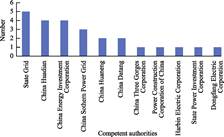
industry shows significant systematic distribution characteristics. From the
dimension of competent authorities, State Grid Corporation of China (5 items),
China Huadian (4 items) and China Energy Investment Corporation (4 items)
ranked in the top three (Figure 2), with the top four units accounting for a
total of 72.7%, highlighting the concentration of cultural heritage in large
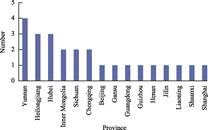
central enterprises. In terms of geospatial distribution, Yunnan (4 items),
Sichuan (2 items), Chongqing (2 items) and other southwestern provinces, as
well as Hubei (3 items) and Heilongjiang (3 items) form the main clusters
(Figure 3), in which the regional centre cities and special terrain areas are
relatively more concentrated, and this spatial pattern is highly consistent
with the historical trajectory of the internal relocation of industries during
the war period and the Third Front Construction. In terms of time dimension,
the industrial cultural heritage of the electric power industry was built
across the period of 1905–1994 (Figure 4), showing 3 construction peaks—the
period of national industrial boom in the 1930s (5 items), the wave of
industrialization at the beginning of the founding of the nation in the 1950s
(7 items) and the period of the Third Front Construction in the 1960s and 1970s
(8 items), outlining the evolution of China’s electric power industry from
colonial capital domination, national independent development to comprehensive
independent innovation. 81.8% of the heritage are still functioning power
generation facilities, which have the dual value of industrial production and
historical testimony.
|
|
|
|
Figure 2 Statistics on the number of
industrial cultural heritage in the electric power industry by different
competent authorities
|
Figure 3 Statistics on the number of
industrial cultural heritage in the electric power industry in different
provinces
|
5 Discussion and Conclusion
|
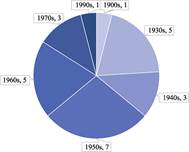
Figure 4 Statistics on the number of
industrial cultural heritages in the electric power industry by time of
construction
|
As
an important carrier recording the process of industrial civilization and
bearing the memory of technological innovation, the systematic protection and
dynamic inheritance of electric power industrial cultural heritage cannot be
separated from the support of standardized data. Based on the list released by
the SASAC in 2023, this dataset integrates authoritative network resources and
spatial data from the SFMAP address big data service platform through the
“Internet +” model. It comprehensively integrates multi-dimensional information
such as heritage names, declaring units, completion years, administrative
divisions and geographic coordinates, and fully covers the key development
nodes of China’s electric power industry from 1905 to 1994. This dataset can
effectively serve the spatial pattern analysis, value evaluation and
formulation of digital protection strategies for industrial cultural heritage.
However, limited by
data sources and collection methods, this dataset still has certain limitations
in the research and development process. In terms of spatial positioning
accuracy, due to the fact that some substations and hydropower facilities’
addresses are ambiguous due to historical place name changes, this study uses
associated marker positioning or the central point of administrative divisions
instead. Although this processing method can meet the analysis of spatial
distribution characteristics at the macro-scale, it is insufficient in the
restoration of the internal pattern of the factory area and precise navigation
at the micro-scale. Future research can expand the scope of the heritage list,
improve the accuracy of spatial data, and improve the historical attribute
dimension by combining field surveys, remote sensing image interpretation and
public crowdsourcing data on this basis, so as to promote the quantitative and
refined research in the field of industrial cultural heritage.
Author Contributions
Li,
Y. Z., Ma, J., and Zhang, Y. designed the algorithms of dataset. Wu, F., Wang,
H. L., and Chen, Y. Y. contributed to the data processing and analysis. Wang, S.
made data validation. Ye, P. wrote the data paper.
Conflicts of Interest
The authors declare no
conflicts of interest.
References
[1]
TICCIH. The nizhny tagil
charter for the industrial heritage [R]. Paris: TICCIH, 2003.
[2]
Liu,
W., Liu, S. D. The importance of management and re-use of industrial cultural
heritage for urban renewal-a review of industrial cultural heritage: value
system, educational heritage and industrial tourism [J]. Leadership Science,
2022(12): 147.
[3]
Huang, X. D., Liu, H. Z. From
Wuxi proposal to Tangshan consensus: research progress and trends of industrial
heritage tourism in China [J]. Journal of
Shanxi Provincial Committee Party School of C.P.C, 2021, 44(1): 60–64.
[4]
Liu, B. Y. Roundup of the
development of industrial building heritage conservation [J]. Architectural Journal,
2012(1): 12–17.
[5]
Xu, Y., Lei, M. Y., Ran, J., et
al. Sustainable development of electric power industrial heritage [J]. Electric Power Survey & Design, 2011(3): 33–36.
[6]
Xu, Y. J., Wang, Y. J., Wang, L.
L. Protection and development of China’s industrial cultural heritage: problems
and countermeasures [J]. Academic Forum,
2016, 39(11): 149–155.
[7]
Li, Y. Z., Ma, J., Zhang, Y., et al. Spatial distribution dataset of
industrial cultural heritage in electric power industry of China [J/DB/OL]. Digital
Journal of Global Change Data Repository, 2025.
https://doi.org/10.3974/geodb.2025.10.03.V1.
[8]
GCdataPR Editorial Office.
GCdataPR data sharing policy [OL]. DOI: 10.3974/dp.policy.2014.05 (Updated
2017).
[9]
Xia, C. J. Intelligent and
smart service of multi-model cultural heritage resources: from available to
evidential and experiential [J]. Journal of Information Resources Management,
2023, 13(5): 44–55.
[10]
China National Radio.
Chongqing’s 220 kV Liangting Substation selected into
the national industrial heritage list [OL].
https://cq.cnr.cn/xwsd/20241031/t20241031_526959683.shtml.
[11]
Baidu Encyclopedia. China
Fengman Hydropower Museum [OL]. https://baike.baidu.com/item/%E4%B8%AD%E5%9B%BD%E4%B8%B0%E6%BB%A1%E6%B0%B4%E7%94%B5%E5%8D%9A%E7%89%A9%E9%A6%86/57716291.
[12]
People’s Daily Online. State
Grid Heilongjiang Electric Power Co., Ltd. Jingpo Lake Red Education Base [OL].
http://finance.people.com.cn/GB/8215/435221/437704/437755/index.html.
[13]
Boya Place Name Sharing
Network. Nanqiao Hydropower Plant [OL]. http://www.tcmap.com.cn/landscape/ 21/malikewategucheng.html.
[14]
People’s Daily Online. The 12th
Train Power Station (a historical retrospective) [OL]. https://paper.people. com.cn/zgnyb/html/2018-04/16/content_1849016.htm.
[15]
Banyue Tan. Datang Xi’an
Thermal Power Plant: activating heritage value and empowering talent cultivation
[OL]. http://www.banyuetan.org/dfgc/detail/20250709/1000200033136151752044903238379725_1.html.
[16]
Aiqicha. Qingyuandong Power
Station under Yuneng (Group) Co., Ltd. [OL]. https://aiqicha.baidu.com/ company_detail_62938855652530.
[17]
Kunming Information Port.
Aerial photography of Lvshuihe tropical rainforest
and power station [OL].
https://www.kunming.cn/news/c/2019-10-14/12741436.shtml.
[18]
China Energy News Network. State
Power Investment Corporation Chifeng Thermal Power Plant: “Electrical control equipment
for Unit 1-3 of Plant A” selected into the China Electricity Council’s list of power
industry heritage [OL].
https://www.cpnn.com.cn/qiye/rongyu/202506/t20250626_1811717.html.
[19]
Baidu Encyclopedia. Geheyan
Reservoir [OL]. https://baike.baidu.com/item/%E9%9A%94%E6%B2%B3%E5%B2%A9%E6%B0%B4%E5%BA%93?fromModule=lemma_search-box.
[20]
Baidu Encyclopedia. Hongfeng
Power Plant Maotiao River Cascade Hydropower Station [OL]. https://baike. baidu.com/item/%E7%BA%A2%E6%9E%AB%E7%94%B5%E5%8E%82%E7%8C%AB%E8%B7%B3%E6%B2%B3%E6%A2%AF%E7%BA%A7%E7%94%B1%E7%AB%99/65028642.
[21]
QiChaCha. Guodian Power
Development Co., Ltd., Heyu Hydropower Development
Company [OL]. https://www.qcc.com.