Ma,
J. H.1 Maharjan, S.2
Acharya, S.2 Liu,
C. 1* Subedi, A.3
1. Institute
of Geographic Sciences and Natural Resources Research,
Chinese Academy of Sciences, Beijing 100101, China;
2. FAO-Nepal,
Latitpur 44700, Nepal;
3. Large
Cardamom Research Center, Ministry of Agriculture and
Livestock Development, Ilam 573000, Nepal
DOI: https://doi.org/10.3974/geodp.2025.04.11
On
September
2–4, 2025, the 44th Capacity Building Workshop on
Big Data Applications was held with the theme of “Geographical Indications
Environment & Sustainability (GIES)” in Illam of Nepal for supporting FAO
One Country One Priority Product (OCOP) Initiative
implementation in Nepal. The event was successfully held under the framework of
the Memorandum of Understanding between the FAO and the Institute of Geographic
Sciences and Natural Resources Research, Chinese Academy of Sciences (IGSNRR, CAS)
on GIES. The event was jointly organized by FAO-Nepal, IGSNRR, CAS, government of
Rong County, Nepal, and Large Cardamom Research Center of Ministry of
Agriculture and Livestock Development, Nepal.
The workshop
was held in two sessions. The first session was held at the government of Rong County,
Nepal. Representatives from the
FAO-Nepal, the Chairman of Rong County, the Director of Agricultural Bureau, et
al., attended the meeting. The meeting was chaired by Dr. Sofina Maharjan from the FAO-Nepal.
Professor Liu, Chuang, Director of World Data System of Global Change Research
Data Publishing & Repository, from IGSNRR, CAS, Vice Chairman of the
Asia-Pacific Regional Organization of the OCOP under FAO of the United Nations,
and Mr. Mani Kumar Syangbo, the Mayer of Rong County, Nepal, delivered
the speeches, respectively.
Nepal
is a major exporter of large cardamom, which is the product of OCOP Nepal. As
an important agricultural product of the country, Nepal produces the highest
global yield of large cardamom and it has been selected for the FAO’s OCOP
initiative. It is primarily used as a culinary spice in daily cooking and holds
significant value as both a food and medicinal resource. Large cardamom
commonly grows at elevations between 300 and 1,300 m, with plants reaching up
to 2 m in height, and is widely distributed across various districts in the
Himalayan region of Nepal. Ilam is the earliest area in Nepal to cultivate
large cardamom, while Rong County is recognized for producing the highest
quality large cardamom and providing the most suitable growing conditions in
the country.
GIES is a
comprehensive tool package about geographical products and their environment
and culture, using open science and big data, the latest technology of the
Internet of Things, making products and their original places identifiable,
which will help the domestic and foreign trade of products and benefit both
producers and consumers. The products of GIES include geographical indication
products, geographical characteristic products, geographical traditional
products. The GIES technology can bring better environment, and better life,
which is one of major objectives of FAO OCOP proposed and advocated by FAO to
enhance the sustainable development of special agricultural products in
developing countries.
|
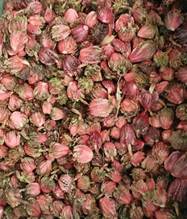
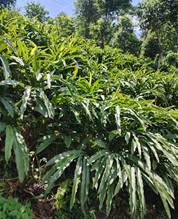
Figure 1 Large cardamom
growing in Rong County of Nepal
|
Figure 2 Harvest of large cardamom of Rong County of Nepal
|
Professor Liu, Chuang
introduced the connotation and significance of GIES and pointed out that GIES
led by IGSNRR, CAS and the Geographical Society of
China, was launched in September 2021 and included in the Science
and Innovation plan of China in 2022. In February 2024, FAO of the United
Nations and IGSNRR, CAS signed a Memorandum of Understanding on cooperation by GIES
to support the OCOP project. Quinoa in Bhutan and coffee in Panama have already
started the GIES case study according to this technical standard. Large
cardamom, as a special agricultural product of the OCOP-Nepal, is a kind of
product bred in unique geographical environment in Nepal, which is the first
product in case study on Nepal’s agricultural products included in the GIES. It
will rely on the geographical conditions of Rong County to carry out the GIES
case study, and provide scientific basis for the traceability and protection of
the original place and the protection the large cardamom
brand in Nepal.
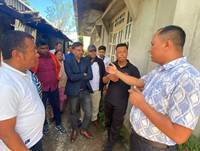
Mr. Mani Kumar Syangbo, the chairman of Rong
County, gave a comprehensive introduction to the special agricultural
products of the local area. After joining the OCOP project, the
local area has established a seedling breeding base of large cardamom
and launched a digital plan with the support of the FAO. The planting area of large
cardamom has doubled compared to before joining the OCOP project, and the yield
per unit has also increased significantly. In addition, coffee and tea are also
special agricultural products in Rong County, where the hilly
landscape in this area is very suitable for the 2 crops. The planting quantity
of coffee has been increased from 80,000 to 300,000. Rong County has a good tea
planting environment, and the tea products are mainly organic green tea and
organic black tea. The tea garden sightseeing significantly promotes the local
economic development.
The second stage
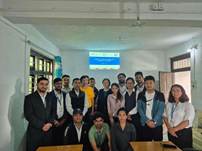
of the workshop was held at the Large Cardamom Research Centre,
Nepal. Professor Liu, Chuang reported on “Data publishing process of GIES case
study”. She presented the key technical points of large cardamom case, and gave
the guidance of the research team. She made a full explain for
the team on technical difficulties, data collection, and data publishing. The scientific
data of GIES case study will be published in the data journals of the Global
Change Research Data Publishing & Repository in China.
Ms. Anupa
Subedi, Director of Large
Cardamom Research Centre, and Principal
Investigator (PI) of OCOP Nepal large cardamon team, will lead the team members
of the research center to carry out the research work on GIES case study of large
cardamom. In the meeting, the research team had heated discussion on the GIES
station, the key data of GIES study, and download, preservation and analysis of
real-time data, and so on.
The 44th symposium
of the Capacity Building Workshop on Big Data Applications in 100
Universities/Towns has played an active role in promoting the
application of GIES, the production and living of large cardamom farmers in the
Rong County of Nepal, the dissemination of the FAO’s “Four Better” concept (better
production, better nutrition, better environment, better life, leaving no one
behind), and the international cooperation in open science, data publishing,
sharing, dissemination.
The Capacity
Building Workshop on Big Data Applications in 100 Universities/Towns was officially
launched by the Geographical Society of China and the IGSNRR, CAS in 2017. A
total of 43 activities has been carried out in China, Indian, Madagascar and
Kennya.
|
|
|
|
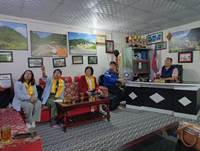
Figure 3 The first session of the
44th Capacity Building Workshop on Big Data Applications was held in Rong County,
Nepal
|
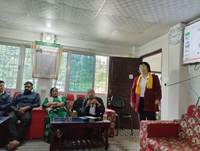
Figure 4 Representatives from the
FAO-Nepal, the Mayer of Rong County, the Director of Agricultural Bureau, et al., attended the workshop
|
|
|
|
|
Figure
5 Mr. Mani Kumar Syangbo, Mayer of Rong County, explained the GIES
functions with farmers
|
Figure
6 The second session of the workshop was
held in Large Cardamom Research Centre,
Nepal
|